How much space is too much?
6 min read
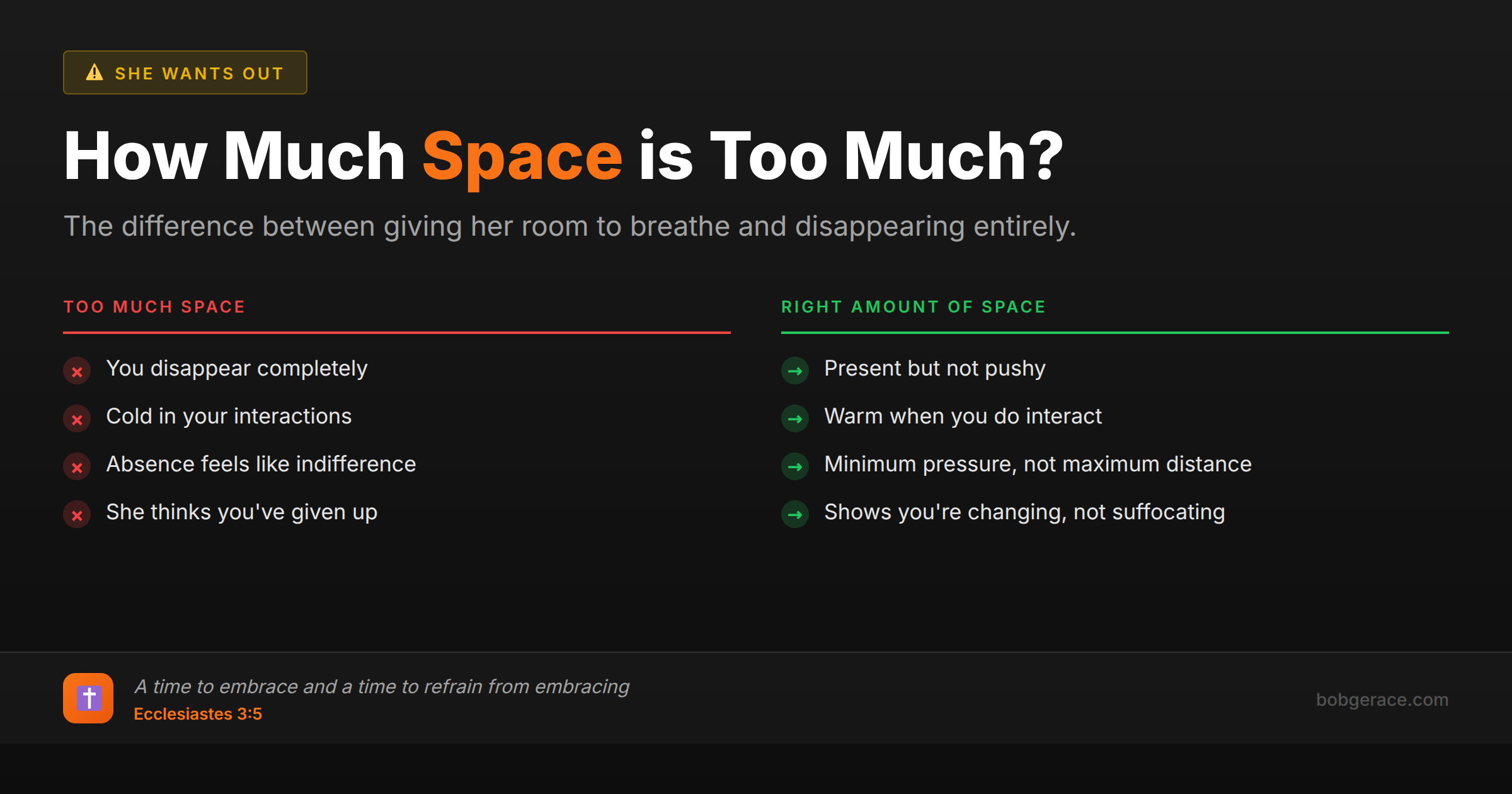
When space becomes indefinite, without communication, and includes emotional or physical boundaries that shut you out completely, you've crossed from healthy space into something more dangerous. Too much space looks like this: no timeline for reconnection, no willingness to discuss the marriage, and barriers that prevent any meaningful interaction. The tipping point isn't measured in days or weeks—it's measured in connection and hope. If she's creating space but still engaging in occasional meaningful conversation and hasn't removed her wedding ring, there's still a bridge. But when space becomes a wall with no doors, and she's actively avoiding any discussion about the future, you're looking at separation disguised as space. The key is recognizing when "I need space" has become "I'm done but haven't said it yet."
The Full Picture
Space exists on a spectrum, and understanding where you land on that spectrum can mean the difference between saving your marriage and watching it slip away. Healthy space involves temporary distance with clear communication about needs and expectations. She might sleep in another room for a few days, limit deep conversations, or spend time with friends, but she's still engaging with you about practical matters and isn't hostile to brief, respectful interactions.
Concerning space escalates when boundaries become absolute and communication stops entirely. This includes refusing all physical contact, avoiding being in the same room, and shutting down any conversation about the relationship. She may start making unilateral decisions about finances, children, or living arrangements without consulting you.
Dangerous space involves active steps toward permanent separation. She's consulting lawyers, making exit plans, removing wedding photos, or telling friends and family that the marriage is over. At this level, "space" has become a euphemism for ending the relationship without the confrontation of actually saying it.
The most destructive mistake men make is treating all space the same way. They either panic and violate healthy boundaries, pushing her further away, or they accept dangerous space as normal, allowing the marriage to die through neglect. The key indicator isn't time—it's trajectory. Is the space leading toward eventual reconnection and healing, or is it creating permanent distance? Watch her actions more than her words, and pay attention to whether she's building bridges or burning them.
What's Really Happening
From a therapeutic perspective, excessive space often indicates attachment injury and emotional flooding. When a spouse requests indefinite space with no parameters, they're typically in a state of emotional dysregulation where proximity to their partner triggers fight-or-flight responses. This isn't necessarily about the relationship being irreparable—it's about their nervous system being overwhelmed.
Research on relationship repair shows that structured separation with clear boundaries and regular check-ins can be therapeutic, while unstructured separation often leads to emotional drift and relationship dissolution. The critical difference is intentionality versus avoidance. Therapeutic space includes specific goals, timelines, and agreements about contact and behavior during the separation period.
Neurologically, when someone is emotionally flooded, their prefrontal cortex—responsible for rational decision-making—goes offline. This is why reasoning with someone in this state often backfires. They need space to regulate their nervous system before meaningful communication can occur. However, indefinite space without professional guidance often becomes emotional avoidance rather than healing.
The attachment system also plays a crucial role. If someone has an avoidant attachment style, they may use excessive space as a defense mechanism against vulnerability. Conversely, if they have an anxious attachment style, requesting extreme space often signals they've flipped into avoidant behaviors as a protective measure. Understanding these patterns helps determine whether space is serving healing or harm.
What Scripture Says
Scripture provides clear guidance on separation within marriage while emphasizing the covenant nature of the relationship. 1 Corinthians 7:5 instructs, "Do not deprive each other except perhaps by mutual consent and for a time, so that you may devote yourselves to prayer. Then come together again so that Satan will not tempt you because of your lack of self-control." This verse establishes that separation should be mutual, temporary, and purposeful.
The principle of pursuing reconciliation is found in Matthew 18:15-17, which outlines the process of addressing conflict: first privately, then with witnesses, and finally with community involvement. This suggests that space shouldn't become an excuse to avoid the hard work of reconciliation.
Ecclesiastes 3:1 reminds us that there is "a time for everything, and a season for every activity under the heavens," including "a time to embrace and a time to refrain from embracing." This acknowledges that temporary distance can be part of healing, but it must be seasonal, not permanent.
Ephesians 4:26-27 warns, "In your anger do not sin: Do not let the sun go down while you are still angry, and do not give the devil a foothold." Extended separation without communication can become sinful avoidance that gives the enemy opportunity to destroy what God has joined together.
The biblical model shows that space should be intentional, limited in time, and aimed at restoration. When space becomes indefinite and serves to avoid rather than heal, it contradicts God's design for marriage as a covenant relationship.
What To Do Right Now
-
1
Define clear parameters by asking for specific timelines and boundaries rather than accepting vague 'space' requests
-
2
Establish weekly check-ins to assess progress and prevent emotional drift during the separation period
-
3
Document behavioral changes to objectively track whether space is healing or harming your relationship
-
4
Seek professional guidance when space extends beyond 30 days without clear progress toward reconnection
-
5
Focus on your own growth and healing rather than trying to control or monitor her use of space
-
6
Set your own boundaries about what level of separation you can accept while still fighting for the marriage
Related Questions
- Should I give her space or fight for her?
- What does 'space' actually mean to her?
- If I give space, won't she think I don't care?
- When does giving space become abandonment?
- She asked for space — can I still text?
- What's the difference between presence and pressure?
- What boundaries should I set?
- What's the difference between boundary and ultimatum?
- How do I pursue without pressuring?
- What does 'detach with love' actually mean?
Also find Bob on
Subscribe for weekly videos on Christian marriage.
Get a Coach on This Today
When space turns into a wall, you need someone who knows your specific situation and can tell you what to do in the next 48 hours.
Talk to Bob →