What are my rights regarding the children?
6 min read
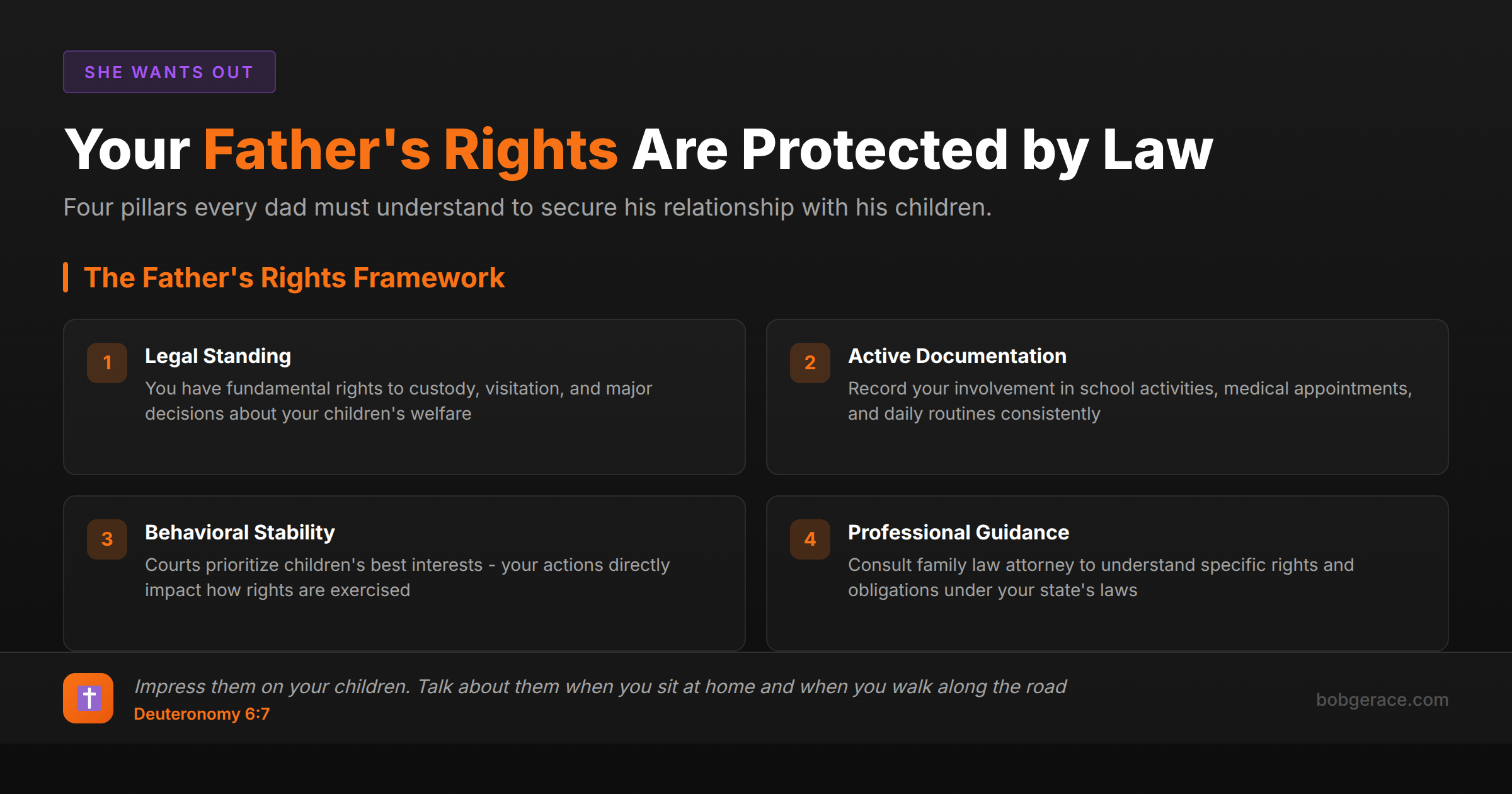
Your rights as a father are significant and legally protected, even during separation. You have the fundamental right to maintain a meaningful relationship with your children, including custody, visitation, and participation in major decisions about their welfare, education, and medical care. However, these rights come with corresponding responsibilities. Courts prioritize the children's best interests above all else, which means your behavior, stability, and commitment to their wellbeing will directly impact how these rights are exercised. The good news? Being proactive about understanding and protecting these rights while demonstrating consistent, loving parenting gives you the strongest possible position, regardless of what's happening in your marriage.
The Full Picture
Your fundamental parental rights include:
• Physical custody - where your children live and when • Legal custody - decision-making authority about education, healthcare, and welfare • Visitation rights - guaranteed time with your children even if you don't have primary custody • Access to information - school records, medical information, and involvement in important decisions
Here's what many fathers don't realize: Courts generally favor maintaining strong relationships between children and both parents. The old stereotype of fathers getting weekend visits while mothers get everything else is largely outdated in most jurisdictions.
Common mistakes that damage your case: • Moving out of the family home without a custody agreement in place • Using children as messengers or involving them in adult conflicts • Missing scheduled time with kids or being inconsistent • Speaking negatively about their mother in front of them • Failing to document your involvement in their daily lives
What strengthens your position: • Documented involvement - keep records of school events, medical appointments, and daily care you provide • Stable environment - maintain consistent housing, income, and routine • Cooperative communication - show willingness to work with their mother for the children's benefit • Child-focused decisions - demonstrate that every choice prioritizes their wellbeing over your convenience or feelings
Remember, these rights exist whether you're married, separated, or divorced. They don't disappear because your wife wants out of the marriage.
What's Really Happening
From a psychological perspective, fathers often underestimate their importance in their children's development and overestimate their legal vulnerability during separation. Research consistently shows that children benefit significantly from maintaining strong relationships with both parents, and courts increasingly recognize this.
The attachment disruption fathers fear most - losing their children - is largely preventable when handled correctly. Children form secure attachments through consistent, responsive caregiving, not through living arrangements. A father who remains emotionally available, reliable, and nurturing can maintain strong bonds regardless of custody arrangements.
However, the stress of separation often triggers protective behaviors that actually harm parental relationships. Many fathers become either overly permissive (trying to be the 'fun parent') or overly controlling (attempting to maintain authority through rules rather than relationship). Both approaches backfire.
The most psychologically healthy approach involves: • Maintaining normal parental boundaries and expectations • Processing your own emotional reactions away from the children • Focusing on their need for stability rather than your need for control • Recognizing that quality of time matters more than quantity
Children's developmental needs don't pause during family transitions. They still need structure, emotional safety, and parents who can regulate their own emotions while helping them process this difficult time. Fathers who understand this and respond accordingly often emerge from separation with stronger, not weaker, relationships with their children.
What Scripture Says
Scripture places tremendous value on the father's role and responsibility toward children. Deuteronomy 6:6-7 instructs: *'These commandments that I give you today are to be on your hearts. Impress them on your children. Talk about them when you sit at home and when you walk along the road, when you lie down and when you get up.'* This passage emphasizes the father's ongoing responsibility for spiritual and moral guidance.
Ephesians 6:4 provides crucial guidance: *'Fathers, do not exasperate your children; instead, bring them up in the training and instruction of the Lord.'* Even during separation, your role as spiritual leader and nurturer remains intact. This isn't about perfect circumstances - it's about faithful presence.
Psalm 127:3 reminds us that *'Children are a heritage from the Lord, offspring a reward from him.'* Your children are gifts entrusted to your care, not possessions to be won or lost in marital conflict. This perspective changes everything about how you approach custody and visitation.
1 Corinthians 13:4-7 defines love in action: *'Love is patient, love is kind... it is not self-seeking, it is not easily angered, it keeps no record of wrongs.'* Apply this directly to your parenting during this crisis. Your children need to see Christ's love demonstrated through your consistent, selfless care.
Proverbs 22:6 states: *'Start children off on the way they should go, and even when they are old they will not turn from it.'* Your influence on their character and faith doesn't diminish because of separation - it may become even more crucial.
God's design for fatherhood transcends legal arrangements. Your calling to love, guide, and protect your children remains unchanged regardless of your marital status.
What To Do Right Now
-
1
Document your current involvement in your children's lives - school activities, medical appointments, daily routines, and special moments
-
2
Consult with a family law attorney to understand your specific rights and obligations under your state's laws
-
3
Establish consistent routines and maintain stability in your interactions with the children during this uncertain time
-
4
Create a communication plan with your wife that keeps children out of adult conflicts while ensuring both parents stay informed
-
5
Begin keeping detailed records of all parenting time, communications, and any incidents that might affect custody decisions
-
6
Focus on being the best father possible right now - consistent, loving, and emotionally stable regardless of the marital situation
Related Questions
- How does moving out affect my legal position?
- What financial protections should I put in place?
- Should I get a lawyer now or wait?
- What do I document?
- How do I protect myself without escalating?
- What's the difference between separation and divorce legally?
- How do I tell the kids?
- How do I co-parent during this?
- What do I say when kids ask what's happening?
- How do I be a good dad through this?
Also find Bob on
Subscribe for weekly videos on Christian marriage.
Get a Coach on This Today
Your kids are watching how you handle this. A coach who knows your specific situation helps you protect your rights while staying the father they need.
Talk to Bob →