What do I document?
6 min read
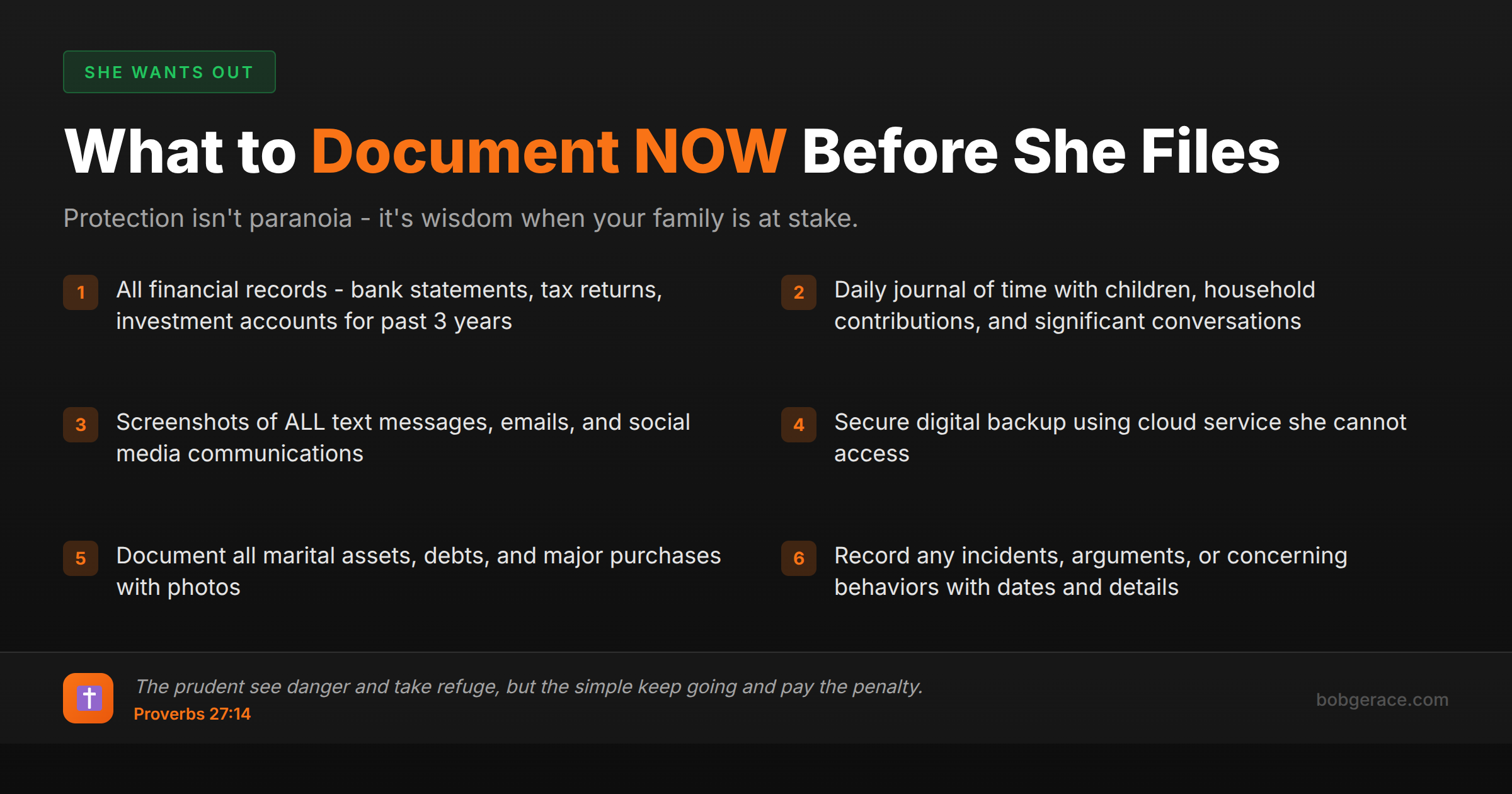
Start documenting everything now - and I mean everything. Financial records, communication with your wife, interactions with your kids, household expenses, and any incidents that could matter in court. This isn't about being vindictive; it's about protecting yourself and your children when emotions are high and memories get fuzzy. The harsh reality is that separation often becomes adversarial, even when it starts amicably. What seems unimportant today could be crucial evidence tomorrow. I've seen too many good men get blindsided because they trusted the process instead of protecting themselves. Documentation is your insurance policy against selective memory and changing narratives.
The Full Picture
Documentation during separation serves three critical purposes: protecting your parental rights, preserving financial evidence, and establishing a factual timeline that courts can rely on.
Financial Documentation is Non-Negotiable • Bank statements, credit card records, and investment accounts from the past 2-3 years • Tax returns, pay stubs, and business financial records • Evidence of all marital assets - real estate, vehicles, collectibles, retirement accounts • Records of who pays what bills and when • Documentation of any hidden accounts or suspicious financial activity
Parenting Documentation Protects Your Kids • Daily logs of time spent with children • School events, medical appointments, and activities you attend • Communication with teachers, coaches, and other caregivers • Evidence of your involvement in homework, bedtime routines, and daily care • Records of any concerning behavior from your spouse regarding the children
Communication Records Tell the Real Story Save every text, email, and voicemail. Screenshot social media posts. Keep a journal of verbal conversations with dates, times, and witnesses present. What seems like normal marital conflict today could be evidence of parental alienation or emotional abuse tomorrow.
The Biggest Mistake Men Make They assume their wife will be fair and reasonable throughout the process. Even good women can become different people under the stress and influence of divorce attorneys. Document now, while you still have access to information and before positions harden.
What's Really Happening
From a clinical perspective, the act of documentation serves both practical and psychological functions during separation. Research shows that individuals under extreme stress often experience memory distortions and selective recall - what psychologists call 'motivated forgetting' and 'confirmation bias.'
The trauma of separation activates our threat-detection systems, flooding the brain with stress hormones that impair memory formation and retrieval. This neurobiological reality means that even well-intentioned spouses may genuinely remember events differently than they occurred.
Documentation also provides what we call 'cognitive anchoring' - external reference points that help maintain psychological stability during chaos. The act of writing down facts and organizing information gives the brain a sense of control when everything feels out of control.
However, there's a psychological risk to over-documentation. Some individuals become hypervigilant, turning every interaction into potential evidence. This defensive stance can escalate conflict and prevent genuine reconciliation efforts. The goal is thorough documentation without becoming paranoid or adversarial.
Studies on high-conflict divorce show that couples who maintain detailed, factual records experience less gaslighting and emotional manipulation. When both parties know that interactions are being documented, behavior often becomes more civil and accountable.
From a therapeutic standpoint, documentation should feel protective rather than vengeful. It's about creating safety and clarity, not building a case for destruction.
What Scripture Says
Scripture emphasizes the importance of truth, wisdom, and proper planning, especially during difficult circumstances. While we hope for reconciliation, biblical wisdom calls us to be prudent and prepared.
Proverbs 27:14 reminds us: *"The prudent see danger and take refuge, but the simple keep going and pay the penalty."* Documentation isn't faithlessness - it's prudence. God expects us to use wisdom in protecting our families and resources.
Proverbs 21:5 teaches: *"The plans of the diligent lead to profit as surely as haste leads to poverty."* Careful documentation is diligent planning. Rushing into separation without proper records often leads to devastating financial and custody losses.
Luke 14:28 asks: *"Suppose one of you wants to build a tower. Won't you first sit down and estimate the cost to see if you have enough money to complete it?"* Jesus advocated for careful planning and counting the cost. Understanding your full financial picture requires thorough documentation.
1 Corinthians 14:33 declares: *"For God is not a God of disorder but of peace."* Proper documentation brings order to chaos and can actually reduce conflict by establishing clear facts rather than competing narratives.
Matthew 10:16 instructs us to be *"as shrewd as snakes and as innocent as doves."* This perfectly describes proper documentation - wise and protective, but not malicious or vengeful.
Proverbs 18:17 notes: *"In a lawsuit the first to speak seems right, until someone comes forward and cross-examines."* Documentation ensures that truth prevails over eloquent storytelling when decisions about your children and assets are being made.
What To Do Right Now
-
1
Gather all financial documents immediately - bank statements, tax returns, investment accounts, and business records for the past three years
-
2
Start a daily journal documenting your time with children, household contributions, and any significant conversations or incidents
-
3
Create a secure digital backup of all important documents using a cloud service your spouse cannot access
-
4
Screenshot and save all text messages, emails, and social media communications with your spouse
-
5
Document all marital assets including vehicles, real estate, collectibles, and personal property with photos and current values
-
6
Consult with a family law attorney to understand what specific evidence matters most in your state and situation
Related Questions
- How does moving out affect my legal position?
- What financial protections should I put in place?
- Should I get a lawyer now or wait?
- What are my rights regarding the children?
- How do I protect myself without escalating?
- What's the difference between separation and divorce legally?
- What evidence should I secure?
- Should I screenshot everything?
- What is 'parental alienation' and is it happening?
- How do I document concerning behavior without being paranoid?
Also find Bob on
Subscribe for weekly videos on Christian marriage.
Your Marriage Isn't a Template Case
Documentation matters, but what you document and how you use it depends on where your marriage actually is. A coach who knows your story helps you see what's noise and what's signal.
Talk to Bob →