She's turning the kids against me
6 min read
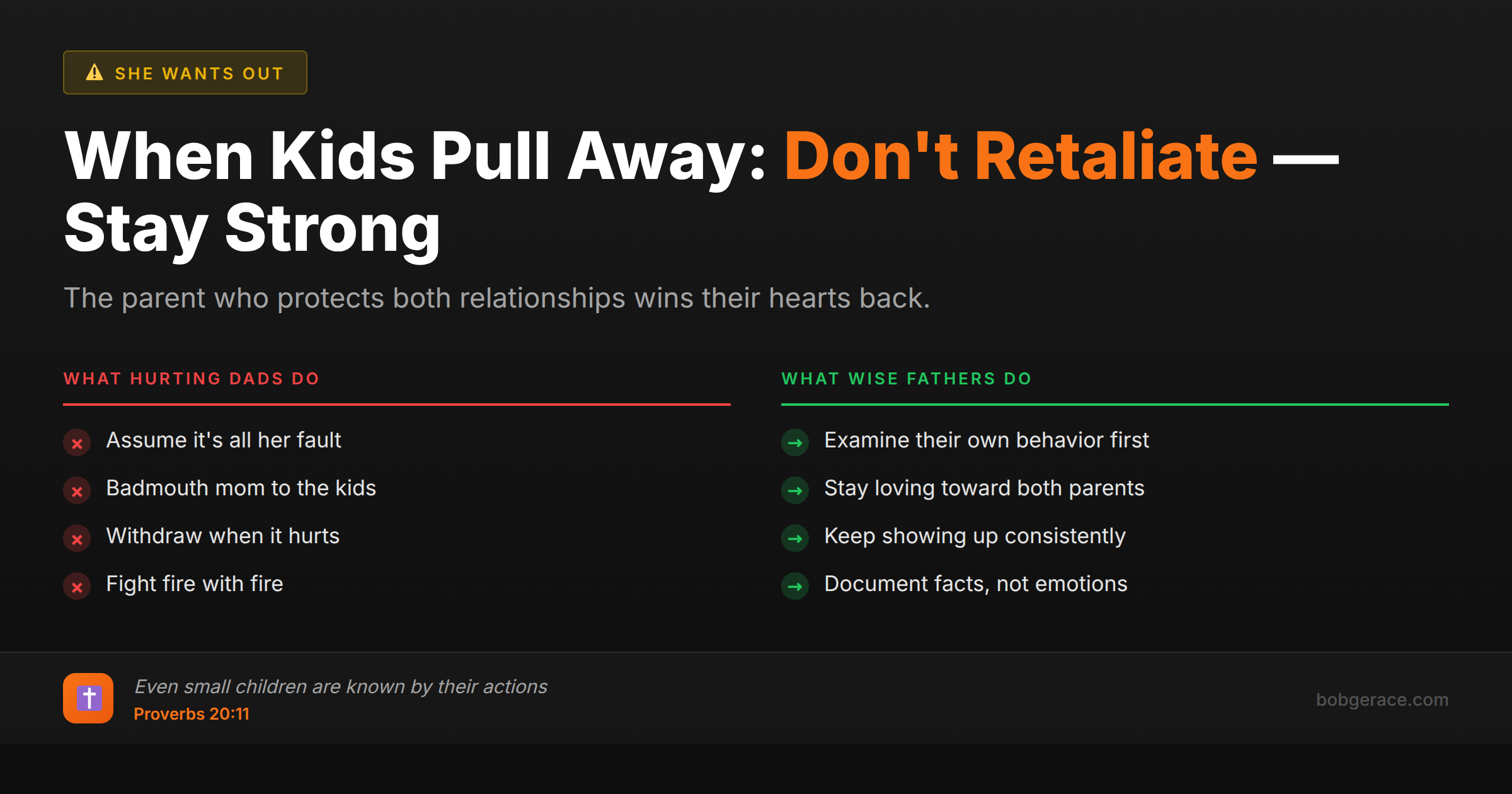
I hear this from men every week, and the pain in their voices is unmistakable. Whether it's intentional manipulation or just her processing her anger in front of the kids, watching your children pull away feels like having your heart ripped out. But here's what I need you to understand: your response in this moment will determine whether you lose your kids or strengthen your bond with them forever. The temptation is to fight fire with fire - to defend yourself, blame her, or worse, start your own campaign against her. Don't. Your children are watching how you handle this crisis, and they're forming opinions about what kind of man you are. This is your opportunity to show them strength, character, and unconditional love, even when it costs you everything.
The Full Picture
When you feel like she's turning the kids against you, you're dealing with one of the most complex and painful dynamics in a broken marriage. This isn't just about your relationship with her anymore - it's about your legacy as a father.
There are usually three things happening simultaneously:
• Your wife is processing her pain and may not realize how her words about you affect the children • The kids are trying to make sense of why their world is falling apart • You're feeling desperate and reactive, which often makes the situation worse
Here's what most men get wrong: they focus on what she's doing instead of what they can control. You start documenting every slight, every snide comment she makes about you in front of the kids. You build a case in your mind about her toxicity. But your children don't need a prosecutor - they need a father.
The reality is that children naturally side with the parent who seems most hurt or vulnerable. If your wife is crying, angry, or playing victim, kids will instinctively want to comfort and protect her. This doesn't mean they love you less - it means they're confused and scared.
Your job isn't to compete for their loyalty. Your job is to be so consistent, loving, and trustworthy that when the dust settles, they know who you really are. This requires a level of emotional maturity that most men haven't developed, especially in crisis. But this is where boys become men and fathers become heroes in their children's eyes.
What's Really Happening
From a clinical perspective, what you're experiencing may involve elements of parental alienation, but it's crucial to understand the difference between alienation and estrangement. True parental alienation involves deliberate, systematic attempts to damage the child's relationship with the other parent. However, what often happens during marital crisis is more complex.
Children are incredibly sensitive to emotional dysregulation in their caregivers. When parents are in conflict, children often develop what we call 'protective identification' with the parent they perceive as more vulnerable or distressed. This isn't manipulation - it's survival psychology.
Research shows that children of divorce who maintain positive relationships with both parents have significantly better outcomes across all measures of wellbeing. However, the parent who remains emotionally regulated and consistent during the crisis typically maintains stronger long-term relationships with their children.
Neurologically, children's brains are still developing executive function and emotional regulation. They cannot process adult relationship dynamics the way adults can. When exposed to high conflict, their nervous systems go into survival mode, and they'll align with whoever feels safest in the moment.
The most effective intervention is what we call 'therapeutic parenting' - maintaining your role as the stable, consistent parent regardless of what the other parent does. This means managing your own emotional dysregulation, avoiding defensive reactions, and focusing entirely on being a secure attachment figure for your children. Studies consistently show this approach preserves and often strengthens parent-child bonds through family crisis.
What Scripture Says
Scripture gives us profound wisdom for navigating this painful situation. Proverbs 15:1 tells us, *"A gentle answer turns away wrath, but a harsh word stirs up anger."* This isn't just about your interactions with your wife - it's about how you respond to your children when they seem to be pulling away from you.
1 Corinthians 13:4-7 defines love in a way that directly applies to this crisis: *"Love is patient, love is kind. It does not envy, it does not boast, it is not proud. It does not dishonor others, it is not self-seeking, it is not easily angered, it keeps no record of wrongs. Love does not delight in evil but rejoices with the truth. It always protects, always trusts, always hopes, always perseveres."* This is your blueprint for loving your children through this season.
Matthew 5:44 challenges us to *"love your enemies and pray for those who persecute you."* Even if your wife is actively working against your relationship with your children, your call is to respond with love - not for her sake, but for your children's sake and your own spiritual health.
Perhaps most importantly, Ephesians 6:4 instructs fathers: *"Do not exasperate your children; instead, bring them up in the training and instruction of the Lord."* This means your response to this crisis should draw your children closer to God's character, not push them away from it.
Psalm 37:7 reminds us to *"be still before the Lord and wait patiently for him."* Your vindication and the restoration of your relationships with your children may take time, but God sees everything and will honor your faithfulness.
Finally, Romans 12:21 gives us our strategy: *"Do not be overcome by evil, but overcome evil with good."* This is how you win back your children's hearts - not through competition or defense, but through consistent, unconditional love.
What To Do Right Now
-
1
Stop defending yourself to your children and start listening to their hearts and fears
-
2
Document interactions calmly for legal purposes, but never let your children see you building a case against their mother
-
3
Create consistent, safe space in your time with them where they can express any feelings without judgment
-
4
Refuse to speak negatively about their mother in their presence, no matter what she says about you
-
5
Focus on being the most emotionally stable and predictable person in their lives right now
-
6
Seek professional support for yourself to process your pain away from your children
Related Questions
- How do I tell the kids?
- What do I say when kids ask what's happening?
- How do I co-parent during this?
- Kids are caught in the middle — how do I protect them?
- What is 'parental alienation' and is it happening?
- How do I not badmouth her when I'm furious?
- I can't control my anger
- How do I stop exploding?
- What does healthy coping look like?
- How do I become emotionally intelligent?
Also find Bob on
Subscribe for weekly videos on Christian marriage.
Your Kids Are Watching How You Handle This
This isn't a situation you can navigate from a script. A coach who knows your specific story can help you protect your relationship with your children while you stabilize your marriage.
Talk to Bob →