What if she only touches me out of habit?
5 min read
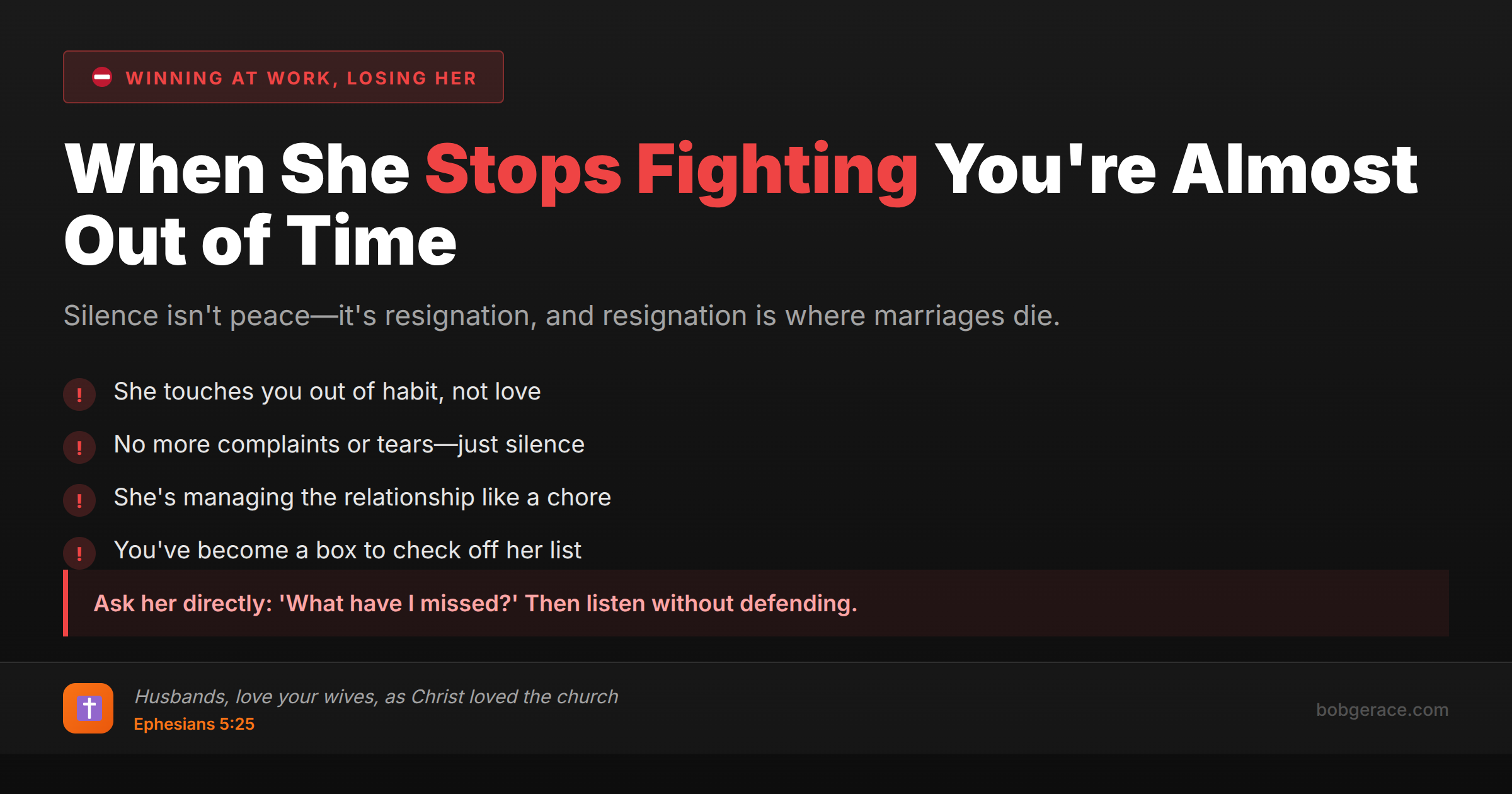
When your wife touches you only out of habit—a quick peck, a hand on your shoulder as she passes—you're witnessing something more dangerous than anger: indifference. She's not fighting anymore. She's not complaining. She's managing the relationship like a chore list, and you've become a box to check. This is often the last stage before she emotionally exits. The early warning signs were louder: complaints, tears, requests for connection. You likely dismissed them as nagging or emotional overreaction. Now she's quiet. She's stopped expecting you to respond. That silence isn't peace—it's resignation. And resignation is where marriages die.
The Quiet Withdrawal You Didn't See Coming
Most men wake up when their wife says she wants out. But the signs started months or years earlier. She stopped initiating sex. She stopped asking about your day. She stopped crying when you were emotionally unavailable. She built a life that doesn't require you—friends, hobbies, routines that fill the space you used to occupy.
You probably thought things were fine. No fighting means no problem, right? Wrong. Fighting means she still cares enough to engage. Indifference means she's done engaging. The touch that remains—the quick kiss goodbye, the hand on your back at church—isn't affection. It's performance. She's maintaining the appearance of marriage while emotionally preparing to leave it.
This pattern is common among high-performing men. You're crushing it at work, providing well, checking the boxes. You assume that because you're not yelling, cheating, or drinking, you're a good husband. But provision isn't presence. Your wife doesn't need another business partner. She needs a man who sees her, pursues her, and stays emotionally engaged even when it's uncomfortable.
The tragedy is that you likely love her. You're just operating from a playbook that worked everywhere else: perform, achieve, solve problems, avoid conflict. That playbook destroys intimacy. Your wife doesn't want you to fix her. She wants you to feel with her. And when you can't or won't, she stops reaching. The touch becomes mechanical. The marriage becomes a shell.
Why Indifference Is More Dangerous Than Anger
From an attachment perspective, habitual touch without emotional connection signals disorganized attachment or complete deactivation. Your wife's nervous system has learned that reaching for you results in disappointment, so it stops reaching. This is protective, not punitive. Her body is conserving energy by shutting down the hope that you'll respond.
Anger and complaint are signs of protest—she's still fighting for the relationship. Indifference is despair. Dr. John Gottman's research shows that contempt and stonewalling predict divorce, but underneath both is this quiet withdrawal. She's not stonewalling to punish you. She's protecting herself from repeated relational injury.
Many successful men operate in a hyperaroused state at work—high cortisol, high adrenaline, constant problem-solving—then come home and collapse into hypoarousal. You're numb, checked out, scrolling your phone. Your wife experiences this as abandonment. She's living with a ghost. The touch that remains is her attempt to keep the structure intact while the foundation crumbles.
Resentment builds in silence. Every time she reached and you didn't respond, a small deposit went into the resentment account. Now the balance is so high she's stopped making deposits. She's not angry anymore. She's just done. This is the most dangerous place a marriage can be, because there's no energy left to fight for it.
Love Is Not a Checklist
Ephesians 5:25 says, "Husbands, love your wives, as Christ loved the church and gave himself up for her." Christ didn't love the church from a distance. He didn't provide for her while remaining emotionally unavailable. He pursued, sacrificed, and stayed present even when it cost him everything.
You may be providing well. You may not be yelling or cheating. But are you loving her? Love is not a checklist. It's not "I worked hard, paid the bills, didn't cheat, so I'm good." Love is presence. It's pursuit. It's emotional engagement even when you're tired, even when it's uncomfortable, even when you'd rather scroll your phone.
Proverbs 5:18-19 calls husbands to be captivated by their wives. Not out of duty. Not out of habit. Captivated. When was the last time you pursued her with that kind of intentionality? When did you last touch her not because you wanted sex, but because you wanted her?
God calls you to lead your home, but leadership isn't control or performance. It's sacrificial love. It's laying down your need to be right, your need to avoid discomfort, your need to win. It's becoming the kind of man who can stay emotionally present even when she's hurt, angry, or distant. That's the love Christ modeled. That's the love your marriage needs.
Action Steps
-
1
Stop assuming silence means peace. Ask her directly: "I've noticed we're not as connected. What have I missed?" Then listen without defending.
-
2
Touch her with no agenda. Put your hand on her back while she's cooking. Kiss her forehead before bed. No expectation of sex. Just presence.
-
3
Identify one way you've been emotionally unavailable. Name it out loud to her: "I've been checked out after work. I see that now."
-
4
Schedule 20 minutes of undistracted time with her daily. No phones, no TV, no kids. Just talk. Let her lead the conversation.
-
5
Get help before she's completely done. Call Bob or join Wingman. Indifference doesn't reverse on its own—it requires a different kind of man.
Related Questions
Also find Bob on
Subscribe for weekly videos on Christian marriage.
Don't Wait Until She's Done
Indifference is the last stage before she leaves. If your wife has stopped complaining, stopped reaching, or only touches you out of habit, you're in the danger zone. Bob helps men rebuild connection before it's too late.
Talk to Bob →