What if she stopped asking me to change?
6 min read
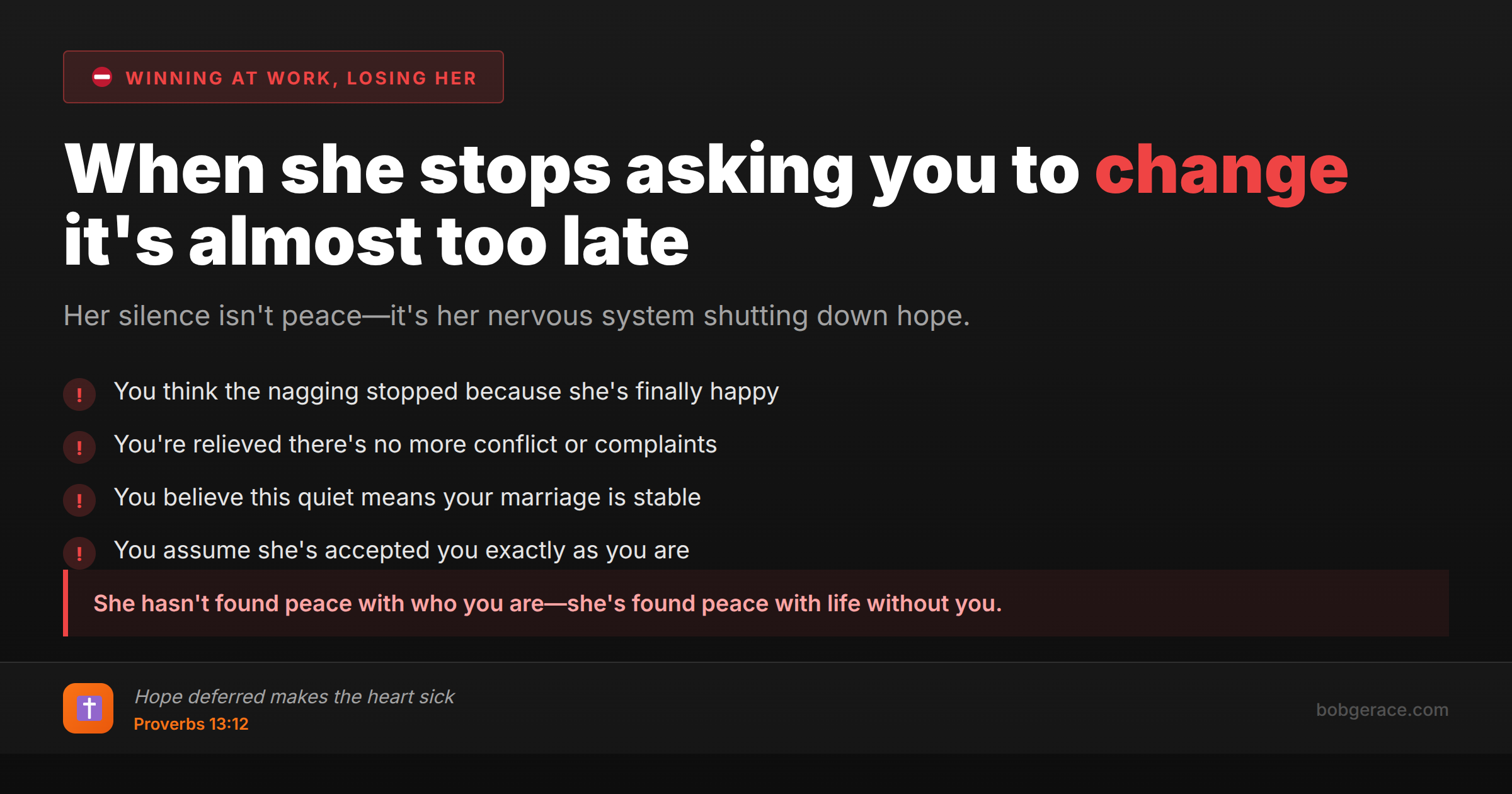
When your wife stops asking you to change, she hasn't found peace with who you are. She's found peace with the idea of life without you. This is one of the most dangerous shifts in a marriage, and most men miss it completely because it feels like relief. No more nagging. No more complaints. No more tension. But what you're experiencing isn't harmony—it's her nervous system shutting down hope. She's stopped investing emotional energy in outcomes she no longer believes are possible. The asking wasn't the problem. Her silence is. This shift often happens after months or years of unmet bids for connection, dismissed concerns, or promises that didn't turn into changed behavior. She didn't stop caring overnight. She stopped asking because asking hurt more than accepting. And by the time you notice the quiet, she's often already begun the emotional work of detachment. You're not in a stable marriage. You're in the final stage before she tells you it's over.
What It Looks Like When She Stops Asking
She used to bring things up. Maybe she asked you to be more present with the kids. Maybe she wanted you to put your phone down at dinner. Maybe she told you she felt alone, even when you were in the same room. And you probably thought, "She's overreacting," or "I'll get to it," or "She knew I was busy when she married me." So nothing changed. And she asked again. And again. Until one day, she didn't.
Now the house runs smoother. She doesn't start conversations about feelings. She doesn't ask where you've been or why you're late. She's polite, functional, even friendly in front of the kids. But there's no warmth. No pursuit. No frustration, either. She's not mad—she's done. She's made peace with managing her own emotional life, planning her own future, and lowering her expectations of you to zero. She might still be physically present, but emotionally, she's already gone.
This is what therapists call "detachment." It's not a strategy. It's a survival response. Her nervous system has learned that hoping for you to change causes pain, so it stops hoping. She's not withholding to punish you. She's protecting herself from the repeated disappointment of being unseen. And here's the part most men don't get: by the time she stops asking, she's often six to eighteen months ahead of you in the decision to leave. You think the marriage is fine because the conflict stopped. She knows it's over because the connection did.
The Neuroscience of Giving Up
When someone repeatedly reaches out and gets no response, their brain starts treating that person as emotionally unsafe. It's not a conscious choice—it's a nervous system adaptation. Your wife's ventral vagal system, which governs social engagement, connection, and hope, begins to shut down. She moves into a dorsal vagal state: shutdown, conservation, disconnection. She's not angry anymore because anger requires energy and belief that things can change. Indifference is what happens when the brain stops wasting resources on a losing bet.
This is compounded by what attachment researchers call "protest-despair-detachment." First, she protested—she told you what she needed. You didn't respond, or you responded inconsistently. Then came despair—she felt the pain of being unseen, unloved, or unimportant. Finally, detachment: her system stops sending the signal because it has learned the signal doesn't work. She's not testing you. She's not playing games. She's conserving her emotional survival.
Men often interpret this as "she's finally chilling out" or "we're past that rough patch." What's actually happening is learned helplessness. She's learned that her efforts don't produce change, so she stops trying. The absence of conflict feels like progress to you. To her, it's the absence of hope. And the longer this goes on, the harder it is to reverse. Her brain has built new neural pathways around the belief that you are not a source of safety, connection, or partnership. You're now a roommate she's planning to leave.
The Danger of a Hardened Heart
Proverbs 13:12 says, "Hope deferred makes the heart sick, but a longing fulfilled is a tree of life." Your wife's heart isn't sick because she's weak or dramatic. It's sick because hope was deferred—over and over. She asked. You delayed. She reached. You were busy. She longed for connection. You offered logistics. And now her heart has moved from sickness to something worse: hardness. Not because she's cold, but because repeated disappointment builds scar tissue.
Jesus warns about hardened hearts in Matthew 19 when the Pharisees ask about divorce. He points back to God's design: one flesh, intimate partnership, mutual pursuit. But He also acknowledges that hearts grow hard. That hardness doesn't usually happen in one moment. It's the result of a thousand small neglects, a thousand unmet longings, a thousand times she felt unseen by the man who vowed to cherish her. When she stops asking you to change, her heart isn't soft and open anymore. It's fortified. And you can't command your way back in.
The call here isn't to guilt. It's to grief and repentance. Grief over what's been lost. Repentance that leads to actual change, not just remorse. God is in the business of softening hearts—but not while you're still operating in the patterns that hardened hers in the first place. She stopped asking because asking didn't work. If you want her to ask again, you'll need to become a man who responds before she has to.
Action Steps
-
1
Stop interpreting her silence as peace. Name it for what it is: detachment. Write down three ways she used to pursue you that she doesn't anymore.
-
2
Own the pattern without defensiveness. Say out loud, to her: "I know you've asked me to change before and I didn't. I understand why you stopped asking. I'm not asking you to hope in me right now. I'm telling you I'm changing whether you believe it or not."
-
3
Get into your own work immediately—coaching, therapy, a men's group, Wingman. Don't wait for her permission or her belief. She needs to see change over time, not promises.
-
4
Start doing the things she used to ask for without announcing them. If she wanted presence, be present. If she wanted emotional availability, start learning what that actually means. Let your actions rebuild safety, not your words.
-
5
Prepare for the long game. If she's detached, it took months or years to get here. It will take months of consistent, humble, transformed behavior for her to even consider re-engaging. Your job isn't to win her back this week. It's to become a man worth reconnecting with.
Related Questions
Also find Bob on
Subscribe for weekly videos on Christian marriage.
She's Not Coming Back on Her Own
If your wife has stopped asking you to change, you're closer to the end than you think. I work with men in exactly this spot—where silence has replaced conflict and detachment has replaced hope. Let's talk before it's too late.
Talk to Bob →