Why does she seem happier when I am not around?
6 min read
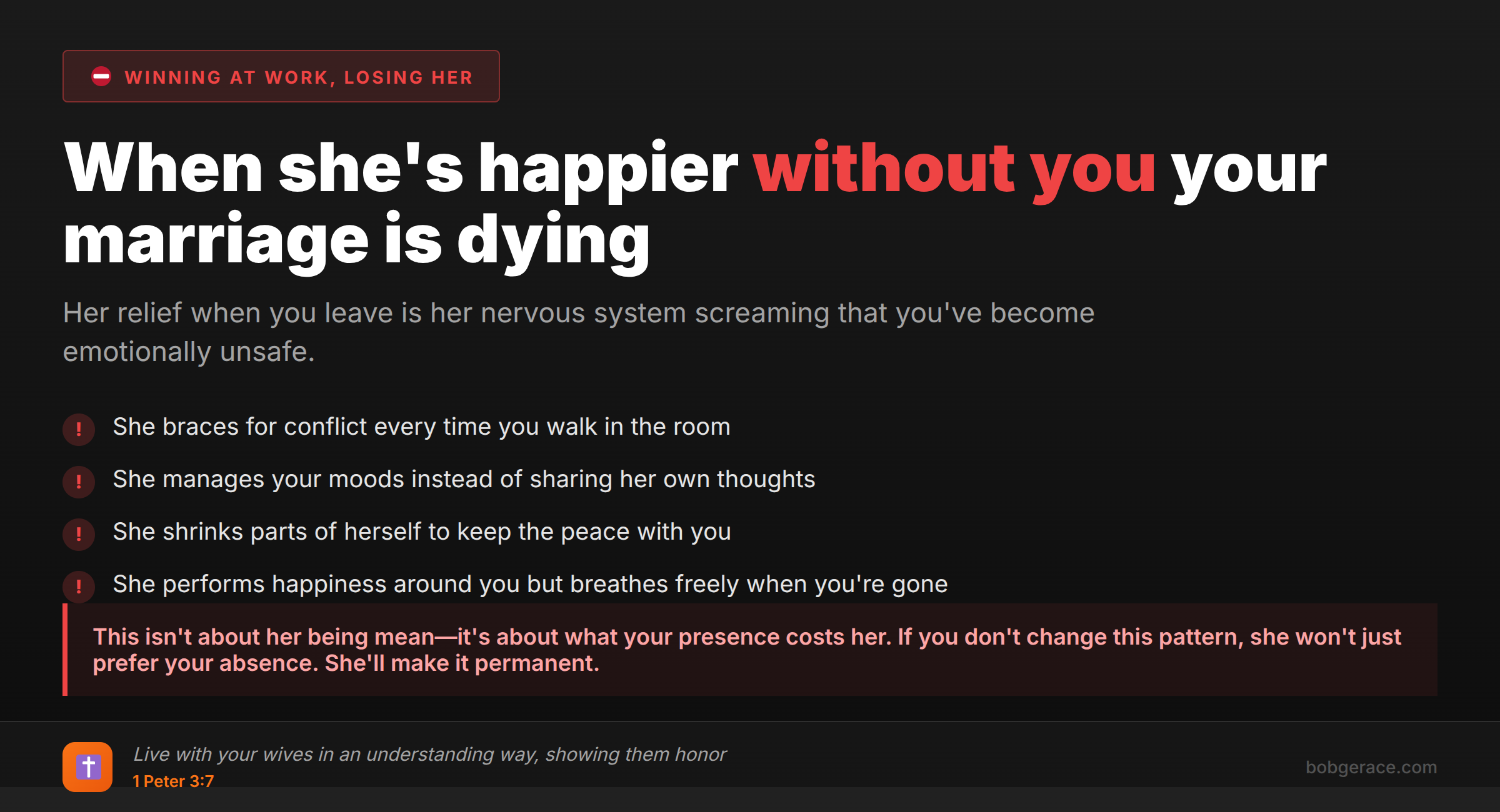
If your wife seems happier when you're not around, it's because your presence has become a source of stress, tension, or emotional labor instead of safety and connection. This isn't about her being mean or checked out—it's about what her nervous system has learned. When you're home, she might feel criticized, dismissed, ignored, or pressured. She might brace for conflict, manage your mood, or shrink parts of herself to keep the peace. When you're gone, she can breathe. She can be herself. She doesn't have to perform, defend, or tiptoe. The relief you're seeing isn't about your absence—it's about the end of the stress your presence creates. This is one of the clearest signs that your marriage is in serious trouble, and most men miss it because it doesn't look like a fight. She's not yelling. She's not slamming doors. She's just... lighter when you leave. And that lightness is her nervous system telling you that you've become unsafe. Not physically dangerous, but emotionally unsafe. She's learned that being around you costs her peace, energy, or authenticity. And if that pattern continues, she won't just prefer your absence—she'll make it permanent.
What It Looks Like When Your Presence Becomes a Problem
You walk in the door after work, and the energy shifts. She was laughing with the kids, music playing, relaxed. Now she's quieter. Busier. Less eye contact. She's not mad, exactly—just... different. You notice she lights up when she's on the phone with her friends. She's animated, funny, fully herself. But when you try to talk to her, she's flat. Short answers. Polite, but distant. She seems more alive when you're traveling for work. More engaged with the kids when you're not home. More relaxed on the weekends you're gone.
At first, you might rationalize it. "She's just stressed." "She needs space." "She's always been more introverted." But deep down, you know it's more than that. She's not avoiding people—she's avoiding you. She doesn't dread her friends. She doesn't tense up around her sister. She doesn't go quiet when her coworkers walk in the room. It's specific. It's you. And the more you notice it, the more it stings. Because you're working hard, providing, doing what you thought you were supposed to do. And somehow, your presence—the thing that should bring her comfort—brings her stress.
This dynamic doesn't develop overnight. It's the result of months or years of interactions where she felt unseen, unheard, criticized, or dismissed. Maybe you've been irritable and she's learned to stay out of your way. Maybe you've been distracted and she's learned not to expect your attention. Maybe you've been critical and she's learned to hide parts of herself. Maybe you've been emotionally unavailable and she's learned to meet her own needs. Whatever the pattern, her nervous system has adapted. And now, your presence doesn't signal safety or connection. It signals work, tension, or loneliness. She's happier when you're gone because being alone is less lonely than being with you.
When Presence Becomes a Threat Response
Your wife's nervous system is designed to detect safety and threat. When she's around someone who makes her feel seen, valued, and emotionally safe, her ventral vagal system activates—she's calm, connected, open. When she's around someone who makes her feel criticized, dismissed, or invisible, her sympathetic nervous system kicks in—fight or flight. If that happens often enough, she moves into a dorsal vagal state: shutdown, disconnection, numbing. She's not choosing to be distant. Her body is protecting her from repeated relational injury.
This is what therapists call "ambient anxiety." She's not anxious about a specific thing you're doing in the moment. She's anxious about the overall experience of being around you. Maybe you've been critical of how she parents, how she spends money, how she keeps the house. Maybe you've been dismissive when she shares feelings. Maybe you've been irritable, and she's learned to manage your mood. Maybe you've been emotionally absent, and she's tired of trying to pull you into connection. Whatever the pattern, her body has learned: when he's here, I'm not safe to be myself.
The result is that she starts to associate your presence with a low-grade stress response. She's not consciously thinking, "I don't want him around." But her body is saying, "Threat. Manage. Protect." So she becomes smaller, quieter, more guarded. And when you leave, that stress lifts. She can exhale. She can laugh. She can be the version of herself that doesn't have to defend, perform, or brace. If you're seeing this, it's not because she's cold or selfish. It's because your relational patterns have trained her nervous system to experience you as a source of dysregulation, not co-regulation. And that's fixable—but only if you're willing to own it and change it.
The Call to Be a Source of Life, Not Stress
In 1 Peter 3:7, husbands are told to live with their wives in an understanding way, showing them honor, so that their prayers may not be hindered. The word "understanding" here means knowledge, awareness, attentiveness. It's not passive. It's active study of who she is, what she needs, how she's wired. And the warning is serious: if you're not doing this, your spiritual life is hindered. Why? Because you can't be in right relationship with God while being in wrong relationship with your wife. If she's happier when you're gone, you're not living with her in an understanding way. You're living with her in a way that makes her want to escape.
Proverbs 14:1 says, "The wisest of women builds her house, but folly with her own hands tears it down." The same is true for men. A wise man builds a home where his wife feels safe, seen, and celebrated. A foolish man tears it down—not with violence or cruelty, but with neglect, criticism, or emotional absence. If your presence makes her tense, you're tearing down what you're supposed to be building. And the cost isn't just relational—it's spiritual. God designed marriage to be a picture of Christ and the church. Christ's presence brings life, peace, and freedom. If your presence brings stress, you're not reflecting Him.
The good news is that God is in the business of transformation. You don't have to stay the man whose presence makes his wife shrink. You can become the man whose presence makes her come alive. But that requires humility, repentance, and a willingness to do deep work on yourself—not to manipulate her into staying, but because it's the right thing to do. Because that's the kind of man God calls you to be. And because your marriage, your family, and your own soul depend on it.
Action Steps
-
1
Stop denying what you're seeing. If she's lighter, freer, or more herself when you're not around, that's data. Don't defend. Don't rationalize. Just acknowledge it.
-
2
Ask yourself: What is it like to be on the other side of me? Am I critical? Irritable? Distracted? Dismissive? Emotionally absent? Write down three patterns you know contribute to her stress.
-
3
Own it with her, but don't make it her job to fix you. Say something like: "I've noticed you seem happier when I'm not around. I don't blame you. I know I've been hard to be around. I'm working on that, and I'm not asking you to coach me through it."
-
4
Get into real work—coaching, therapy, a men's group that does more than complain about women. You need to understand why you've become a source of stress and how to become a source of safety. This isn't a weekend project. It's months of intentional change.
-
5
Change your behavior and give it time. Don't expect her to relax around you after one good week. Her nervous system needs to see consistent, sustained change before it will recalibrate. Your job is to become safe, whether she ever softens or not.
Related Questions
Also find Bob on
Subscribe for weekly videos on Christian marriage.
Become the Man She Wants to Be Around
If your wife is happier when you're gone, your marriage is in crisis—even if it doesn't look like it yet. I work with men who've become sources of stress instead of safety, and I help them transform before it's too late.
Talk to Bob →