Can God heal what happened to me?
6 min read
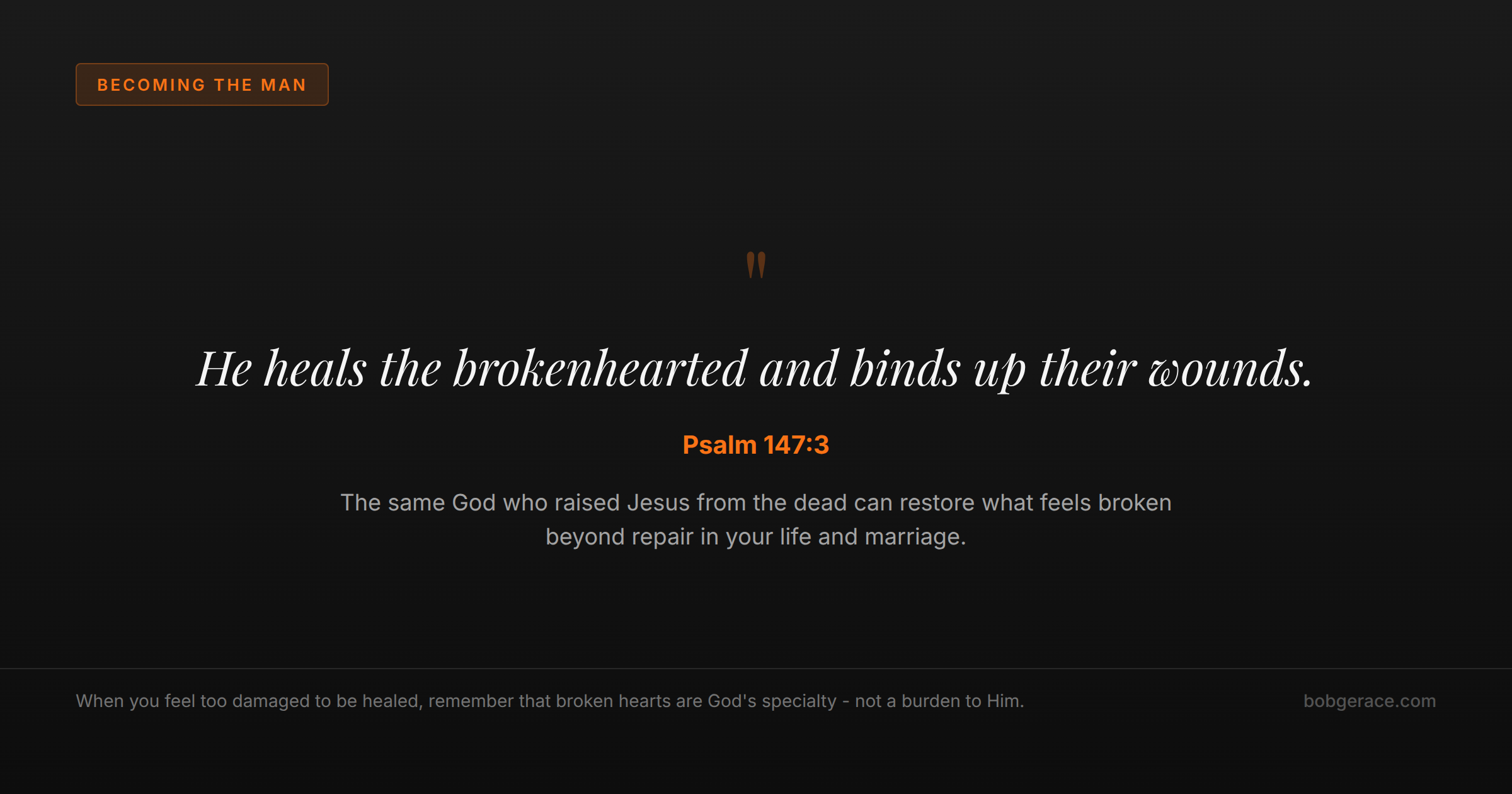
Yes, God absolutely can heal what happened to you. The same God who raised Jesus from the dead has the power to restore what feels broken beyond repair in your life and marriage. This doesn't mean healing is always instant or looks the way we expect, but God specializes in bringing beauty from ashes and strength from weakness. Healing often involves both God's supernatural work and practical steps of growth, therapy, and restored relationships. Your past doesn't define your future, and what feels impossible to you is completely possible with God. He's not intimidated by your deepest wounds or most complicated situation.
The Full Picture
Here's what I want you to understand: God is in the business of healing broken things. That's literally what the gospel is about - taking what's shattered and making it whole again.
But let's be honest about what healing looks like. It's rarely the instant, dramatic transformation we see in movies. More often, it's a process that involves:
- God's supernatural intervention working in ways you can't see - Your active participation in the healing process - Professional help when trauma requires clinical expertise - Time for wounds to properly close and scars to form - Community support from people who can walk with you
I've seen God heal marriages that everyone said were finished. I've watched Him restore trust that seemed permanently broken. I've witnessed Him bring peace to people tormented by their past for decades.
The key is understanding that healing doesn't mean forgetting or pretending it never happened. It means the wound no longer controls your life, your choices, or your relationships. It means you can think about what happened without being consumed by it.
Sometimes God heals the trauma itself - removing triggers, nightmares, or emotional pain. Sometimes He heals around it - giving you strength to carry what remains while living fully. Both are legitimate forms of divine healing.
Your spouse needs to understand this too. If they're waiting for you to "just get over it," they're missing how healing actually works. Recovery takes time, patience, and often professional guidance alongside prayer and faith.
What's Really Happening
From a clinical perspective, healing from trauma involves rewiring neural pathways that were formed during harmful experiences. This is both a psychological and physiological process that takes time and intentional work.
When we experience trauma, our brains create protective mechanisms that can persist long after the danger has passed. These might include hypervigilance, emotional numbing, or triggered responses that seem disproportionate to current situations.
The good news is that neuroplasticity - the brain's ability to form new neural connections - means healing is genuinely possible at any age. Through therapy modalities like EMDR, cognitive behavioral therapy, or trauma-focused approaches, we can help the brain process and integrate traumatic memories in healthier ways.
What's fascinating is how this aligns with spiritual healing. When clients engage both their faith and evidence-based therapeutic interventions, I consistently see more comprehensive and lasting recovery. Prayer, community support, and belief in God's healing power create an environment where clinical work can be even more effective.
It's important to understand that seeking professional help isn't a lack of faith - it's stewarding the healing resources God has provided. Just as you'd see a doctor for a broken bone, complex trauma often requires specialized clinical expertise alongside spiritual support.
I encourage couples to approach healing as a team effort. The traumatized partner needs patience and professional support, while the supporting spouse benefits from understanding trauma's impact and learning how to provide appropriate care without enabling unhealthy patterns.
What Scripture Says
Scripture is absolutely clear about God's heart for healing and restoration:
"He heals the brokenhearted and binds up their wounds." - Psalm 147:3
God doesn't just heal physical ailments - He specifically addresses broken hearts and deep wounds. This is His specialty.
"And we know that in all things God works for the good of those who love him, who have been called according to his purpose." - Romans 8:28
Notice it doesn't say all things are good, but that God works in all things for good. Even your worst experiences can become part of God's redemptive plan.
"Therefore, if anyone is in Christ, the new creation has come: The old has gone, the new is here!" - 2 Corinthians 5:17
Your identity isn't defined by what happened to you. In Christ, you are fundamentally a new creation.
"'For I know the plans I have for you,' declares the Lord, 'plans to prosper you and not to harm you, to give you hope and a future.'" - Jeremiah 29:11
God's plans for your life haven't been derailed by your past. He still has good plans for your future.
"Come to me, all you who are weary and burdened, and I will give you rest." - Matthew 11:28
Jesus specifically invites those carrying heavy burdens to find rest in Him.
"But he said to me, 'My grace is sufficient for you, for my power is made perfect in weakness.'" - 2 Corinthians 12:9
Even if complete healing doesn't come this side of heaven, God's grace is enough to sustain you and His power works through your weakness.
What To Do Right Now
-
1
Pray specifically for healing - Ask God to heal what happened to you, and be open to how He might choose to do it
-
2
Consider professional counseling - Trauma often requires specialized therapeutic intervention alongside prayer
-
3
Tell your spouse what you need - They can't support your healing if they don't understand what helps and what hurts
-
4
Connect with safe community - Find people who can walk with you through the healing process without judgment
-
5
Start journaling your progress - Document small improvements so you can see God's work over time
-
6
Practice self-compassion - Healing takes time, and beating yourself up for not being "better" yet only slows the process
Related Questions
- What does 'new creation' mean for my history?
- What is redemption of my story?
- How do I honor my parents while breaking from their patterns?
- What does healing from the past require spiritually?
- What is the role of deliverance vs. sanctification?
- How do generational patterns work spiritually?
- What is 'betrayal trauma' and do I have it?
- What does trauma recovery look like?
- Is my suffering redemptive?
- How do I trust a God who let this happen?
Also find Bob on
Subscribe for weekly videos on Christian marriage.
Bring Your Story to a Coach
Healing isn't one-size-fits-all. A coach who knows your specific wounds and your actual marriage can help you walk this out without guessing.
Talk to Bob →