What does healing from the past require spiritually?
6 min read
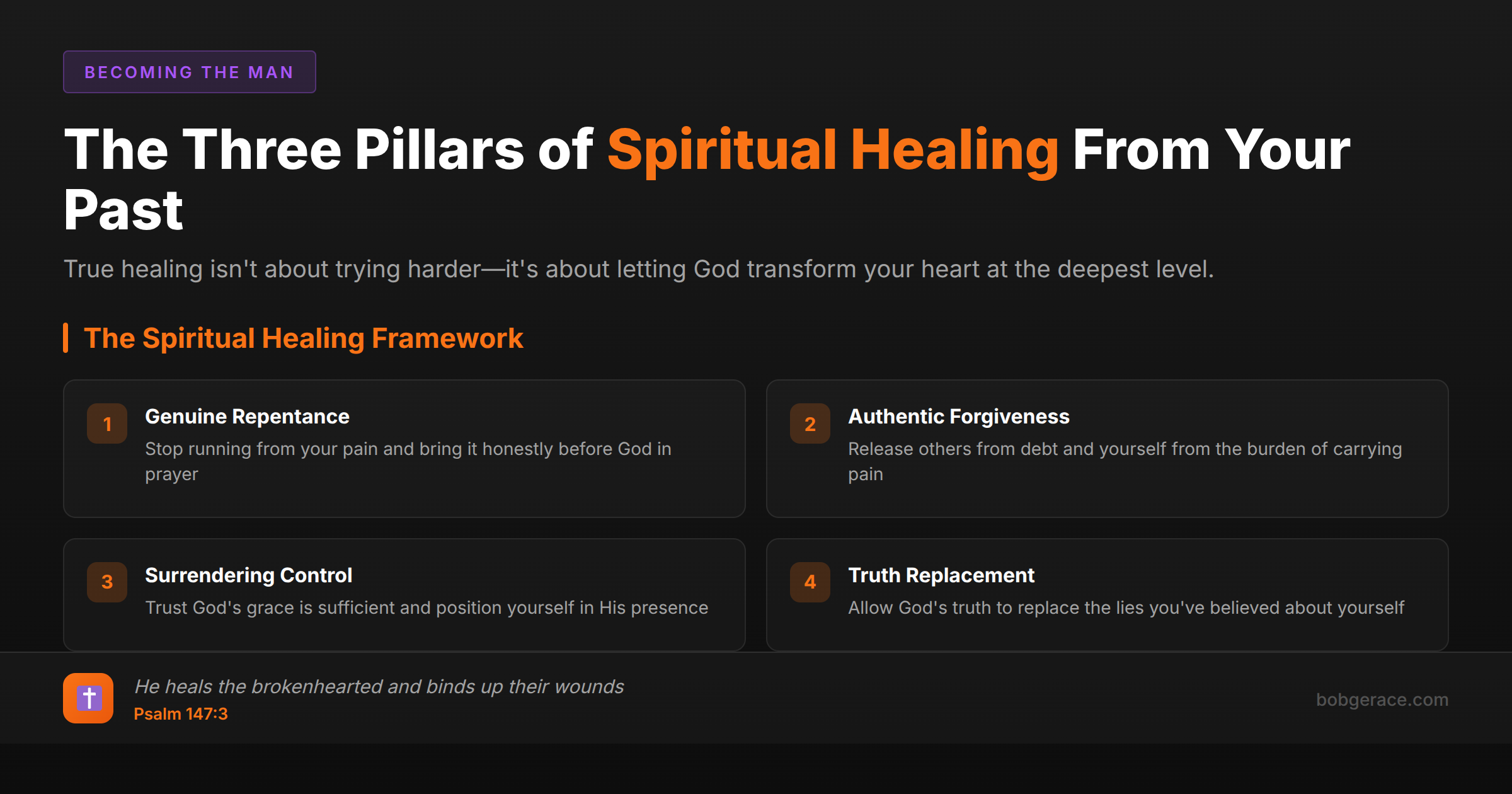
Spiritual healing from the past requires three foundational elements: genuine repentance, authentic forgiveness, and surrendering control to God. This isn't about positive thinking or trying harder—it's about allowing God to transform your heart at the deepest level. True healing begins when you stop running from your pain and bring it honestly before God. It requires you to face the reality of your wounds while trusting that God's grace is sufficient for your healing. The process involves releasing others from the debt of their wrongs against you and releasing yourself from the burden of carrying that pain. This spiritual work can't be rushed or forced—it happens as you consistently position yourself in God's presence and allow His truth to replace the lies you've believed about yourself, others, and your future.
The Full Picture
Here's what most people miss about spiritual healing: it's not about forgetting what happened or pretending it doesn't hurt. Real spiritual healing acknowledges the depth of your wounds while trusting God's power to transform them into something redemptive.
The healing process typically involves several stages. First, you have to get honest about the damage—not just the surface stuff, but the deep beliefs about yourself that got formed in those painful moments. Maybe you learned you weren't worth protecting, or that love always comes with conditions, or that you have to perform to have value.
These core lies become the operating system for how you show up in your marriage. Until they're addressed spiritually, you'll keep recreating the same patterns, no matter how hard you try to change your behavior.
Spiritual healing requires you to bring these wounded places into God's presence consistently. This means prayer that goes beyond asking for things—it's about sitting with God in your pain and letting Him speak truth over the lies you've believed. It means studying Scripture not just for information, but for transformation.
The goal isn't to erase your past but to redeem it. God has a way of taking the very things that were meant to destroy you and turning them into your greatest source of strength and ministry to others. But this only happens when you're willing to do the spiritual work of healing rather than just managing symptoms.
This process takes time and often involves seasons of grieving what you lost, forgiving those who hurt you, and learning to receive God's love in places where you've only known rejection or neglect.
What's Really Happening
From a clinical perspective, spiritual healing addresses what we call 'implicit memories'—the emotional and sensory memories stored in your nervous system that trigger automatic responses. These memories often bypass your conscious mind and directly influence how you react in your marriage.
What's fascinating is that spiritual practices like prayer, meditation on Scripture, and worship actually rewire your brain's neural pathways. When you consistently bring your pain into God's presence, you're literally creating new neural networks that associate safety and love with your painful memories instead of threat and shame.
The spiritual component is crucial because trauma doesn't just affect your psychology—it affects your core beliefs about God, yourself, and the world. Purely psychological approaches can address symptoms but often miss the spiritual wounds that keep people stuck in cycles of pain.
Spiritual healing also provides what psychology calls 'meaning-making'—the ability to find purpose in your suffering. When someone can see how God is using their pain for good, it transforms their relationship with their past. They stop being victims of their history and become stewards of their healing story.
The role of community is also vital. Healing happens in relationship, and the church provides a context for people to experience God's love through others. This is particularly important for those whose wounds came from broken relationships—they need healthy relationships to experience healing.
What we see clinically is that people who engage in authentic spiritual healing work often experience breakthrough that goes beyond what traditional therapy alone can provide. They don't just learn coping skills—they experience genuine transformation at the identity level.
What Scripture Says
Scripture is clear that God is both willing and able to heal our deepest wounds, but it also shows us that healing requires our active participation in the process.
Psalm 147:3 tells us that God "heals the brokenhearted and binds up their wounds." This isn't just about emotional healing—it's about God restoring what was damaged or destroyed in your heart. But notice that healing comes through binding up wounds, which suggests a process that takes time and care.
Isaiah 61:3 promises that God will "bestow on them a crown of beauty instead of ashes, the oil of joy instead of mourning, a garment of praise instead of a spirit of despair." This exchange requires you to bring God your ashes, mourning, and despair. You can't hold onto your pain and receive His healing at the same time.
2 Corinthians 5:17 declares that "if anyone is in Christ, the new creation has come: The old has gone, the new is here!" Your past doesn't have to define your future because God has made you a new creation. But this transformation happens as you learn to live from your new identity rather than your old wounds.
Romans 12:2 instructs us to "be transformed by the renewing of your mind." Spiritual healing involves allowing God's truth to replace the lies you learned in your pain. This renewal happens through consistent exposure to God's word and His presence.
Matthew 11:28-30 shows Jesus inviting those who are "weary and burdened" to come to Him for rest. Healing begins when you stop trying to carry your pain alone and bring it to the only One who can truly heal it.
Ephesians 4:31-32 calls us to "get rid of all bitterness, rage and anger" and "be kind and compassionate to one another, forgiving each other, just as in Christ God forgave you." This isn't just good advice—it's a requirement for healing.
What To Do Right Now
-
1
Stop avoiding your pain and bring it honestly before God in prayer, asking Him to show you what needs healing
-
2
Identify the specific lies you learned about yourself, God, and others through your painful experiences
-
3
Begin replacing those lies with God's truth through daily Scripture meditation and prayer
-
4
Practice forgiveness as a daily discipline, releasing others from the debt of their wrongs against you
-
5
Find a trusted Christian counselor or mentor who can walk with you through the healing process
-
6
Join a healing-focused small group or support community where you can experience God's love through others
Related Questions
Ready to Experience Real Healing?
You don't have to stay stuck in the pain of your past. Let's work together to find the spiritual breakthrough you need for your marriage.
Start Healing →