How do I listen without fixing?
6 min read
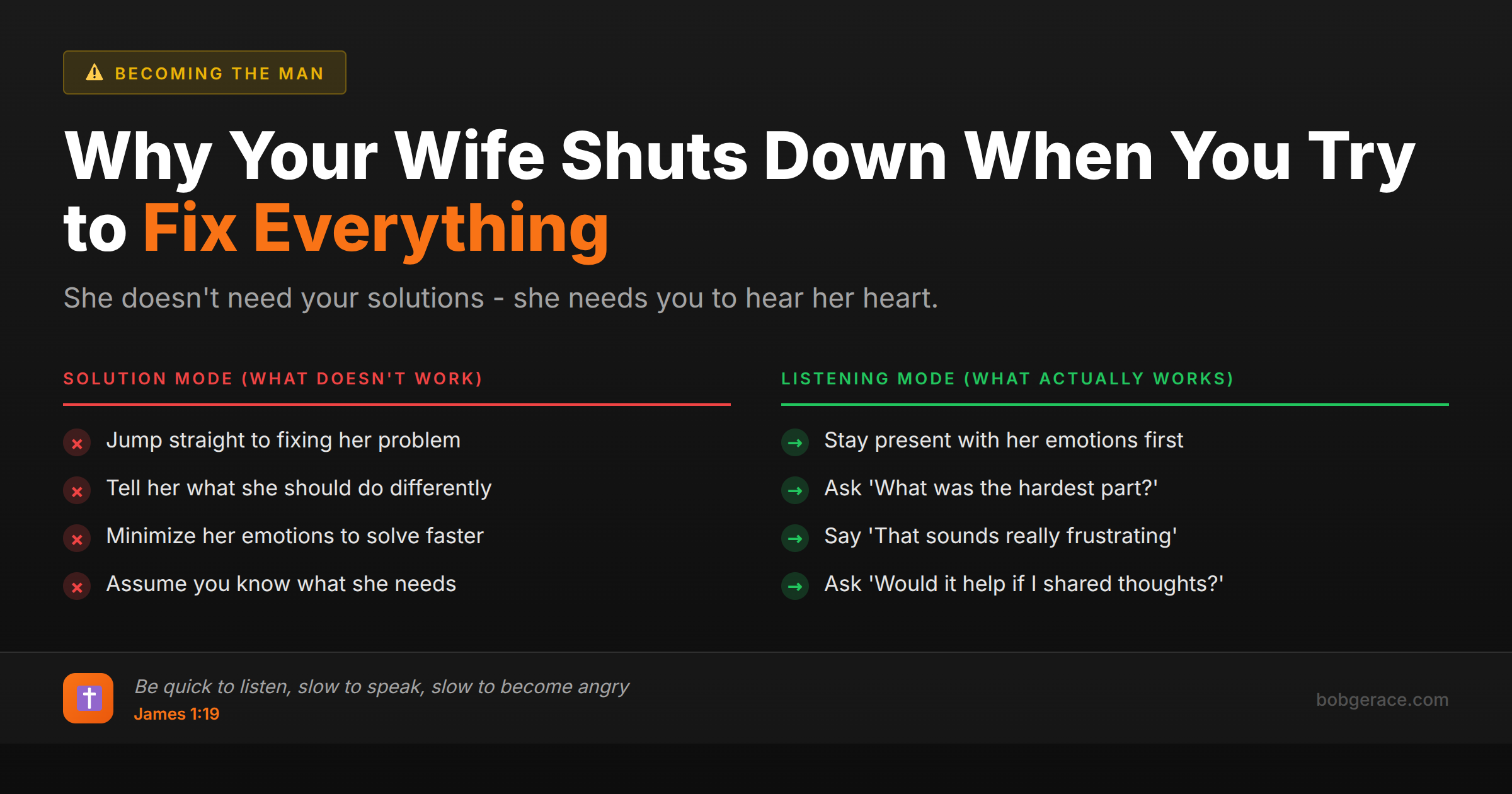
Listening without fixing starts with understanding that your wife doesn't always need you to solve her problems - she needs you to hear her heart. Most men jump straight into solution mode because that's how we're wired, but real listening means staying present with her emotions before offering any advice. The key is to respond with empathy first: 'That sounds really frustrating' or 'I can see why you'd feel that way.' Ask questions that help her process: 'What was the hardest part about that?' Only after she feels truly heard should you ask, 'Would it help if I shared some thoughts?' This approach actually makes you a stronger leader because you're responding to what she actually needs, not what you think she needs.
The Full Picture
Here's what most marriage advice gets wrong about listening: they tell you to stop being a problem-solver, as if that's a character flaw. That's garbage. Your instinct to fix things isn't the enemy - it's actually part of how God designed you as a man and leader. The problem isn't that you want to help; it's that you're trying to help in the wrong way at the wrong time.
Your wife's brain processes problems differently than yours. When she shares a struggle, she's often working through her emotions to get to her own solution. She needs to feel understood and supported in that process. When you jump straight to fixing, you're essentially telling her, 'Skip all that emotional processing - here's what you should do.' That doesn't feel supportive; it feels dismissive.
Think of it like this: if you came home stressed about a work situation, you wouldn't want her to immediately tell you how to handle your boss. You'd want her to understand the pressure you're under first. Same principle applies here.
The goal isn't to become passive. You're not trying to turn into some emotion-validating robot who never offers guidance. You're learning to lead with wisdom - understanding what your wife needs in the moment and responding accordingly. Sometimes she needs your problem-solving skills. Sometimes she needs your emotional support. A wise leader knows the difference.
This skill will transform your marriage. When your wife feels truly heard by you, she'll naturally turn to you more for guidance. She'll trust your input because she knows you understand her heart, not just her circumstances.
What's Really Happening
From a neurological standpoint, men and women often process stress and problems through different pathways. Research shows that women frequently use verbal processing to work through emotional challenges - talking helps them organize their thoughts and regulate their emotions. When a husband immediately offers solutions, he's inadvertently interrupting this natural processing system.
The key is understanding emotional co-regulation. When your wife shares a problem, her nervous system is often in a heightened state. Your calm, attentive presence actually helps regulate her emotional state. This is why simply listening can be so powerful - you're providing the safety and connection she needs to work through the issue herself.
There's also a attachment dynamic at play. Many women have a deep need to feel emotionally understood by their partner. When you listen without immediately trying to fix, you're communicating that her inner world matters to you. This strengthens the emotional bond and actually increases her likelihood of seeking your input in the future.
The 'fix-it' impulse often comes from your own discomfort with her distress. It's natural to want to eliminate your loved one's pain quickly. But learning to tolerate that temporary discomfort while staying emotionally present is a crucial relationship skill. It shows maturity and genuine care for her process, not just her outcome.
What Scripture Says
Scripture gives us a clear model for listening well. James 1:19 tells us, *'Be quick to listen, slow to speak, slow to become angry.'* Notice the order - listening comes first, always.
Proverbs 18:13 warns us: *'To answer before listening - that is folly and shame.'* When we jump straight to solutions without truly hearing our wife's heart, we're operating in folly. We're answering questions she isn't asking and solving problems that aren't the real issue.
Jesus modeled this perfectly. Look at how He interacted with people - He often asked questions that helped them process their own hearts before offering guidance. With the woman at the well (John 4), He could have immediately condemned her lifestyle, but instead He engaged her story and helped her discover truth for herself.
Proverbs 20:5 says, *'The purposes of a person's heart are deep waters, but one who has insight draws them out.'* This is your role as a husband - to draw out your wife's heart through thoughtful listening and questions, not to impose solutions from the outside.
As a leader, you're called to shepherd your wife's heart (Ephesians 5:25-28). Shepherds don't drive sheep; they guide them. Sometimes that guidance comes through patient listening and understanding before offering direction.
Ecclesiastes 3:7 reminds us there's *'a time to be silent and a time to speak.'* Wisdom knows when each is appropriate. Your strength as a husband isn't just in having answers - it's in knowing when your wife needs those answers versus when she needs your presence and understanding.
What To Do Right Now
-
1
Put down your phone and face her fully when she's sharing something important - your body language communicates whether you're really listening
-
2
Use reflection statements before offering solutions: 'It sounds like you felt really overwhelmed when that happened' or 'That must have been discouraging'
-
3
Ask process questions that help her think through the situation: 'What do you think bothered you most about that?' or 'How are you feeling about it now?'
-
4
Wait for emotional cues that she's ready for input - often she'll ask directly, or you'll sense she's moved from processing to problem-solving mode
-
5
When you do offer guidance, ask permission first: 'I have some thoughts about this - would it help if I shared them?' This respects her process
-
6
Practice the 24-hour rule for big issues - if it's not urgent, sleep on it and revisit when emotions aren't as high, which often leads to better solutions anyway
Related Questions
- What does 'holding space' actually mean?
- How do I become emotionally intelligent?
- How do I identify what I'm feeling?
- What does emotional attunement look like?
- How do I share emotion without overwhelming?
- What's the difference between vulnerability and vomiting?
- She shuts down when I try to connect
- She won't talk about our problems
- What does she need to hear that I haven't said?
- How do I not pursue while also not abandoning?
Also find Bob on
Subscribe for weekly videos on Christian marriage.
You Don't Have to Figure This Out Alone
Listening without fixing is harder when it's your wife, your history, your specific fights. A coach who knows your marriage can help you see what you're missing and calibrate to where she actually is.
Talk to Bob →