How do I become a safe emotional presence?
6 min read
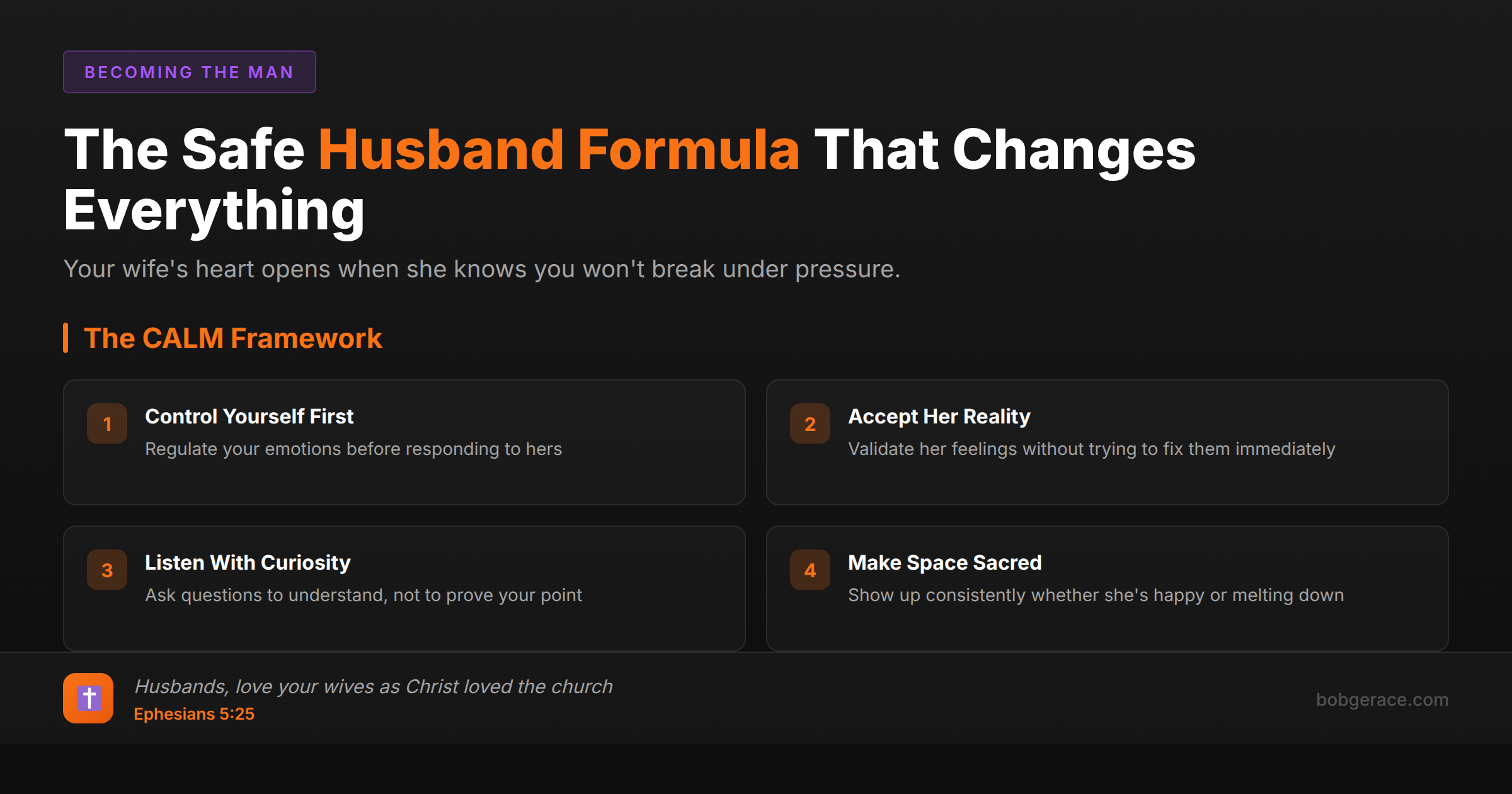
Becoming a safe emotional presence starts with learning to regulate your own emotions first. Your wife needs to know that when she shares her heart, you won't explode, shut down, or make it about you. This means staying calm when she's upset, listening without immediately trying to fix, and validating her feelings even when you don't fully understand them. Safety is built through consistency over time. It's showing up predictably - same steady presence whether she's having a good day or melting down. Your goal isn't to agree with everything she feels, but to create space where she can feel and express without fear of your reaction. This requires genuine curiosity about her inner world and the humility to put her emotional needs above your discomfort.
The Full Picture
Emotional safety isn't about walking on eggshells - it's about becoming unshakeable.
Most men confuse emotional safety with avoiding conflict or never saying anything that might upset their wife. That's not safety - that's fear-based people-pleasing that actually creates more anxiety in your marriage.
True emotional safety means your wife knows she can bring you her worst day, her deepest fears, her irrational moments, and even her anger toward you, and you won't crumble, retaliate, or disappear. She needs to know that your love for her isn't conditional on her emotional state.
This requires you to develop emotional maturity you may never have learned. Many of us grew up in homes where emotions were either explosive or suppressed. We never saw healthy emotional processing modeled. We learned to either fight, flee, or freeze when things got intense.
Your wife is watching how you handle stress, disappointment, and conflict. She's subconsciously asking: "Is this man strong enough to hold space for my emotions without making them about him?" If you get defensive when she's frustrated, if you shut down when she cries, if you minimize her concerns or rush to fix them - you're communicating that her emotions are too much for you.
Safety is built through a thousand small moments. It's staying present when she's processing something difficult. It's asking questions instead of offering solutions. It's acknowledging her perspective even when you see things differently. It's managing your own triggers so you can be genuinely curious about hers.
The goal isn't perfection - it's progress. Your wife doesn't need you to be a therapist, but she does need you to be emotionally available and stable.
What's Really Happening
From a neurobiological perspective, emotional safety activates your wife's parasympathetic nervous system - the 'rest and digest' mode where connection and intimacy can flourish. When she perceives emotional threat, her sympathetic nervous system kicks in, triggering fight, flight, or freeze responses that shut down vulnerability.
Women's brains are typically more interconnected between emotional and verbal processing centers, meaning they often need to talk through feelings to understand them. When you interrupt this process with solutions or defensiveness, you're essentially hijacking her emotional regulation system.
Co-regulation is a crucial concept here. Your nervous system state directly impacts hers. If you're anxious, defensive, or overwhelmed when she shares emotions, her nervous system will mirror that dysregulation. But when you remain calm and grounded, you actually help regulate her emotional state through your presence.
Attachment theory shows us that secure relationships require what we call 'felt safety' - the deep sense that your partner is emotionally available and responsive. This isn't built through grand gestures but through consistent, attuned responses to emotional bids for connection.
Trauma-informed research reveals that many women carry wounds from previous relationships where their emotions were met with anger, dismissal, or abandonment. Your wife may be unconsciously testing whether you're truly different. This isn't manipulation - it's nervous system protection.
The key is developing what we call 'differentiation' - the ability to stay connected to your wife while remaining grounded in your own emotional center. This allows you to be present with her pain without taking it on or trying to immediately eliminate it.
What Scripture Says
God designed marriage as a picture of His own heart toward us - safe, steadfast, and unconditionally loving. Scripture gives us a clear framework for becoming the kind of emotionally safe presence our wives need.
"Husbands, love your wives as Christ loved the church and gave himself up for her" (Ephesians 5:25). Christ's love for the church is patient, sacrificial, and unwavering regardless of our emotional state. He doesn't withdraw His love when we're struggling or make our relationship contingent on our performance.
"Be completely humble and gentle; be patient, bearing with one another in love" (Ephesians 4:2). Gentleness isn't weakness - it's strength under control. It's the ability to remain tender when your wife is in pain, even when her pain triggers your own discomfort.
"Everyone should be quick to listen, slow to speak and slow to become angry" (James 1:19). This is emotional safety 101. Your wife needs to know that when she shares her heart, your first response will be to truly hear her, not to defend, correct, or fix.
"Above all, love each other deeply, because love covers over a multitude of sins" (1 Peter 4:8). Deep love creates space for imperfection. Your wife needs to know she can be messy, emotional, and human without losing your love or respect.
"Carry each other's burdens, and in this way you will fulfill the law of Christ" (Galatians 6:2). Sometimes being emotionally safe means simply sitting with your wife in her pain without trying to eliminate it. You're called to bear her burdens with her, not to make them disappear.
"The Lord your God is with you, the Mighty Warrior who saves. He will take great delight in you; in his love he will no longer rebuke you, but will rejoice over you with singing" (Zephaniah 3:17). This is the heart God wants you to have toward your wife - delighting in her, not rebuking her emotions, celebrating who she is even in difficult moments.
What To Do Right Now
-
1
Start tracking your emotional reactions. For one week, notice when you get defensive, shut down, or feel overwhelmed by your wife's emotions. Simply observe without judgment.
-
2
Practice the 6-second rule. When your wife shares something emotionally charged, count to 6 before responding. This allows your prefrontal cortex to engage instead of reacting from your amygdala.
-
3
Ask this question daily: 'How are you feeling about us today?' Then listen without offering solutions or defending yourself. Your only job is to understand her perspective.
-
4
Develop a personal calming practice. Whether it's deep breathing, prayer, or a brief walk, have a go-to method for regulating yourself when conversations get intense.
-
5
Apologize specifically when you miss the mark. Instead of 'I'm sorry you're upset,' try 'I'm sorry I got defensive when you were trying to share your heart with me.'
-
6
Create a weekly emotional check-in ritual. Set aside 30 minutes each week where you both can share how you're feeling about life, work, and your relationship without trying to fix anything.
Related Questions
- What does emotional attunement look like?
- What does 'holding space' actually mean?
- How do I listen without fixing?
- How do I self-regulate before I connect?
- What does emotional co-regulation look like?
- How do I share emotion without overwhelming?
- How do I become a safe person again?
- What would help her nervous system feel safe again?
- What does safety look like to her nervous system?
- What have I done that made connection feel unsafe?
Also find Bob on
Subscribe for weekly videos on Christian marriage.
Want a coach who knows your marriage?
Becoming safe in your specific dynamic—with her triggers, your patterns, the history between you two—requires someone who hears your actual story and calibrates to where you are today.
Talk to Bob →