What does emotional co-regulation look like?
6 min read
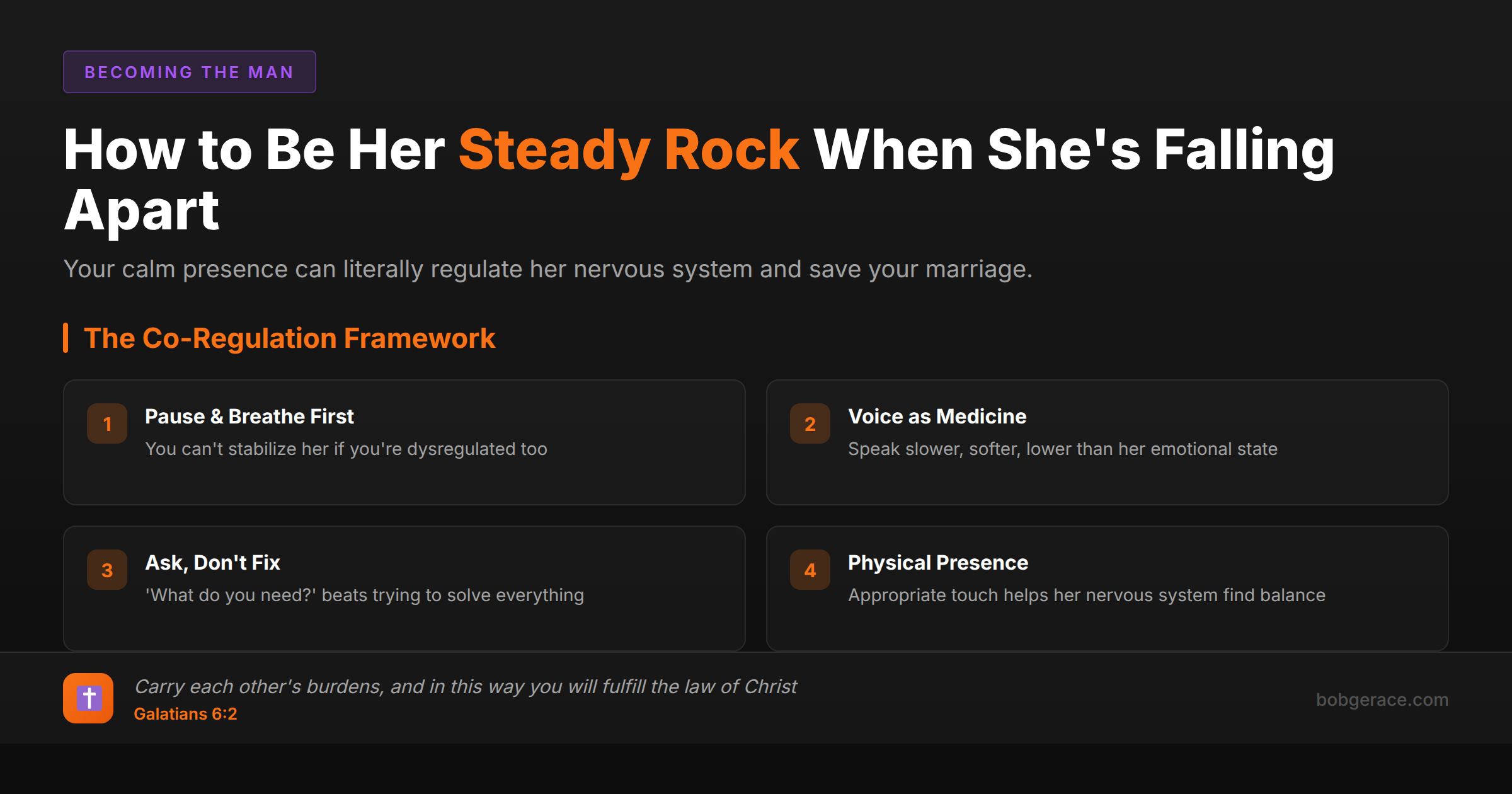
Emotional co-regulation is when you help stabilize your spouse's emotional state through your own calm presence and intentional responses. It looks like staying steady when she's overwhelmed, matching her need for comfort with appropriate physical touch, speaking in measured tones when tensions rise, and creating space for emotions without trying to fix everything immediately. Co-regulation isn't about controlling her emotions or suppressing them - it's about being the stable foundation that helps her nervous system find balance. When you co-regulate effectively, you're literally lending your emotional stability to help her return to a regulated state, which strengthens your entire relationship dynamic.
The Full Picture
Co-regulation is one of the most powerful tools in your marriage toolkit, but most men have never been taught what it actually looks like in practice.
Think of yourself as an emotional anchor. When your wife is experiencing big emotions - whether it's stress from work, overwhelm with the kids, or hurt from something that happened - your regulated nervous system can literally help calm hers. This isn't about being her therapist or fixing her problems. It's about being present in a way that signals safety and stability.
Here's what co-regulation looks like in real time:
When she comes home frazzled, you don't immediately jump into problem-solving mode. Instead, you notice her state, take a breath yourself, and respond from a place of calm. Maybe that's a warm hug that lasts long enough for her to exhale. Maybe it's sitting beside her and listening without offering solutions. Maybe it's simply lowering your voice and slowing your movements to match what her nervous system needs.
Co-regulation also means not getting hijacked by her emotional state. If she's anxious, you don't become anxious. If she's angry, you don't escalate. You stay connected to your own center while remaining emotionally available to her. This takes practice and intentionality.
The beautiful thing about co-regulation is that it works both ways. When you're stressed or overwhelmed, she can offer the same stabilizing presence to you. This creates a marriage where both partners feel emotionally safe and supported, rather than constantly triggered by each other's emotional states.
Remember: co-regulation isn't about suppressing emotions or avoiding difficult conversations. It's about creating the right emotional environment where those conversations can actually be productive and connecting rather than destructive.
What's Really Happening
From a neurological perspective, co-regulation is about nervous system synchronization between partners. When one person is dysregulated - meaning their fight, flight, or freeze response is activated - their partner's regulated nervous system can serve as an external regulator, helping them return to a state of calm alertness.
This process happens through multiple channels simultaneously. Mirror neurons fire when we observe our partner's emotional state, but when you maintain regulation while witnessing their distress, you're modeling a different neural pattern. Your calm breathing, steady voice tone, and relaxed body posture send safety signals to their nervous system.
The vagus nerve, which controls our rest-and-digest response, is particularly sensitive to co-regulation cues. Physical touch, eye contact, and vocal prosody (the rhythm and tone of speech) all influence vagal tone. When you speak slowly and softly while maintaining warm eye contact, you're literally activating your partner's parasympathetic nervous system.
What many couples don't realize is that emotional contagion - catching each other's emotions - is our default mode. Without intentional co-regulation skills, partners typically escalate together. One person's anxiety triggers the other's anxiety, creating a feedback loop of dysregulation.
Successful co-regulation requires what we call 'differentiated presence' - staying emotionally connected without becoming emotionally enmeshed. You feel empathy for your partner's experience without taking on their emotional state as your own. This allows you to respond rather than react, offering the stability they need to self-regulate.
The long-term benefits extend beyond individual moments of support. Couples who practice co-regulation develop greater emotional resilience and report feeling more secure in their relationship. They learn to see emotional moments as opportunities for connection rather than threats to avoid.
What Scripture Says
Scripture provides a rich foundation for understanding our role in supporting our spouse's emotional well-being. God designed marriage as a partnership where we bear one another's burdens and provide mutual comfort.
'Carry each other's burdens, and in this way you will fulfill the law of Christ.' (Galatians 6:2). Co-regulation is a practical way of burden-bearing. When your wife is overwhelmed, your steady presence helps carry the weight of that emotional load, not by taking it from her, but by standing with her in it.
'Rejoice with those who rejoice; mourn with those who mourn.' (Romans 12:15). This verse speaks directly to emotional attunement - the foundation of co-regulation. You're called to enter into your spouse's emotional experience while maintaining the wisdom and stability to respond helpfully.
'A gentle answer turns away wrath, but a harsh word stirs up anger.' (Proverbs 15:1). Your tone, pace, and emotional state directly influence your spouse's emotional state. When you respond to her distress with gentleness rather than defensiveness or irritation, you're practicing biblical co-regulation.
'Be completely humble and gentle; be patient, bearing with one another in love.' (Ephesians 4:2). Co-regulation requires patience and gentleness, especially when your spouse's emotions feel big or overwhelming. This verse reminds us that love includes bearing with each other's emotional states.
'Above all, love each other deeply, because love covers over a multitude of sins.' (1 Peter 4:8). Deep love creates the safety necessary for emotional vulnerability. When your wife knows you won't shame or dismiss her emotions, she can be authentic about her inner world.
'Anxiety weighs down the heart, but a kind word cheers it up.' (Proverbs 12:25). Your words and presence have the power to lift your spouse's spirit and ease emotional burdens. This is co-regulation in action - using your influence to bring comfort and peace to your marriage.
What To Do Right Now
-
1
Practice the 'pause and breathe' response - when your spouse is emotional, take a conscious breath before responding to ensure you're regulated first
-
2
Use your voice as a co-regulation tool - speak slower, softer, and lower than usual when your spouse is distressed
-
3
Offer physical comfort appropriately - a hand on the shoulder, sitting close, or a longer hug can help regulate her nervous system
-
4
Ask 'What do you need right now?' instead of immediately problem-solving - this helps you respond to her actual emotional needs
-
5
Practice staying curious instead of defensive - when she's upset, get curious about her experience rather than protecting yourself
-
6
Create a daily check-in ritual where you both share your emotional state and offer support as needed
Related Questions
Ready to Become the Husband She Needs?
Learning to co-regulate effectively takes practice and personalized guidance. Let's work together to develop these skills in your specific situation.
Get Coaching →