How do I pray when I'm angry at God?
6 min read
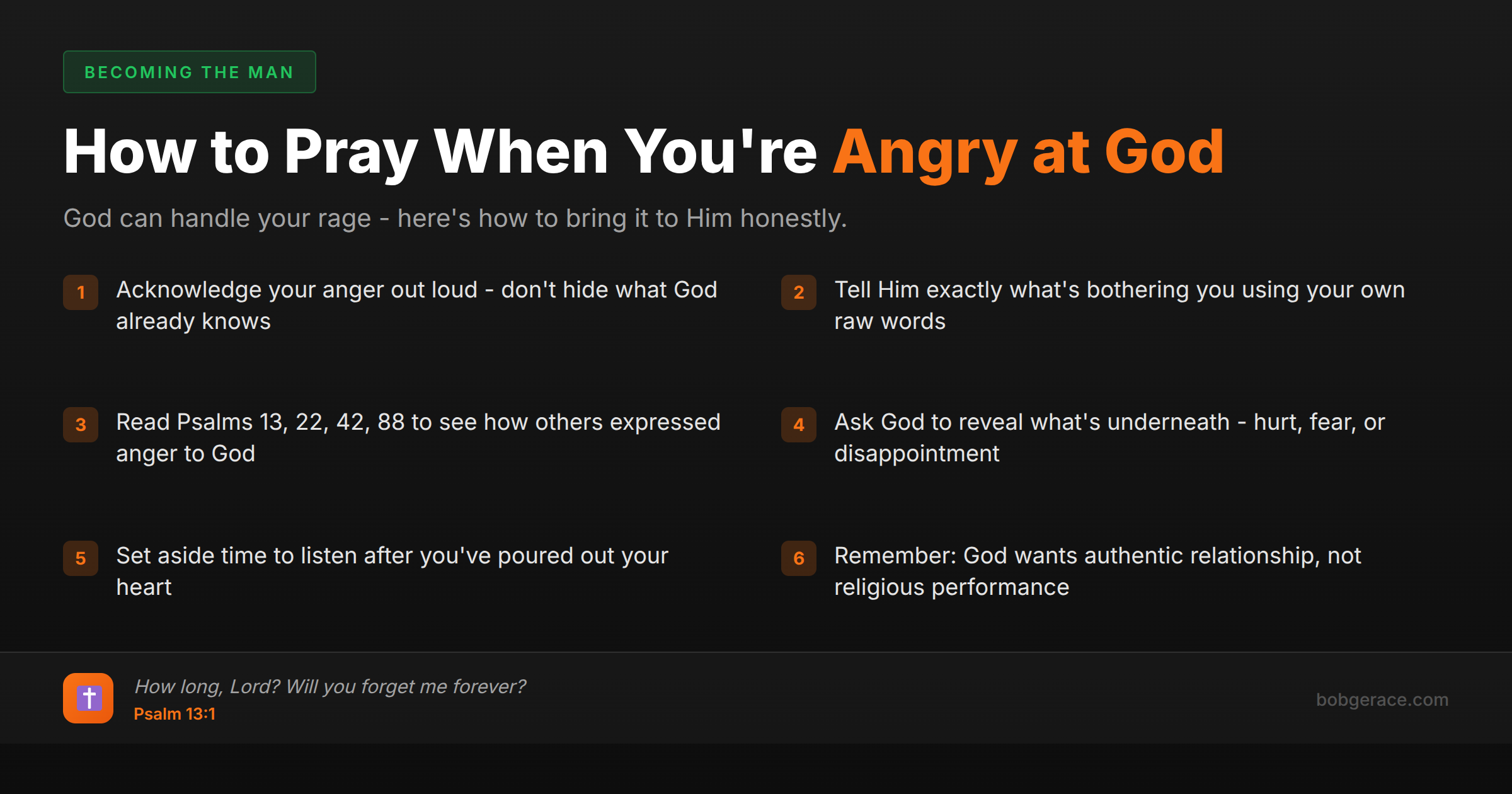
When you're angry at God, the most powerful thing you can do is pray with complete honesty. God already knows your anger - hiding it won't fool Him. The Psalms are filled with raw, honest prayers where people expressed their frustration, confusion, and even anger toward God. David, Job, and Jeremiah all brought their real emotions directly to the Lord. Start by acknowledging your anger out loud: 'God, I'm furious with You right now because...' Then tell Him exactly what's bothering you. Don't clean it up or make it sound prettier. God can handle your anger, and He wants authentic relationship with you, not religious performance. Your anger often reveals deeper hurt, fear, or disappointment - let Him into those places too.
The Full Picture
Anger toward God is more common than most Christians want to admit. When life doesn't go according to plan - when marriages fall apart, children rebel, health fails, or dreams die - it's natural to feel angry at the One who could have prevented it. The problem isn't having these feelings; it's what we do with them.
Many believers think anger at God is sinful, so they stuff it down, avoid prayer, or fake their way through spiritual conversations. This creates distance in your relationship with God at the exact moment you need Him most. It's like being angry at your spouse but pretending everything's fine - it doesn't resolve anything and makes the relationship worse.
God isn't fragile. He's not going to fall off His throne because you're upset with Him. He's not shocked by your emotions or threatened by your questions. In fact, throughout Scripture, we see God engaging with people who brought Him their raw, unfiltered feelings.
Your anger often reveals what matters most to you. When you're angry at God about your marriage, it shows how deeply you care about your spouse and your relationship. When you're furious about injustice, it reflects God's own heart for righteousness. Don't dismiss your anger - examine it.
The goal isn't to eliminate anger but to express it in ways that draw you closer to God rather than push you away. Honest prayer during angry seasons often becomes the foundation for deeper intimacy with the Lord. He meets us in our mess, not just in our victories.
What's Really Happening
From a psychological perspective, anger at God often represents what we call 'spiritual injury' - a wound that occurs when our understanding of God's character conflicts with our lived experience. This creates cognitive dissonance that can be incredibly distressing.
Anger is typically a secondary emotion that masks primary emotions like hurt, fear, disappointment, or feelings of abandonment. When someone says they're angry at God, I help them dig deeper: 'What's underneath that anger?' Often, they discover profound grief over losses, terror about the future, or deep hurt from feeling forgotten by God.
The suppression of anger toward God creates several problems. It can lead to spiritual numbness, depression, anxiety, and a sense of disconnection from faith communities. People often develop what I call 'religious performance syndrome' - going through the motions of faith while feeling emotionally distant from God.
Healthy expression of anger, including anger at God, is actually crucial for psychological and spiritual well-being. Research shows that people who can express negative emotions in safe contexts (like prayer) tend to have better mental health outcomes and stronger relationships.
The key is learning to express anger without letting it consume you. This involves acknowledging the feeling, expressing it appropriately, examining what's underneath it, and remaining open to resolution and growth. When people learn to bring their authentic selves to God in prayer - including their anger - they often discover a more robust, resilient faith.
What Scripture Says
Scripture is remarkably honest about human anger toward God. The Bible doesn't sanitize these experiences but presents them as part of authentic faith.
Psalm 13:1-2 shows David's raw frustration: *'How long, Lord? Will you forget me forever? How long will you hide your face from me? How long must I wrestle with my thoughts and day after day have sorrow in my heart?'* David didn't hide his feelings or speak in religious platitudes.
Job 23:2-3 reveals Job's honest struggle: *'Even today my complaint is bitter; his hand is heavy in spite of my groaning. If only I knew where to find him; if only I could go to his dwelling!'* Job was angry and confused, yet God called him righteous.
Jeremiah 20:7 shows the prophet's boldness: *'You deceived me, Lord, and I was deceived; you overpowered me and prevailed. I am ridiculed all day long; everyone mocks me.'* Jeremiah accused God of deception, yet remained God's faithful servant.
Psalm 22:1 gives us Jesus' own words of feeling abandoned: *'My God, my God, why have you forsaken me? Why are you so far from saving me, so far from my cries of anguish?'* Even Christ expressed feelings of abandonment.
Habakkuk 1:2-3 shows a prophet questioning God's justice: *'How long, Lord, must I call for help, but you do not listen? Or cry out to you, "Violence!" but you do not save? Why do you make me look at injustice? Why do you tolerate wrongdoing?'*
Notice that in every case, these people brought their anger *to* God, not away from Him. Their honesty deepened their relationship rather than destroying it.
What To Do Right Now
-
1
Acknowledge your anger honestly - write down exactly what you're angry about and why
-
2
Pray with brutal honesty - tell God exactly how you feel using your own words, not religious language
-
3
Read the Psalms of lament (Psalms 13, 22, 42, 88) to see how others expressed anger and confusion
-
4
Ask God to show you what's underneath your anger - hurt, fear, disappointment, or unmet expectations
-
5
Set aside time for listening prayer - after expressing your anger, sit quietly and listen for God's response
-
6
Consider talking to a pastor or counselor if your anger is consuming you or affecting your daily life
Related Questions
- How do I pray through this?
- What is biblical lament?
- What psalms help in marital crisis?
- How do I trust a God who let this happen?
- How do I pray for my wife when she's hurting me?
- How do I pray without demanding outcomes?
- Is God punishing me?
- Does God still love me if I fail?
- Why does God allow marital suffering?
- Is God present in this chaos?
Also find Bob on
Subscribe for weekly videos on Christian marriage.
Bring Your Actual Marriage to a Coach
You're working through real anger and real hurt. A coach who knows your story can help you pray through what's actually happening in your marriage, not just what should work in theory.
Talk to Bob →