What is biblical lament?
6 min read
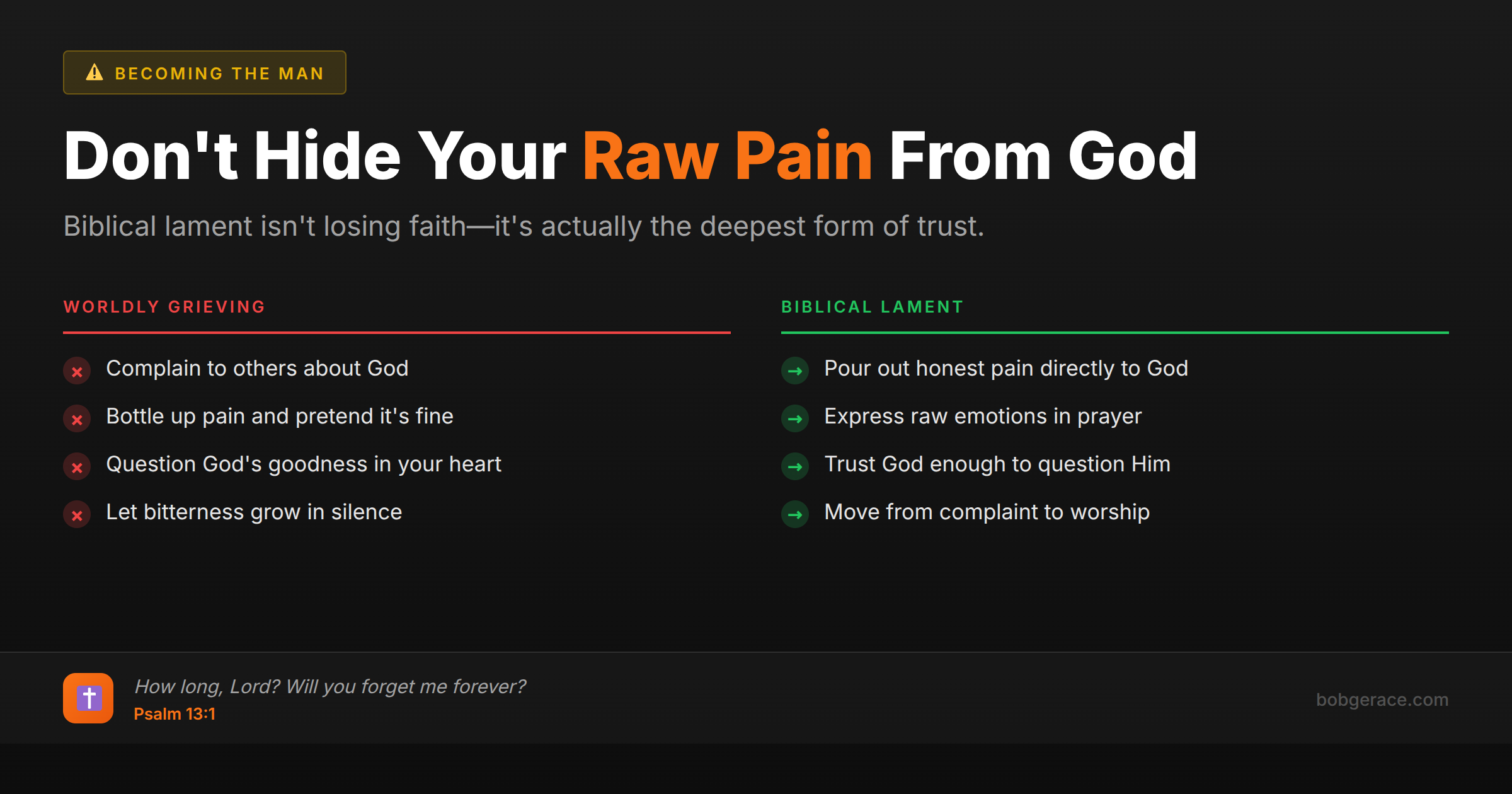
Biblical lament is honest, raw prayer that expresses pain, confusion, and grief directly to God. It's not complaining or losing faith—it's actually a deep expression of trust. When you lament biblically, you're bringing your whole heart before God, including the parts that hurt, doubt, or feel abandoned. The Bible is full of lament, especially in the Psalms. David, Job, and even Jesus expressed their deepest anguish to the Father. Lament acknowledges that life is broken while affirming that God is still good and sovereign. It's a way to process pain without losing hope, giving voice to suffering while maintaining relationship with God through the darkness.
The Full Picture
Biblical lament is one of the most misunderstood aspects of Christian faith, yet it makes up nearly 40% of the Psalms. We've somehow gotten the idea that good Christians should always be positive, always grateful, always "blessed." But that's not what Scripture teaches.
Lament is structured honest crying out to God. It typically includes four elements: addressing God directly, describing the problem honestly, asking for help specifically, and expressing trust despite circumstances. This isn't venting or complaining—it's covenant conversation with your Creator.
In marriage, lament becomes crucial when you face infertility, financial ruin, betrayal, or loss. These experiences can either drive you toward God or away from Him. Lament provides a biblical pathway to process pain without abandoning faith. It gives you permission to feel deeply while still believing God is good.
Many couples struggle because they think they have to choose between honesty about their pain and faith in God's goodness. Lament says you don't have to choose. You can acknowledge that your marriage is struggling, that you're disappointed, that you feel forgotten by God—and still maintain that He is worthy of trust.
The goal of lament isn't to stay stuck in pain but to process through it with God as your companion. It's not faithlessness; it's faith expressing itself through tears. When you lament biblically, you're joining a conversation that spans millennia, adding your voice to the chorus of believers who have found God faithful even in their darkest hours.
What's Really Happening
From a psychological perspective, biblical lament provides what we call "emotional regulation through sacred narrative." When couples experience trauma or prolonged stress, their nervous systems can become dysregulated, leading to fight-or-flight responses that damage intimacy and communication.
Lament offers a structured way to express intense emotions without becoming overwhelmed by them. The format itself—addressing God, naming the problem, asking for help, declaring trust—creates what we call a "container" for difficult feelings. This prevents emotional flooding while still allowing for full expression.
Research shows that suppressing negative emotions actually increases stress hormones and reduces immune function. Couples who learn to lament together often report feeling more connected, not just to God but to each other. They're practicing vulnerability in a safe context, which builds intimacy.
I've seen marriages transformed when spouses learn to lament together over infertility, prodigal children, or financial struggles. Instead of each partner suffering alone or blaming the other, they unite in bringing their shared pain before God. This creates what attachment theorists call "co-regulation"—two people helping each other manage difficult emotions.
The biblical practice of lament also reframes suffering from "something that shouldn't happen to good people" to "part of the human experience that God walks through with us." This cognitive shift reduces shame and isolation while increasing resilience and hope.
What Scripture Says
Scripture is filled with examples of godly people lamenting honestly before the Lord. Psalm 13:1-2 captures the heart of lament: *"How long, Lord? Will you forget me forever? How long will you hide your face from me? How long must I wrestle with my thoughts and day after day have sorrow in my heart?"* David isn't losing faith—he's expressing the depth of his pain to the One who can help.
Psalm 22:1 shows us that even Jesus understood lament: *"My God, my God, why have you forsaken me? Why are you so far from saving me, so far from my cries of anguish?"* If the Son of God could lament honestly, surely we can too.
Lamentations 3:19-24 demonstrates the movement from pain to hope that characterizes biblical lament: *"I remember my affliction and my wandering, the bitterness and the gall. I well remember them, and my soul is downcast within me. Yet this I call to mind and therefore I have hope: Because of the Lord's great love we are not consumed, for his compassions never fail. They are new every morning; great is your faithfulness."*
Job 23:3-5 shows lament as desperate seeking: *"If only I knew where to find him; if only I could go to his dwelling! I would state my case before him and fill my mouth with arguments. I would find out what he would answer me, and consider what he would say to me."* Job wants to argue his case with God—and God calls him blameless.
Lament isn't the opposite of praise—it's often the pathway back to it.
What To Do Right Now
-
1
Write an honest letter to God about your current pain or frustration—don't edit yourself
-
2
Read Psalm 13 or Psalm 22 and notice how the psalmist moves from complaint to trust
-
3
Practice lamenting together as a couple over one shared struggle you're facing
-
4
Set aside time weekly for "lament prayer"—bringing your hardest questions to God
-
5
Study the structure of biblical laments and use it as a template for your own prayers
-
6
Join or create a safe space where couples can share struggles and pray together honestly
Related Questions
- How do I pray when I'm angry at God?
- What psalms help in marital crisis?
- How do I pray for my wife when she's hurting me?
- How do I pray for my marriage when it seems hopeless?
- What does surrendered prayer look like?
- How do I pray without demanding outcomes?
- How do I pray through this?
- Is God punishing me?
- How do I trust a God who let this happen?
- What psalms speak to this kind of anguish?
Also find Bob on
Subscribe for weekly videos on Christian marriage.
Bring Your Actual Marriage to a Coach
Lament is powerful—but applying it to your specific situation takes someone who knows your story. A coach calibrates to where you actually are.
Talk to Bob →