What if I can't get past it?
5 min read
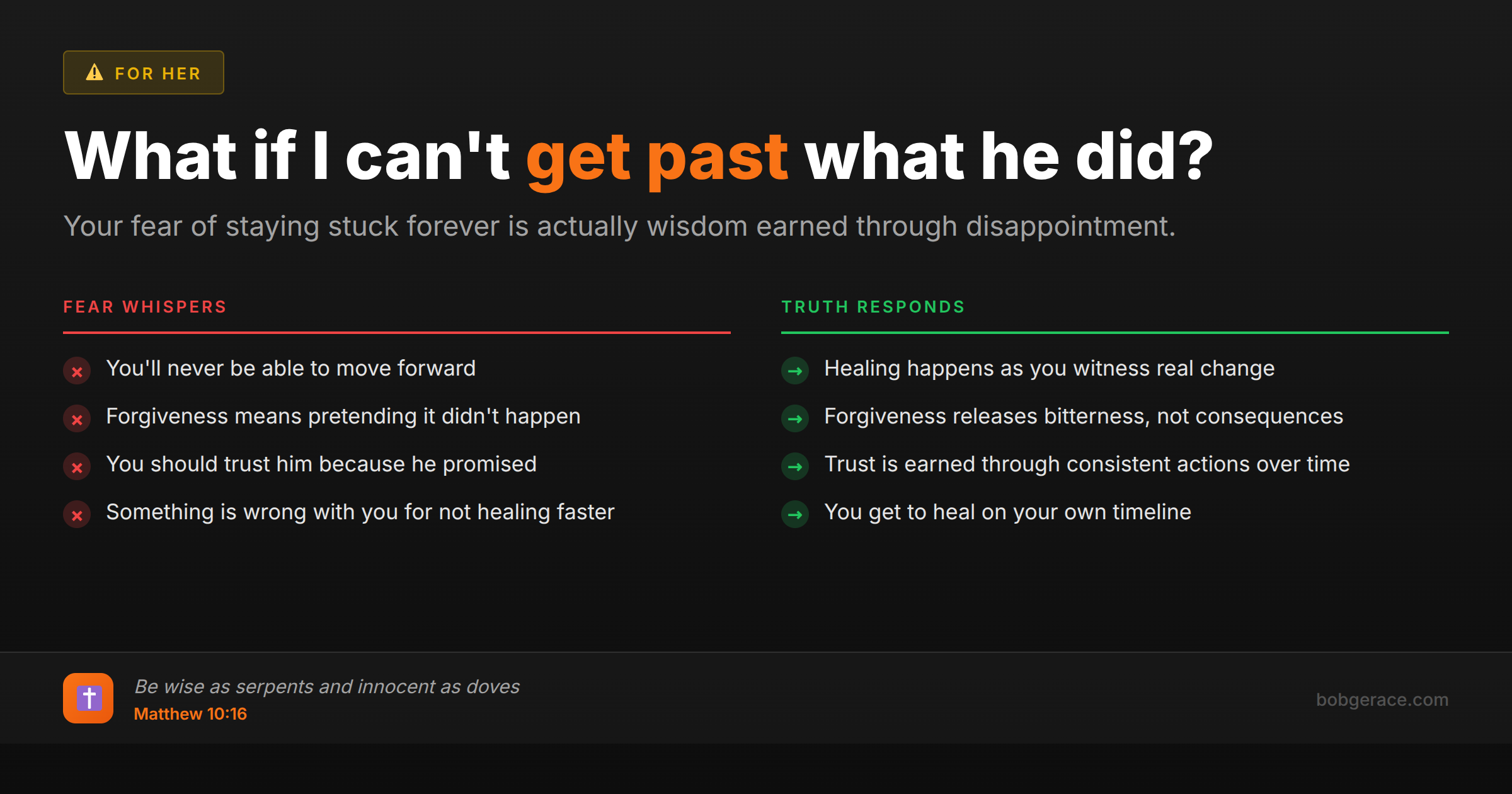
The fear that you'll never get past what happened is one of the most common and honest concerns women express. Here's what's important to understand: that fear usually comes from past experiences where nothing actually changed. You tried to move forward, but the same patterns repeated, making forgiveness feel foolish rather than healing. What you're really asking is whether it's safe to hope again. That's not a weakness—it's wisdom earned through disappointment. True healing doesn't require you to forget what happened or pretend it didn't hurt. It requires seeing genuine, sustained transformation that makes the future different from the past. The program your husband is in addresses exactly this—it doesn't ask you to forgive based on promises. It creates observable, measurable change through daily accountability, brotherhood support, and identity-level transformation. Your ability to 'get past it' is directly connected to whether you're witnessing real change. As that evidence accumulates over time, many women find that what felt impossible gradually becomes possible—not through forcing feelings, but through watching consistent new patterns emerge.
The Full Picture
When you wonder if you can ever get past what happened, you're not being dramatic or holding a grudge. You're asking a profoundly reasonable question based on lived experience. Most women who feel stuck aren't stuck because they're unforgiving—they're stuck because they've forgiven before and watched the same painful patterns repeat. That's not a failure of forgiveness; that's an appropriate protective response.
The human brain is designed to remember threats. When someone has hurt you, your mind catalogs that experience to protect you from future harm. This isn't bitterness—it's neurological self-preservation. The reason you can't simply 'let it go' is because your brain hasn't received convincing evidence that letting go is safe. Every time you tried to move forward in the past and encountered the same behavior, your brain added another data point: 'Moving forward equals getting hurt again.'
This is why promises don't work. Your husband may have made dozens of sincere commitments over the years. Each broken promise didn't just hurt in the moment—it trained your nervous system to distrust future promises. You're not being cynical; you're being accurately informed by experience.
What changes this equation isn't more promises or more pressure to forgive. What changes it is sustained, observable, different behavior over time. Your brain needs new data points. It needs to see him respond differently to stress, handle conflict with new tools, maintain consistency when no one is watching. As these new experiences accumulate, your nervous system gradually updates its threat assessment.
The transformation process your husband is engaged in is specifically designed to create these new data points. Daily check-ins mean daily opportunities for you to observe consistency. Brotherhood accountability means he's not relying solely on willpower—he has men holding him to his commitments. The Four Theater framework gives you a shared language to understand where he is in his journey and what genuine progress looks like.
Many women in your position have found that what felt impossible at month one felt different at month six. Not because they forced themselves to feel better, but because they witnessed sustained change that their nervous system could actually trust. Your healing timeline is valid. Your caution is earned. And your ability to move forward is directly connected to the quality and consistency of what you're witnessing.
Clinical Insight
Research in trauma recovery and attachment repair reveals why 'getting past it' feels so difficult—and what actually facilitates genuine healing. The phenomenon you're experiencing has a name: betrayal trauma. Unlike single-incident traumas, betrayal trauma involves wounds inflicted by someone you trusted for safety. This creates a neurobiological paradox where the source of comfort is also the source of pain.
Studies in interpersonal neurobiology show that betrayal trauma doesn't heal through cognitive decision alone. You can't simply decide to trust again—trust is rebuilt through what researchers call 'earned secure attachment.' This requires consistent, predictable, safe behavior over an extended period. The brain literally needs to form new neural pathways based on new relational experiences.
The timeframe for this neurological rewiring varies, but research suggests meaningful shifts typically require 6-18 months of consistent new behavior. This isn't about being slow to forgive—it's about how the brain actually processes relational safety. Rushing this process often backfires, as premature trust that gets violated reinforces the original trauma //blog.bobgerace.com/marriage-separation-christian-response-guide/:response.
Effective programs for relational repair incorporate this understanding. Daily accountability structures provide regular opportunities for the brain to collect 'safety data.' Transparent communication allows for verification rather than blind trust. Staged progression through clearly defined phases gives the observing partner concrete milestones to assess change.
What you're looking for—evidence that this time is different—is clinically appropriate. Healthy skepticism in the wake of betrayal is protective, not punitive. The question isn't whether you can force yourself to get past it, but whether you're witnessing the kind of sustained transformation that makes genuine healing neurologically possible.
Biblical Framework
Scripture presents a sophisticated understanding of forgiveness that differs significantly from popular misconceptions. Forgiveness in the biblical model is not the same as restored trust, immediate reconciliation, or pretending harm didn't occur. These distinctions matter deeply for your healing.
When Jesus taught on forgiveness, He also taught wisdom: 'Be wise as serpents and innocent as doves' (Matthew 10:16). Forgiveness releases the offense to God's justice rather than carrying the burden of vengeance yourself. But wisdom observes patterns and responds appropriately. Even God, who offers complete forgiveness, also requires repentance—a genuine turning that produces 'fruit in keeping with repentance' (Matthew 3:8).
The biblical concept of repentance (metanoia) means a complete change of mind that transforms behavior. It's not sorrow about getting caught or temporary remorse—it's fundamental redirection. Scripture is clear that genuine repentance produces visible evidence: 'By their fruits you will know them' (Matthew 7:20). Looking for fruit isn't faithlessness; it's biblical discernment.
The reconciliation process modeled in Scripture involves confession (1 John 1:9), evidence of change (Acts 26:20), restitution where possible (Luke 19:8), and patient rebuilding of trust. None of these steps are instantaneous. The restoration of Peter after his denial involved multiple conversations, specific questions, and commissioned purpose—a process, not a moment.
Your struggle to 'get past it' may actually reflect appropriate biblical wisdom rather than spiritual deficiency. You're waiting to see fruit. You're looking for evidence that this is metanoia rather than momentary remorse. That's not unforgiveness—that's the discernment Scripture commends.
Action Steps
-
1
Distinguish between forgiveness (releasing bitterness) and trust (earned through consistent behavior)—you can work on forgiveness while appropriately withholding trust until it's earned.
-
2
Create a private list of specific changes you'd need to see over time—this helps you recognize genuine progress rather than waiting for a feeling that may never come through willpower alone.
-
3
Give yourself permission to heal on your own timeline—pressure to 'get over it' faster often backfires and creates shame that impedes genuine recovery.
-
4
Notice and mentally note new positive patterns when they occur—your brain needs these new data points to update its threat assessment and create space for healing.
-
5
Consider what support you need for your own processing—your healing matters independently of whether the marriage is restored.
-
6
Ask your husband to share specific aspects of his transformation journey—understanding the daily accountability and brotherhood support helps contextualize what makes this process different.
Related Questions
- How do I heal from what's happened?
- Is it okay to still love him and be hurt?
- How do I take care of myself through this?
- Do I need my own support?
- How long does real change actually take?
- What should I expect during this process?
- Will I ever get over this?
- How long does recovery take?
- What does trauma recovery look like?
- What is 'post-traumatic growth'?
Also find Bob on
Subscribe for weekly videos on Christian marriage.
Think This Could Help Your Husband?
If you believe your husband could benefit from the structured transformation process we offer, share this with him. Real change is possible when men commit to the work.
Learn About the Program →