What do I share and what do I keep private?
6 min read
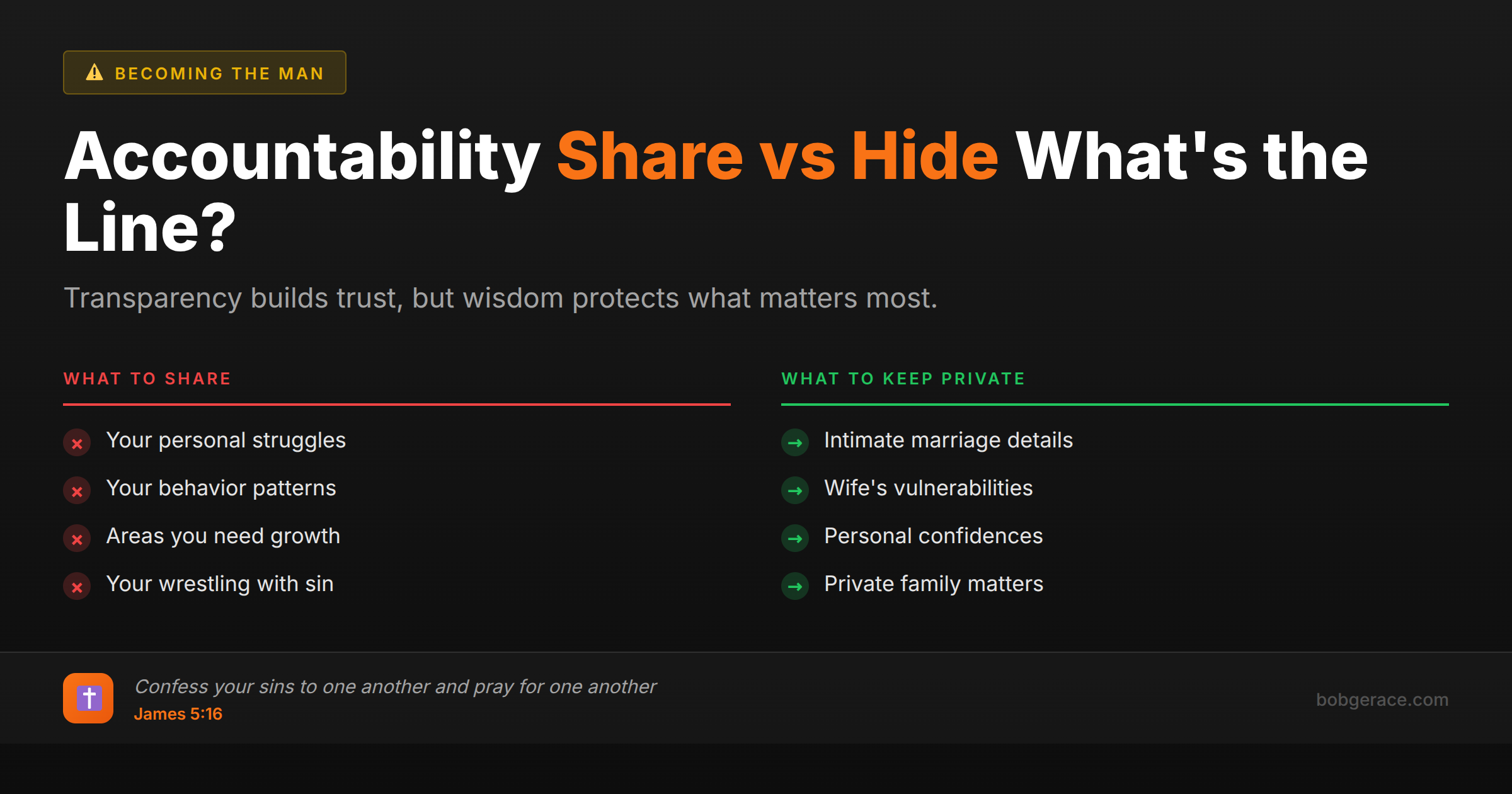
The key to healthy accountability is understanding that intimacy has layers - what you share depends on the relationship level and purpose. Share your struggles, patterns, and areas where you need growth with your accountability brothers. Keep the intimate details of your marriage bed private, along with your wife's personal vulnerabilities she's shared in confidence. The goal isn't to bare your soul completely, but to create enough transparency for real growth and support. Think of it as sharing your wrestling match with sin and weakness, not every private detail of your life.
The Full Picture
Here's what most men get wrong about accountability - they think it's either all or nothing. Either you share everything or you're being fake. That's garbage thinking that leads to either oversharing or complete isolation.
What TO share with your brothers: - Your patterns of struggle (anger, lust, pride, laziness) - Areas where you're failing as a husband or father - Temptations you're facing - Goals you're working toward - Ways you need prayer and support - Character flaws you're addressing
What to KEEP private: - Intimate details of your marriage bed - Your wife's personal struggles she's shared with you in confidence - Financial specifics (unless directly relevant to accountability) - Details that would embarrass or betray your wife's trust - Information about your children that's not yours to share
The principle is simple: Share what builds you up and helps you grow, protect what honors your family.
Your wife married you, not your accountability group. She deserves the safety of knowing her vulnerabilities won't become group discussion topics. At the same time, you need brothers who know your real struggles, not a sanitized version of your life.
Good accountability requires wisdom - knowing the difference between transparency that leads to growth and oversharing that violates trust. Your brothers need to know you're struggling with anger, but they don't need to know every detail of the fight you had with your wife last Tuesday.
What's Really Happening
From a therapeutic perspective, healthy disclosure follows what we call 'graduated intimacy' - different relationships warrant different levels of sharing. Research shows that men who participate in accountability relationships report higher life satisfaction and better emotional regulation, but only when boundaries are clearly established.
The challenge many men face is what I call 'disclosure anxiety' - they're either terrified of being vulnerable or they swing to the opposite extreme and overshare as a way to manage shame. Both responses are maladaptive.
Healthy accountability sharing serves three psychological functions: it reduces shame through connection, provides external perspective on blind spots, and creates supportive pressure for positive behavior change. However, when men share details that violate their spouse's privacy, it actually increases relationship stress and can damage the primary attachment bond.
The key is understanding that accountability isn't therapy. Your brothers aren't there to process every detail of your inner world - they're there to help you stay on track with your commitments and growth goals. Think of it as having spotters at the gym rather than conducting group therapy.
Effective accountability focuses on patterns, not particulars. Instead of sharing every detail of a conflict with your spouse, share the pattern of behavior that led to the conflict and your plan for change.
What Scripture Says
Scripture gives us clear principles for both transparency and discretion in relationships. The Bible calls us to confession and accountability while also emphasizing wisdom and honor in our relationships.
Confess your sins to one another: *"Therefore, confess your sins to one another and pray for one another, that you may be healed."* - James 5:16. Notice it says confess your sins, not your wife's private information or intimate details.
Wisdom in speech: *"The heart of the righteous ponders how to answer, but the mouth of the wicked pours out evil things."* - Proverbs 15:28. Accountability requires thoughtful, purposeful sharing, not emotional dumping.
Honor your wife: *"Husbands, live with your wives in an understanding way, showing honor to the woman as the weaker vessel, since they are heirs with you of the grace of life."* - 1 Peter 3:7. Honoring your wife includes protecting her privacy and dignity.
Bear one another's burdens: *"Bear one another's burdens, and so fulfill the law of Christ."* - Galatians 6:2. Your brothers are called to help carry your burdens, which means sharing your struggles appropriately.
Covering rather than exposing: *"Above all, love each other deeply, because love covers over a multitude of sins."* - 1 Peter 4:8. Love protects rather than exposes unnecessarily.
Iron sharpening iron: *"Iron sharpens iron, and one man sharpens another."* - Proverbs 27:17. This sharpening happens through honest, purposeful interaction, not through violating confidences or oversharing intimate details.
What To Do Right Now
-
1
Have a conversation with your wife about what aspects of your marriage and family life should remain private between you two
-
2
Establish clear boundaries with your accountability partners about what topics are appropriate for discussion
-
3
Practice sharing your own struggles and patterns rather than details about others in your family
-
4
Create a simple filter: ask yourself 'Does sharing this help me grow and honor my family?' before speaking
-
5
Focus accountability conversations on your character, goals, and areas where you need growth and support
-
6
Schedule regular check-ins with your wife to ensure she feels her privacy and dignity are being protected
Related Questions
Ready to Build Healthy Brotherhood?
Stop navigating marriage alone. Let me help you build the kind of accountability relationships that actually strengthen your marriage rather than complicate it.
Get Started →