What makes accountability relationships work?
6 min read
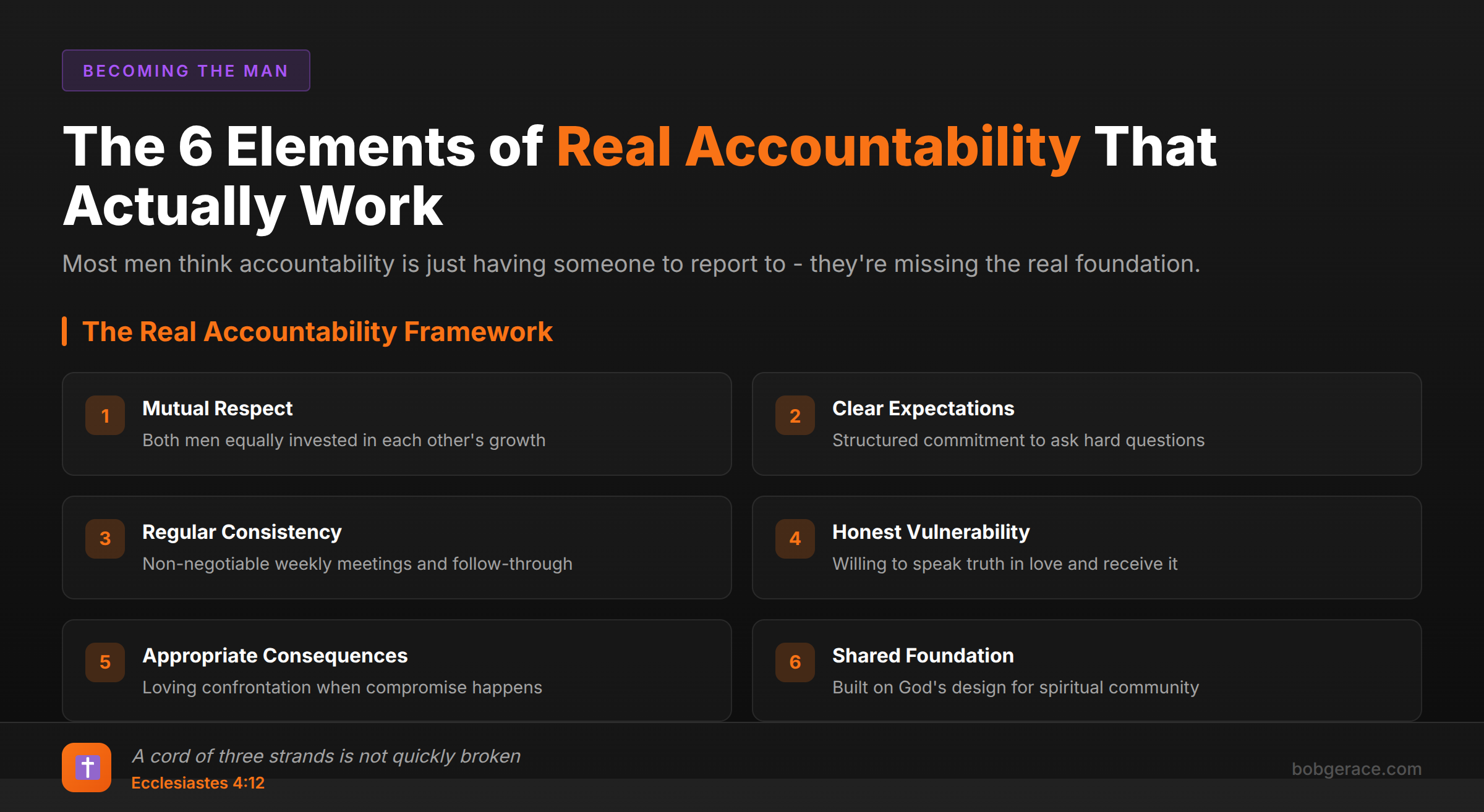
Effective accountability relationships are built on six foundational elements: mutual respect, clear expectations, regular consistency, honest vulnerability, appropriate consequences, and shared spiritual foundation. The key isn't just having someone to report to - it's creating a relationship where both men are committed to each other's growth and willing to speak truth in love. What separates working accountability from friendship is the structured commitment to ask the hard questions, celebrate victories, and lovingly confront areas of compromise. Both men must be equally invested in the process, meeting consistently, and maintaining confidentiality while pushing each other toward their stated goals.
The Full Picture
Most men think accountability means finding someone to confess their failures to once a week. That's confession, not accountability. Real accountability is a proactive partnership designed to help you become the man God called you to be before you stumble.
The Six Pillars of Effective Accountability:
1. Mutual Investment: Both men must be equally committed to the relationship. This isn't mentor-student; it's warrior-warrior. You're both fighting battles and both need support.
2. Structured Consistency: Weekly meetings at the same time and place. No "let's catch up when we can" approach. Consistency builds trust and creates safe space for vulnerability.
3. Specific Questions: Generic "how are you doing?" doesn't work. You need targeted questions about your specific struggles, goals, and commitments. Write them down. Ask them every time.
4. Loving Confrontation: The willingness to speak truth when you see patterns of compromise or self-deception. This requires courage from the confronter and humility from the receiver.
5. Celebration and Encouragement: Accountability isn't just about failure management. It's about recognizing growth, celebrating victories, and encouraging each other toward excellence.
6. Confidentiality: What's shared stays between you two. This safety net allows for the vulnerability necessary for real change.
Without these elements, you're just having coffee with a friend who occasionally asks how you're doing.
What's Really Happening
From a psychological perspective, effective accountability relationships work because they address multiple therapeutic principles simultaneously. They provide external regulation when our internal systems are compromised, create positive peer pressure through social accountability theory, and establish what we call 'implementation intentions' - specific if-then plans for behavior change.
The neurological reality is that shame thrives in isolation while healing happens in relationship. When men create structured, safe relationships for honest self-disclosure, they're literally rewiring their brains for healthier patterns. The consistent meetings create new neural pathways that associate struggle with support rather than shame.
What makes these relationships particularly effective for men is the task-oriented structure combined with relational depth. Men typically connect through shared activities and goals rather than purely emotional conversations. Accountability provides this framework - you're working together toward specific outcomes while building genuine intimacy.
The key therapeutic element is what psychologists call 'witnessing' - having someone see your whole story without judgment while holding you to your stated values. This combination of acceptance and challenge creates the optimal environment for sustainable behavior change. It's why accountability often succeeds where willpower alone fails.
What Scripture Says
God designed us for community and mutual accountability from the beginning. Scripture consistently shows that spiritual growth happens best in relationship with other believers who are committed to our holiness.
Ecclesiastes 4:12 reminds us that "a cord of three strands is not quickly broken." When you and your accountability partner invite God into your relationship, you create an unbreakable foundation for growth and change.
Proverbs 27:17 declares that "as iron sharpens iron, so one person sharpens another." This isn't about being nice to each other - it's about the friction necessary for growth. Real sharpening requires pressure, heat, and sometimes sparks.
Galatians 6:1-2 gives us the model: "Brothers and sisters, if someone is caught in a sin, you who live by the Spirit should restore that person gently. But watch yourselves, or you also may be tempted. Carry each other's burdens, and in this way you will fulfill the law of Christ." Notice the balance - gentle restoration with mutual vigilance.
Hebrews 3:13 emphasizes urgency: "encourage one another daily, as long as it is called 'Today,' so that none of you may be hardened by sin's deceitfulness." Daily encouragement prevents the gradual drift that leads to major compromise.
James 5:16 connects confession with healing: "Therefore confess your sins to each other and pray for each other so that you may be healed." Healing requires both vulnerability and intercession.
God's design is clear: we need each other to become who He's called us to be.
What To Do Right Now
-
1
Identify a man who shares your values and is equally committed to growth - not just someone available
-
2
Schedule a conversation to discuss mutual accountability, expectations, and specific areas where you both need support
-
3
Create a list of 5-7 specific questions tailored to your current struggles and goals to ask each other weekly
-
4
Set a consistent weekly meeting time and location - treat it as non-negotiable as any important business meeting
-
5
Establish ground rules for confidentiality, confrontation, and what happens when one person misses meetings
-
6
Begin each meeting with prayer and end by committing to specific actions before you meet again
Related Questions
- What is accountability and what isn't it?
- What's the difference between confession and reporting?
- What does effective accountability require?
- How do I find men I can be real with?
- What is 'performative accountability'?
- What role does group play vs. one-on-one?
- What does genuine repair look like for old wounds?
- What does 'taking responsibility' actually look like?
- How do I not lose my mind right now?
- What does real forgiveness look like?
Also find Bob on
Subscribe for weekly videos on Christian marriage.
Accountability Works Better With a Coach
You know what good accountability looks like. But building it in your specific marriage—with your history, your patterns, your stuck points—takes someone who sees the whole picture. That's what coaching does.
Talk to Bob →