What is 'performative accountability'?
6 min read
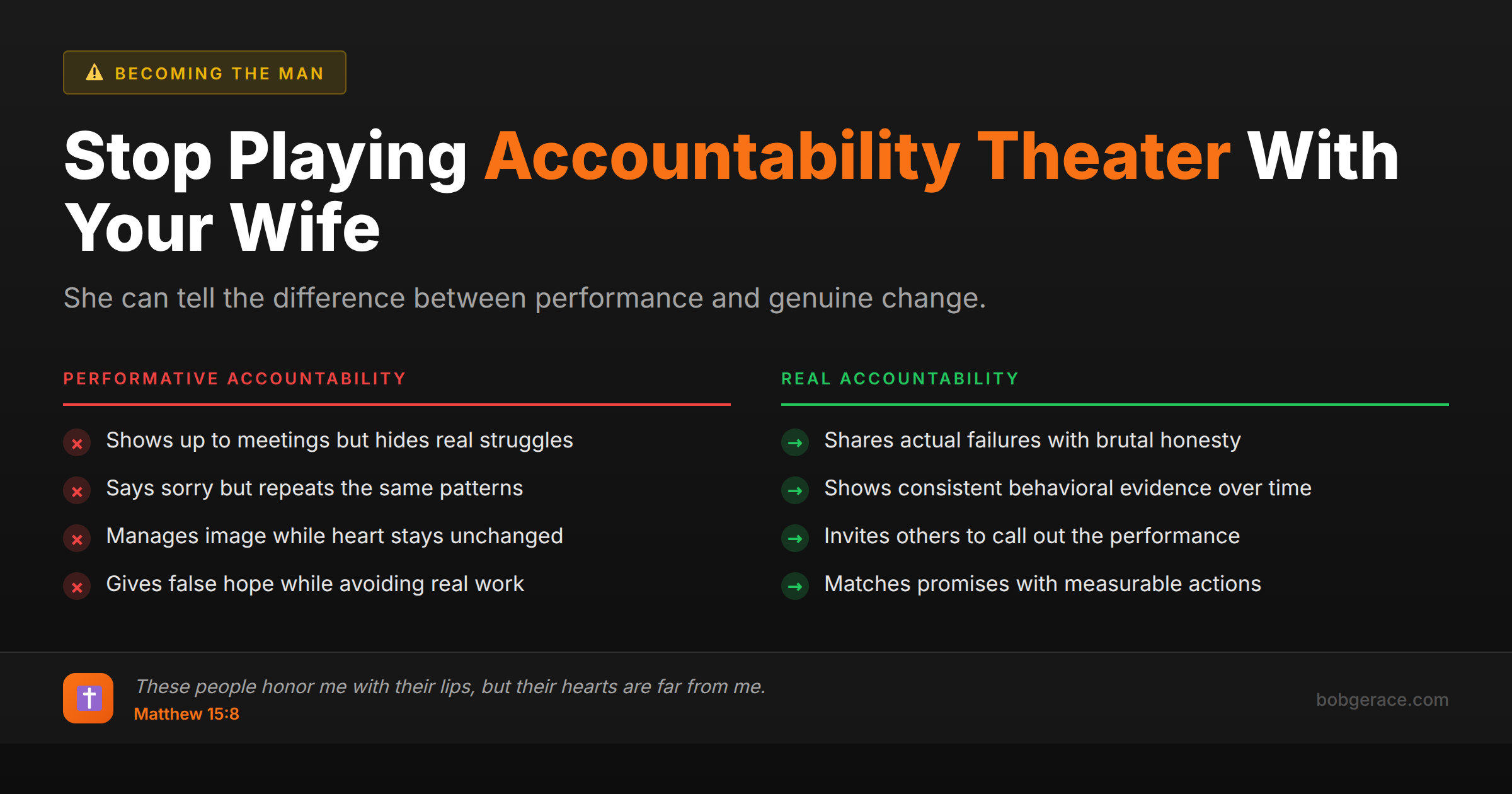
Performative accountability is when a man goes through the motions of being accountable without actually changing his heart or behavior. It's accountability theater - showing up to meetings, saying the right words, appearing remorseful, but continuing the same destructive patterns. Think of it as spiritual and emotional window dressing designed to appease others while avoiding the hard work of real transformation. This counterfeit version is incredibly damaging because it gives everyone false hope while the underlying issues remain untouched. Your wife sees the performance, hopes for change, but continues experiencing the same pain. Real accountability requires genuine repentance, consistent behavioral change, and transparent vulnerability - not just checking boxes to keep the peace.
The Full Picture
Performative accountability is one of the most destructive forms of deception in marriage recovery because it masquerades as progress while maintaining the status quo. When a man engages in performative accountability, he's essentially running a con game on everyone around him - including himself.
Here's what performative accountability looks like: - Attending accountability meetings but sharing surface-level struggles - Apologizing repeatedly without changing behavior patterns - Using therapeutic language to sound insightful while avoiding real responsibility - Focusing on external compliance rather than heart transformation - Making promises and commitments he has no intention of keeping - Playing the victim when confronted about lack of genuine change
The devastating impact on marriage: Your wife becomes trapped in a cycle of false hope. She sees you "doing the work" and believes change is coming, but the fundamental issues - pride, selfishness, lack of empathy - remain unchanged. This creates deeper wounds because now she's dealing with both the original betrayal and the ongoing deception of fake accountability.
Why men choose performative accountability: It's easier than real change. Performative accountability allows a man to maintain his image, avoid difficult conversations, and keep his wife from leaving - all without actually surrendering his will to God or doing the hard work of transformation. It's a control mechanism disguised as humility.
The tragedy is that performative accountability prevents the very breakthrough that could save the marriage. Real accountability requires death to self, genuine repentance, and consistent follow-through - elements that create actual healing and restoration.
What's Really Happening
From a clinical perspective, performative accountability represents a sophisticated defense mechanism that serves multiple psychological functions for the individual while causing significant relational trauma.
The psychological drivers: Performative accountability often stems from deep shame combined with an inability to tolerate the discomfort of genuine vulnerability. The individual has learned to manage relationships through performance rather than authenticity. This pattern typically develops in childhood where love was conditional on behavior rather than being.
Neurological considerations: The brain's reward system becomes wired to seek validation through performance rather than connection through vulnerability. The individual experiences dopamine hits from the positive responses to their "accountability" performance, reinforcing the cycle without requiring actual behavioral change.
Impact on the betrayed partner: The spouse experiences what I call "recovery whiplash" - the constant cycle of hope and disappointment that occurs when surface-level changes don't translate to lasting transformation. This creates complex trauma patterns including hypervigilance, emotional dysregulation, and difficulty trusting their own perceptions.
Breaking the pattern requires: 1. Awareness - The individual must recognize their performative patterns 2. Accountability structure - External oversight that measures behavior, not just words 3. Therapeutic intervention - Professional help to address underlying shame and attachment wounds 4. Spiritual surrender - Genuine submission to God's transformative process rather than self-managed change
The key clinical indicator of genuine versus performative accountability is consistency between private behavior and public commitment. Authentic accountability creates sustainable change because it addresses root issues rather than managing symptoms.
What Scripture Says
Scripture is crystal clear about the difference between genuine repentance and mere performance. God sees through religious theater and calls men to authentic transformation of heart and behavior.
God despises performative righteousness: *"These people honor me with their lips, but their hearts are far from me."* (Matthew 15:8). Jesus reserved His harshest criticism for those who performed righteousness while their hearts remained unchanged. Performative accountability is the modern version of this ancient deception.
True repentance produces fruit: *"Produce fruit in keeping with repentance."* (Matthew 3:8). John the Baptist demanded evidence of genuine heart change. Real accountability isn't about perfect words but about consistent behavioral transformation that others can observe and verify.
Authentic confession requires specificity: *"Whoever conceals their sins does not prosper, but the one who confesses and renounces them finds mercy."* (Proverbs 28:13). Notice the two requirements: confession AND renunciation. Performative accountability often includes vague confession without the hard work of renouncing sinful patterns.
God requires heart-level change: *"Create in me a pure heart, O God, and renew a steadfast spirit within me."* (Psalm 51:10). David's prayer after his adultery wasn't about managing his image but about genuine heart transformation. This is the model for authentic accountability.
Submission to authority is essential: *"Submit to one another out of reverence for Christ."* (Ephesians 5:21). Real accountability requires genuine submission to the brothers God has placed in your life, not performance designed to maintain control.
The call to authentic living: *"Rather, we have renounced secret and shameful ways; we do not use deception, nor do we distort the word of God. On the contrary, by setting forth the truth plainly we commend ourselves to everyone's conscience in the sight of God."* (2 Corinthians 4:2). Paul models radical authenticity - no secrets, no deception, no performance.
What To Do Right Now
-
1
Examine your accountability meetings - are you sharing real struggles or managing your image?
-
2
Ask your accountability partners to call out any patterns of performance they observe
-
3
Inventory your promises - match your commitments with actual behavioral evidence
-
4
Invite your wife to identify gaps between your words and actions without defending yourself
-
5
Establish measurable accountability markers that go beyond attendance and good intentions
-
6
Commit to 90 days of radical transparency where you report behavior, not just intentions
Related Questions
- What is accountability and what isn't it?
- What's the difference between confession and reporting?
- What does effective accountability require?
- What makes accountability relationships work?
- How do I find men I can be real with?
- What are markers of genuine remorse vs. guilt?
- How do I tell performance from genuine change?
- What distinguishes remorse from guilt?
- What is 'white-knuckling' vs. internalized change?
Also find Bob on
Subscribe for weekly videos on Christian marriage.
Your Wife Knows When It's Theater
If you're checking boxes but not changing, a coach who knows your story can see what you can't. This is the 30 days that matters.
Talk to Bob →