What's the difference between confession and reporting?
6 min read
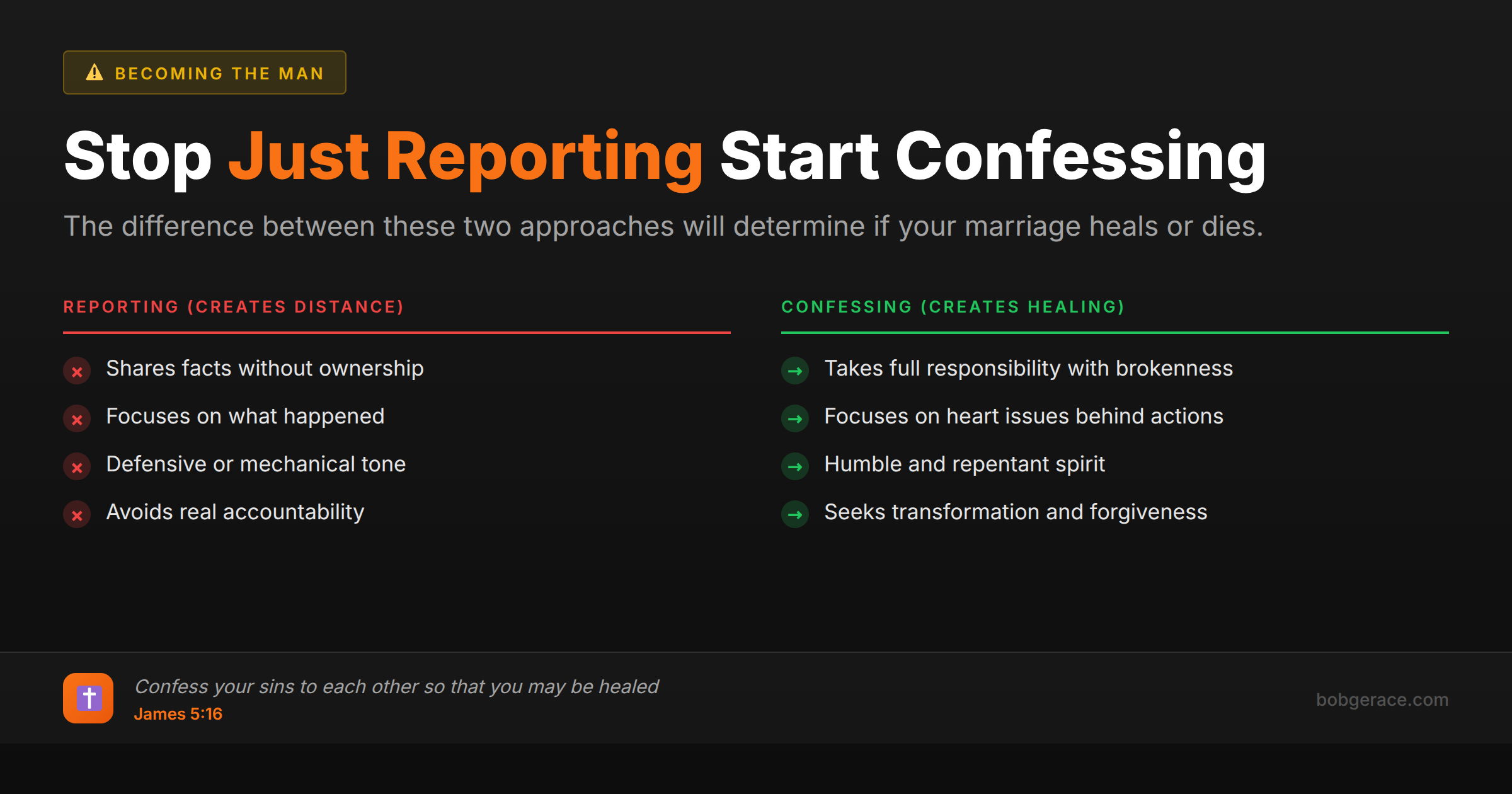
Confession is acknowledging sin or failure to God and trusted individuals for the purpose of repentance, healing, and restoration. It's about owning your actions, expressing genuine remorse, and seeking forgiveness. Reporting, on the other hand, is simply providing factual information about your behavior or circumstances without necessarily taking full ownership or demonstrating true repentance. The key difference lies in the heart posture. Confession involves brokenness, humility, and a desire to change. Reporting can be mechanical, defensive, or even manipulative - sharing just enough information to appear transparent while avoiding real accountability. True confession leads to transformation; mere reporting often maintains the status quo while creating an illusion of progress.
The Full Picture
Understanding the difference between confession and reporting is crucial for any man serious about accountability and transformation. Confession is a heart issue. It comes from a place of brokenness, where you're genuinely grieved by your sin and its impact on God, your wife, and others. When you confess, you're not just admitting what you did - you're owning the full weight of it.
Reporting, however, is often a head game. It's sharing information without the heart change. You might tell your accountability partner about a struggle or failure, but you're doing it to check a box, avoid confrontation, or maintain the appearance of transparency. There's no real grief, no genuine repentance, just information transfer.
I've seen too many men master the art of reporting while avoiding true confession. They'll share surface-level struggles, give updates on their behavior, and even admit to failures - but there's no broken heart behind it. They're managing their image rather than pursuing transformation.
True confession is costly. It requires vulnerability, humility, and the willingness to be fully known. It means admitting not just what you did, but why you did it, how it's hurt others, and what you're going to do differently. Reporting asks, "What happened?" Confession asks, "Who have I become, and how do I change?"
The fruit of confession is different too. Confession leads to relief, healing, and genuine accountability. Reporting often leads to frustration - both for you and those trying to help you - because nothing really changes despite all the "transparency."
What's Really Happening
From a psychological standpoint, the distinction between confession and reporting reflects different levels of emotional processing and self-awareness. Confession engages what we call "emotional integration" - the ability to connect your actions with their emotional impact on yourself and others. This requires activating the parts of your brain responsible for empathy, self-reflection, and genuine remorse.
Reporting, conversely, often operates from a defensive psychological stance. It's frequently a form of "impression management" - sharing just enough information to appear cooperative while maintaining psychological safety. Men who report without confessing are often protecting themselves from shame, but this protection prevents the very vulnerability needed for healing.
Neurologically, confession activates different brain pathways than reporting. True confession engages the anterior cingulate cortex, which processes emotional pain and empathy. This is why genuine confession often feels uncomfortable - your brain is literally experiencing the emotional weight of your actions. Reporting can bypass these emotional centers entirely, keeping you in a more detached, analytical state.
The therapeutic value lies in confession's ability to break through psychological defenses and create genuine emotional awareness. This is why confession has been a cornerstone of healing across cultures and religions - it forces integration between behavior and emotional consequence. Without this integration, behavioral change remains surface-level and temporary. Men who learn to confess rather than report develop greater emotional intelligence, stronger relationships, and more sustainable personal transformation.
What Scripture Says
Scripture draws a clear distinction between true confession and mere acknowledgment of wrongdoing. James 5:16 instructs us to "confess your sins to each other and pray for each other so that you may be healed." The word "confess" here means to fully acknowledge, not just report facts.
1 John 1:9 promises that "If we confess our sins, he is faithful and just and will forgive us our sins and purify us from all unrighteousness." Notice the emphasis on confession leading to purification - this requires more than just admitting what happened.
Psalm 51 gives us David's model of true confession after his sin with Bathsheba. He doesn't just report what he did - he cries out, "Have mercy on me, O God, according to your unfailing love... I know my transgressions, and my sin is always before me." This is a broken heart, not a casual update.
Proverbs 28:13 warns that "Whoever conceals their sins does not prosper, but the one who confesses and renounces them finds mercy." The key word is "renounces" - confession without repentance isn't biblical confession.
2 Corinthians 7:10 distinguishes between "godly sorrow" that brings repentance and "worldly sorrow" that brings death. Confession flows from godly sorrow - genuine grief over sin. Reporting often comes from worldly sorrow - being sorry you got caught or sorry about consequences.
Luke 15:21 shows the prodigal son's confession: "Father, I have sinned against heaven and against you. I am no longer worthy to be called your son." This is ownership, humility, and genuine repentance - the heart of biblical confession.
What To Do Right Now
-
1
Examine your heart before sharing with accountability partners - are you seeking to confess or just report?
-
2
Practice full ownership by stating not just what you did, but how it affected others and grieved God
-
3
Ask yourself if you feel genuine sorrow for your sin or just regret about getting caught or facing consequences
-
4
Share the 'why' behind your actions, not just the 'what' - confess the heart issues driving the behavior
-
5
Express specific commitments to change and ask for prayer, not just acknowledgment of your struggle
-
6
Follow up confession with concrete actions that demonstrate repentance and a changed heart
Related Questions
- What is accountability and what isn't it?
- What does effective accountability require?
- What makes accountability relationships work?
- What is 'performative accountability'?
- How do I find men I can be real with?
- What does 'confess your sins to one another' mean?
- What does 'taking responsibility' actually look like?
- What does 'godly sorrow' look like in practice?
- What does repentance look like for accumulated sin?
Also find Bob on
Subscribe for weekly videos on Christian marriage.
Your Marriage Needs More Than Reports
A coach who knows your story can tell when you're confessing versus performing. Bob works with men who want to stop hiding behind compliance and actually rebuild trust.
Talk to Bob →