What is 'transformational learning'?
6 min read
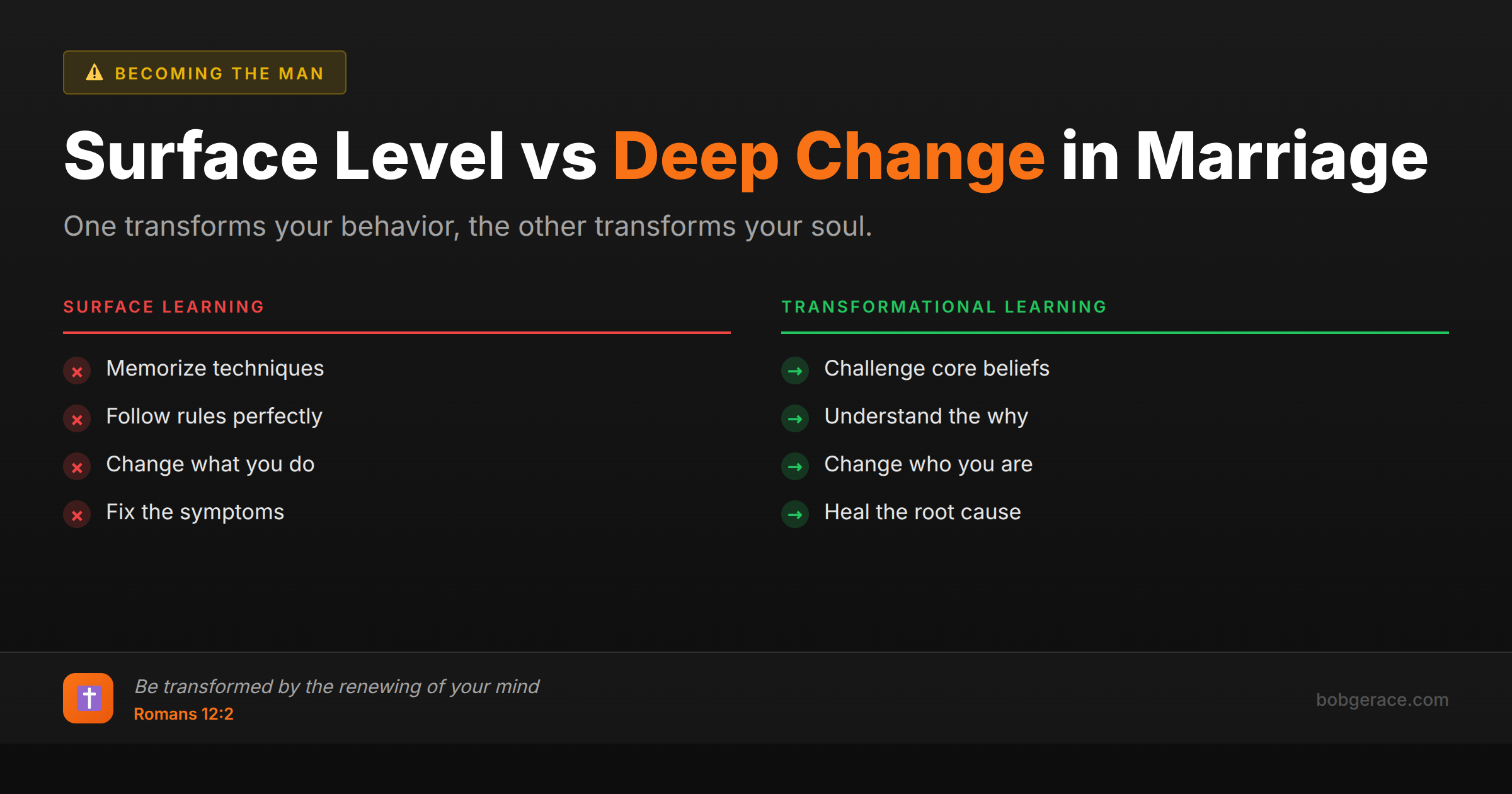
Transformational learning is a process that goes far deeper than simply acquiring new information or skills. Unlike surface-level learning where you might memorize facts or techniques, transformational learning fundamentally changes how you see yourself, others, and your world. It's the difference between knowing that forgiveness is important and actually becoming a forgiving person at your core. This type of learning happens when you encounter experiences, insights, or truths that challenge your existing beliefs and assumptions so profoundly that you can't go back to your old way of thinking. In marriage, transformational learning might occur when a man realizes his need to control everything actually stems from deep insecurity, not strength. That awareness doesn't just change his behavior—it transforms his entire approach to leadership and partnership.
The Full Picture
Most men approach personal growth like they approach everything else—looking for quick fixes, actionable tips, and immediate results. But transformational learning operates on a completely different level. It's not about adding new tools to your toolbox; it's about becoming a different kind of craftsman altogether.
The Three Levels of Learning
First, there's informational learning—gathering facts and data. You read an article about communication techniques and file away some tips. Second is formational learning—developing skills and habits. You practice active listening until it becomes more natural. But transformational learning goes to the deepest level—it changes your fundamental assumptions about reality.
When transformational learning occurs, you experience what researchers call a "perspective transformation." Your entire frame of reference shifts. A man who's always believed that showing emotion equals weakness doesn't just learn to express feelings—he discovers that vulnerability is actually a form of strength. This isn't just new information; it's a complete reorientation of his worldview.
Why Most Change Efforts Fail
Most marriage advice focuses on the first two levels of learning. "Try this communication technique." "Schedule weekly date nights." "Learn to listen better." These aren't wrong, but they're insufficient for deep change. Without transformational learning, you're essentially putting Band-Aids on bullet wounds.
Transformational learning often begins with what Jack Mezirow called a "disorienting dilemma"—a crisis or challenge that makes your current way of thinking inadequate. For many men, this happens when their marriage hits rock bottom and they realize their approach isn't working. The pain creates an opening for transformation that comfort never could.
What's Really Happening
From a clinical perspective, transformational learning involves neuroplasticity—the brain's ability to reorganize and form new neural pathways. When we engage in transformational learning, we're literally rewiring our brains at the deepest level, changing not just what we think but how we think.
In my practice, I see men who've tried countless marriage books and seminars without lasting change. They're stuck in what we call "single-loop learning"—making surface adjustments without questioning their underlying assumptions. Transformational learning requires "double-loop learning," where we examine and potentially change our fundamental beliefs and mental models.
The process typically involves several stages: First, a disorienting dilemma that challenges existing beliefs. Second, critical reflection on assumptions. Third, exploring new roles and relationships. Fourth, building competence in new ways of being. Finally, integration of the new perspective into one's life.
What makes this particularly challenging for men is that our culture often discourages the kind of deep self-reflection required for transformation. We're taught to fix problems quickly and move on, not to sit with discomfort and uncertainty. But transformational learning requires what Buddhist teacher Pema Chödrön calls "staying with the shakiness"—remaining present with the discomfort of not knowing while new understanding emerges.
The neural changes that occur during transformation can be measured through brain imaging. We see increased activity in areas associated with self-awareness, emotional regulation, and cognitive flexibility. This isn't just psychological change—it's biological transformation that creates lasting shifts in how we perceive and respond to life.
What Scripture Says
Scripture is filled with examples of transformational learning, though it uses different language. The Bible calls this process "renewal of the mind" and "transformation." Romans 12:2 says, "Do not conform to the pattern of this world, but be transformed by the renewing of your mind. Then you will be able to test and approve what God's will is—his good, pleasing and perfect will."
The Greek word for "transformed" here is *metamorphoo*—the same word used to describe a caterpillar becoming a butterfly. It's not improvement or modification; it's fundamental transformation into something new.
2 Corinthians 5:17 declares, "Therefore, if anyone is in Christ, the new creation has come: The old has gone, the new is here!" This isn't just positional truth—it's describing the transformational learning that occurs when we truly encounter Christ. Our entire worldview shifts.
Consider Paul's transformation on the Damascus road. Acts 9:3-6 describes how his encounter with Jesus didn't just change his opinion about Christianity—it completely transformed his identity, purpose, and understanding of reality. That's transformational learning in action.
Ephesians 4:22-24 outlines the process: "You were taught, with regard to your former way of life, to put off your old self, which is being corrupted by its deceitful desires; to be made new in the attitude of your minds; and to put on the new self, created to be like God in true righteousness and holiness."
Notice the three-step process: putting off old patterns, renewing the mind (transformational learning), and putting on new patterns. The middle step—renewal of mind—is crucial. Without it, we're just behavior modification.
Proverbs 27:17 reminds us that "iron sharpens iron," indicating that transformation often happens through relationship and community, not just individual effort.
What To Do Right Now
-
1
Identify your disorienting dilemma—what marriage challenge is forcing you to question your assumptions?
-
2
Practice critical reflection by journaling about beliefs that aren't serving your marriage well
-
3
Seek out perspectives that challenge your worldview through books, mentors, or counseling
-
4
Create space for uncertainty—resist the urge to quickly fix or explain away discomfort
-
5
Engage in dialogue with others who've experienced similar transformation
-
6
Begin integrating new insights through small, consistent actions that reflect your new understanding
Related Questions
Ready for Real Transformation?
Surface-level changes create temporary improvements. Transformational learning creates lasting change that impacts every area of your life and marriage.
Start Your Journey →