What does Proverbs say about receiving correction?
6 min read
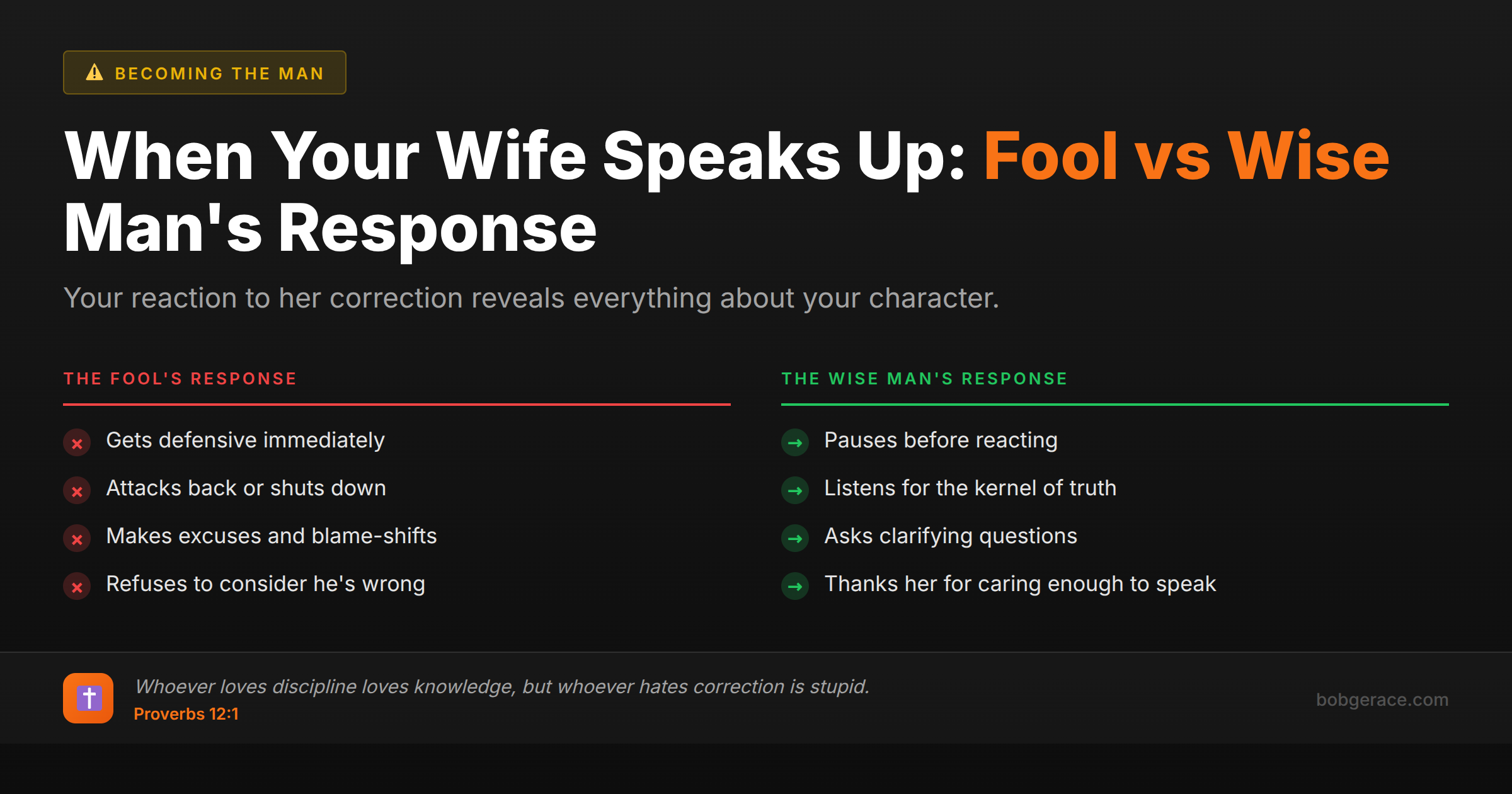
Proverbs presents correction as a gift from God that leads to wisdom and life. The book repeatedly emphasizes that wise people welcome correction while fools reject it. Proverbs 12:1 states, "Whoever loves discipline loves knowledge, but whoever hates correction is stupid." This isn't about being a doormat—it's about having the humility to recognize that we all have blind spots and need others to help us see clearly. In marriage, this principle is crucial. When your spouse offers correction, Proverbs suggests viewing it as an opportunity for growth rather than an attack on your character. Proverbs 27:5-6 reminds us that "Better is open rebuke than hidden love. Wounds from a friend can be trusted." Your spouse's correction, when offered in love, is actually a pathway to becoming the person God designed you to be.
The Full Picture
The Book of Proverbs is essentially God's manual for wisdom in relationships, and it has a lot to say about how we handle correction. Here's what you need to understand: receiving correction well is a mark of wisdom, not weakness.
Proverbs divides humanity into two camps—the wise and the foolish. The wise person seeks out correction, knowing it leads to life and success. The foolish person rejects correction and continues down destructive paths. Proverbs 15:31-32 puts it bluntly: "Whoever heeds life-giving correction will be at home among the wise. Those who disregard discipline despise themselves, but the one who heeds correction gains understanding."
In marriage, this plays out daily. Your spouse sees things about you that you can't see about yourself. They live with your blind spots, your habits, your patterns. When they offer correction—whether it's about how you load the dishwasher or how you speak to the kids—Proverbs suggests this is actually a gift.
But here's the key distinction: Proverbs assumes correction comes from a place of love and genuine concern. It's not about nitpicking or control. It's about iron sharpening iron (Proverbs 27:17). The goal isn't to tear you down but to build you up.
The challenge is that our flesh naturally resists correction. We get defensive. We justify. We counter-attack. But Proverbs calls this foolishness. The wise person pauses, listens, and asks, "Is there truth here I need to hear?" Even if the delivery isn't perfect, even if your spouse's tone could be better, there might be gold buried in that correction.
This doesn't mean becoming a doormat. Proverbs also teaches about the importance of timing, gentleness, and love in how we give correction. But when you're on the receiving end, the question isn't whether your spouse delivered it perfectly—it's whether God might be using them to make you more like Christ.
What's Really Happening
From a psychological perspective, our resistance to correction is deeply rooted in our attachment system and self-preservation instincts. When we perceive criticism, our brain's threat detection system activates, triggering fight-or-flight responses. This is why receiving correction feels so viscerally uncomfortable—our nervous system interprets it as potential abandonment or rejection.
What's fascinating is how this aligns with Proverbs' wisdom. The book essentially describes two different attachment styles: the secure (wise) person who can receive feedback without their identity crumbling, and the insecure (foolish) person whose fragile sense of self cannot tolerate any perceived threat.
Secure individuals—what Proverbs calls "the wise"—have developed what we call distress tolerance. They can sit with the discomfort of hearing hard truths because their core identity remains stable. They've learned to differentiate between "I made a mistake" and "I am a mistake."
Insecure individuals often developed defensive strategies early in life. Perhaps criticism in their family of origin came with shame, rejection, or withdrawal of love. Now, any correction from their spouse triggers those old wounds. They're not really responding to their current situation—they're responding to historical pain.
The beautiful thing about Proverbs is it offers a pathway to rewire these patterns. By consistently choosing wisdom over defensiveness, we literally create new neural pathways. Each time we receive correction gracefully, we strengthen our capacity to do so again. We develop what Scripture calls "a teachable spirit"—essentially, earned secure attachment with both God and others.
This process requires what I call "bilateral safety"—feeling secure enough in the relationship to be vulnerable, and trusting that correction comes from love, not contempt.
What Scripture Says
Proverbs presents a clear biblical framework for understanding correction as God's instrument for our growth and maturity. Let's examine the key verses:
Proverbs 12:1 - "Whoever loves discipline loves knowledge, but whoever hates correction is stupid." This verse establishes the fundamental principle: our attitude toward correction reveals our character. The Hebrew word for "stupid" here is strong—it describes someone who is morally deficient, not just intellectually lacking.
Proverbs 15:31-32 - "Whoever heeds life-giving correction will be at home among the wise. Those who disregard discipline despise themselves, but the one who heeds correction gains understanding." Notice the phrase "life-giving correction"—this suggests that not all correction is created equal. Biblical correction should lead to flourishing, not destruction.
Proverbs 27:5-6 - "Better is open rebuke than hidden love. Wounds from a friend can be trusted, but an enemy multiplies kisses." This passage distinguishes between correction that comes from love versus flattery that enables our flaws. Sometimes the most loving thing your spouse can do is tell you hard truths.
Proverbs 19:20 - "Listen to advice and accept discipline, and at the end you will be counted among the wise." The emphasis here is on the long-term outcome. Receiving correction well today leads to wisdom tomorrow.
Proverbs 17:10 - "A rebuke impresses a discerning person more than a hundred lashes a fool." The wise person only needs gentle correction to change course, while the foolish person won't change even under severe consequences.
Proverbs 9:8-9 - "Do not rebuke mockers or they will hate you; rebuke the wise and they will love you. Instruct the wise and they will be wiser still; teach the righteous and they will add to their learning."
These verses reveal God's heart: He uses correction not to shame us but to mature us into the people He designed us to be.
What To Do Right Now
-
1
Pause before reacting - When your spouse offers correction, take three deep breaths before responding. Ask yourself, "What is my first instinct telling me to do?" then choose wisdom over self-protection.
-
2
Listen for the kernel of truth - Even if the delivery isn't perfect, ask, "Is there something here God wants me to hear?" Look past the tone or timing to the substance of what's being said.
-
3
Ask clarifying questions - Instead of defending, try "Help me understand what you're seeing" or "Can you give me a specific example?" This shows you're taking their concern seriously.
-
4
Thank them for caring - Acknowledge that it takes courage to offer correction. Say something like, "I know this wasn't easy to bring up. Thank you for caring enough to tell me."
-
5
Take time to process - You don't have to respond immediately. Say, "I need some time to think about this" and come back with a thoughtful response within 24 hours.
-
6
Make specific changes - If the correction is valid, create an action plan. Ask your spouse, "What would it look like if I improved in this area?" then follow through consistently.
Related Questions
Ready to Stop the Defensive Cycle?
If you keep blowing it when your spouse tries to help you grow, you don't have to stay stuck in that pattern. Let's work together to build the wisdom and humility your marriage needs.
Get Help Now →