What does humility in conflict look like?
6 min read
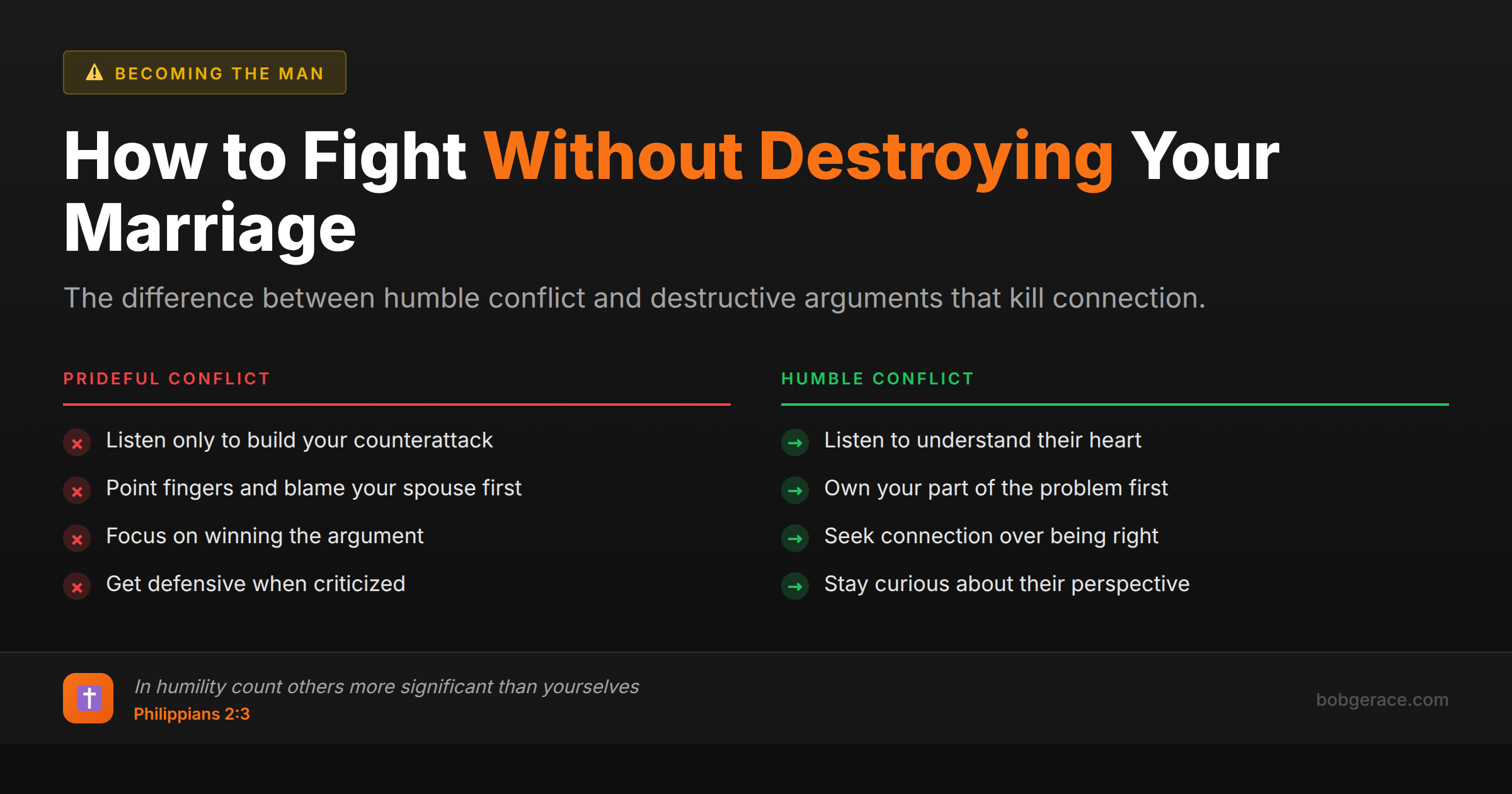
Humility in conflict means approaching disagreements with your spouse from a posture of teachability rather than defensiveness. It's listening to understand instead of listening to win. When you're humble, you're quick to own your part of the problem and slow to point fingers. True humility doesn't mean being a doormat or avoiding difficult conversations. It means entering conflict with curiosity about your spouse's perspective, willingness to be wrong, and genuine care for their heart. You're more concerned with understanding than being understood, more focused on connection than being right.
The Full Picture
Most of us enter conflict like we're going to war. Our hearts start racing, our defenses go up, and we're ready to fight for our position at all costs. But humility flips the entire script on how conflict works in marriage.
Humility changes your posture. Instead of crossing your arms and digging in your heels, you lean forward with open hands. You're genuinely curious about what your spouse is experiencing, even when they're upset with you. This doesn't mean you become passive or agree with everything - it means you're secure enough to truly listen.
Humility changes your questions. Instead of "How can you say that?" you ask "Help me understand what you're feeling." Instead of "You always..." you ask "What did I do that hurt you?" These aren't just better communication techniques - they flow from a heart that's genuinely interested in your spouse's experience.
Humility changes your timeline. Pride wants to resolve everything RIGHT NOW and be proven right immediately. Humility can sit with tension, take breaks when emotions are high, and prioritize understanding over speed. Sometimes the most humble thing you can do is say "I need some time to think about what you've shared."
Humility changes your goals. Instead of winning the argument, you're aiming for deeper understanding and stronger connection. Instead of proving your point, you're trying to love your spouse well even in the middle of disagreement. This shift in purpose transforms everything about how conflict unfolds in your marriage.
What's Really Happening
From a clinical perspective, humility in conflict involves a fundamental shift from a threat-based response to a connection-based response. When we feel criticized or misunderstood, our nervous system activates fight-or-flight mode. Pride amplifies this response, while humility helps regulate it.
Humble individuals demonstrate what we call "cognitive flexibility" - they can hold multiple perspectives simultaneously without feeling threatened. This allows them to stay emotionally regulated even when their spouse is upset. They're not constantly defending their sense of self because their identity isn't dependent on being right in every argument.
Research shows that couples who approach conflict with humility have significantly better outcomes. They resolve issues faster, report higher satisfaction, and build trust rather than eroding it during disagreements. This happens because humility creates psychological safety - both partners feel heard and valued even in the midst of conflict.
The neuroscience is fascinating here. When you approach conflict with genuine curiosity and openness, it activates the prefrontal cortex - the part of your brain responsible for empathy and complex thinking. This keeps you out of reactive mode and allows for creative problem-solving. Humble conflict engagement literally changes your brain state in ways that promote connection rather than division.
What Scripture Says
Scripture gives us a clear picture of what humility looks like, especially in relationships. Philippians 2:3-4 cuts right to the heart: "Do nothing from selfish ambition or conceit, but in humility count others more significant than yourselves. Let each of you look not only to his own interests, but also to the interests of others."
This doesn't mean your needs don't matter - it means you're genuinely concerned about your spouse's heart and experience, not just your own agenda. James 1:19 gives us the practical framework: "Let every person be quick to hear, slow to speak, slow to anger." In conflict, humility makes you a better listener than you are a talker.
Proverbs 27:6 reminds us that "faithful are the wounds of a friend." Sometimes loving your spouse well means hearing hard truths about how you've hurt them. Humility allows you to receive correction as a gift rather than an attack. Galatians 6:1 shows us how to approach our spouse's failures: "If anyone is caught in any transgression, you who are spiritual should restore him in a spirit of gentleness."
1 Peter 5:5-6 connects humility directly to God's blessing: "Clothe yourselves, all of you, with humility toward one another, for God opposes the proud but gives grace to the humble. Humble yourselves, therefore, under the mighty hand of God so that at the proper time he may exalt you." When you choose humility in marriage conflict, you're aligning yourself with how God works in relationships.
What To Do Right Now
-
1
Take three deep breaths before responding when conflict starts - this engages your thinking brain instead of your reactive brain
-
2
Ask "What are you feeling right now?" and listen to the entire answer before formulating your response
-
3
Own your part first - identify at least one thing you contributed to the problem before addressing your spouse's role
-
4
Use "Help me understand..." instead of "You're wrong because..." when you disagree with your spouse's perspective
-
5
Take breaks when you feel defensive rising - say "I want to hear you well, can we pause for 10 minutes?"
-
6
End conflicts by asking "What do you need from me going forward?" and commit to specific changes
Related Questions
- What does Proverbs say about receiving correction?
- How do I receive correction as from the Lord?
- What does 'taking responsibility' actually look like?
- How do I hear her without defending myself?
- What does a non-defensive response sound like?
- What is the relationship between confession and defensiveness?
- What does real forgiveness look like?
- What does 'godly sorrow' look like in practice?
- What does genuine repair look like for old wounds?
- What does 'speaking truth in love' look like?
Also find Bob on
Subscribe for weekly videos on Christian marriage.
Bring Your Actual Conflicts to a Coach
Humility sounds good on paper. Practicing it when your wife's upset and you're flooded? That's where most men need a human who knows their specific marriage and can call the patterns they can't see.
Talk to Bob →