What does real transformation look like vs. temporary change?
6 min read
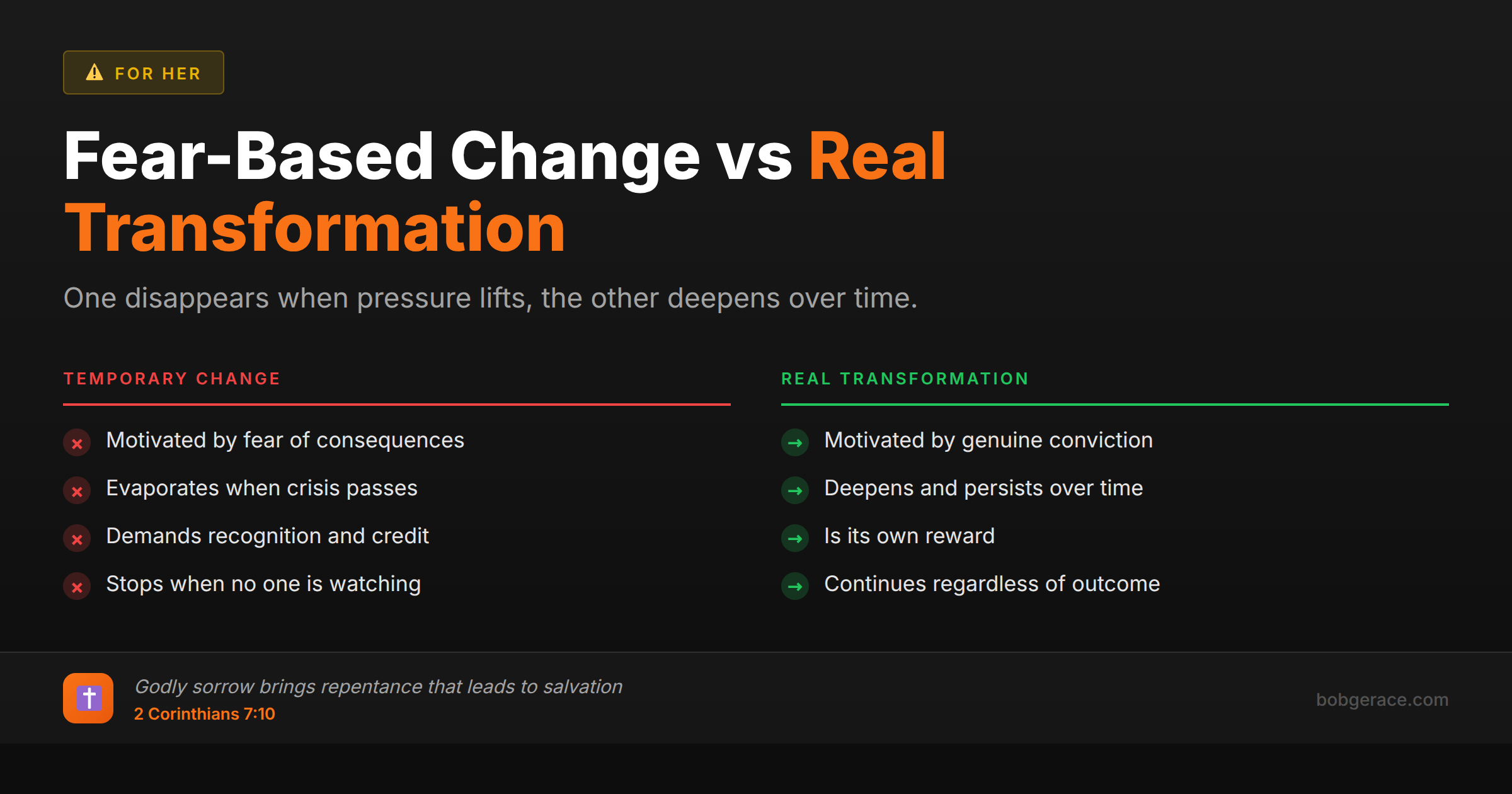
Temporary change is motivated by fear of consequences—he changes because he's scared of losing you, facing divorce, or experiencing pain. Real transformation is motivated by genuine conviction—he changes because he sees who he's been, grieves it, and becomes genuinely committed to being different regardless of outcome. You can tell the difference by what happens when pressure decreases. Temporary change evaporates when the crisis passes or when he thinks he's 'done enough.' Real transformation deepens over time and persists even when no one is watching and nothing is forcing it. Temporary change demands recognition and credit. Real transformation is its own reward.
The Full Picture
You've seen temporary change before. The tearful promises after a fight. The renewed effort after you mentioned divorce. The flowers, the dates, the sudden attentiveness that lasts for weeks—maybe even months—before slowly fading back to the old patterns.
That cycle is one of the most painful parts of a struggling marriage. You start to hope. You let your guard down. Then reality returns, and the disappointment is worse than if he'd never tried at all. After enough cycles, you stop believing change is possible.
Here's how to tell the difference:
Temporary change is performance. Real transformation is identity shift.
Performance asks: 'What do I need to do to fix this situation?' Identity shift asks: 'Who do I need to become?' Performance is exhausting and unsustainable because he's acting against his nature. Identity shift becomes natural because his nature itself has changed.
Temporary change resists accountability. Real transformation welcomes it.
Watch how he responds when you express doubt or when others check on his progress. Temporary change gets defensive: 'Why can't you just trust me? I'm trying!' Real transformation stays humble: 'I understand you need to see evidence over time. What would help you feel safer?'
Temporary change has a finish line. Real transformation is a lifestyle.
Temporary change asks: 'How long do I have to do this?' Real transformation understands that becoming a healthy man is a permanent way of living, not a program to complete.
Temporary change focuses on your response. Real transformation focuses on his character.
If his mood about 'doing the work' depends on whether you're responding positively, it's temporary. If he's committed to growth regardless of your current response because he knows it's right, that's transformation.
Temporary change is often dramatic. Real transformation is usually mundane.
Big gestures are easy to manufacture. Showing up consistently, day after day, with small acts of integrity when no one is applauding—that's where real change lives.
What's Really Happening
Clinically, the distinction between temporary change and real transformation maps to what psychologists call extrinsic versus intrinsic motivation. Extrinsic motivation comes from external rewards or punishments—he changes to avoid divorce or to get you to stop being upset. Intrinsic motivation comes from internal values and genuine desire—he changes because he's convicted about who he's been and committed to who he wants to become.
Research consistently shows that extrinsically motivated change has a short half-life. Once the external pressure decreases, so does the behavior. This is why 'scared straight' approaches and consequence-based interventions typically fail long-term. They produce compliance, not transformation.
Neurologically, real transformation involves what's called neuroplasticity—the brain's ability to rewire itself through sustained new patterns of thought and behavior. This rewiring takes time (typically 6-18 months of consistent practice) and requires deep engagement, not surface compliance.
True transformation also involves what therapists call mentalization—the ability to see yourself from the outside and others from the inside. A man experiencing real transformation can articulate how his behavior affected you, not just that it affected you. He understands your //blog.bobgerace.com/marriage-tests-christian-husband-inner-battle/:inner experience, not just your external reactions.
The accountability structures in this program are designed to maintain change long enough for it to become identity. By the time the formal program ends, the behaviors have become who he is, not just what he's doing.
What Scripture Says
Scripture makes a clear distinction between worldly sorrow and godly sorrow—and the fruit each produces.
"Godly sorrow brings repentance that leads to salvation and leaves no regret, but worldly sorrow brings death" (2 Corinthians 7:10). Worldly sorrow is sorry about consequences. Godly sorrow is grieved about the offense itself. One produces temporary change; the other produces transformation.
"Produce fruit in keeping with repentance" (Matthew 3:8). John the Baptist's challenge to the Pharisees applies here: words and emotions aren't enough. Real repentance produces visible, sustained fruit. If the fruit isn't there over time, the repentance wasn't real.
Jesus warned about exactly this pattern: "This people honors me with their lips, but their hearts are far from me" (Matthew 15:8). Temporary change is lip service. Real transformation is heart change that manifests in sustained action.
"But the fruit of the Spirit is love, joy, peace, forbearance, kindness, goodness, faithfulness, gentleness and self-control" (Galatians 5:22-23). Notice these are called fruit, not performance. Fruit grows naturally from a healthy tree. It's not manufactured or forced. When a man is genuinely transformed by God's Spirit, these qualities emerge naturally over time.
"By their fruit you will recognize them" (Matthew 7:16). Jesus gave you permission to evaluate based on evidence, not promises. You're not being unforgiving or faithless when you wait to see sustained fruit before extending trust. You're being wise.
What This Means for You Right Now
-
1
Track patterns over time, not moments - Keep a simple journal noting his behavior. After 3-6 months, patterns become clear that are invisible week to week.
-
2
Watch what happens when you're not responsive - Does his effort continue when you're not rewarding it? Real transformation persists regardless of your response.
-
3
Listen for ownership vs. excuse-making - Real transformation says 'I did this and it was wrong.' Temporary change says 'I did this, but...' followed by justification.
-
4
Notice whether he seeks accountability or avoids it - A man in real transformation actively wants others checking on him. A man in temporary change resents oversight.
-
5
Test with time and decreased pressure - Temporary change shows up in crisis and fades when things stabilize. Real transformation becomes more evident when pressure decreases.
-
6
Trust your gut over his words - You've been watching this man for years. Your nervous system knows the difference between performance and genuine change, even when your mind wants to believe the words.
Related Questions
Also find Bob on
Subscribe for weekly videos on Christian marriage.
Think This Could Help Your Husband?
If you believe your husband could benefit from the structured transformation process we offer, share this with him. Real change is possible when men commit to the work.
Learn About the Program →