What is 'attachment shutdown'?
6 min read
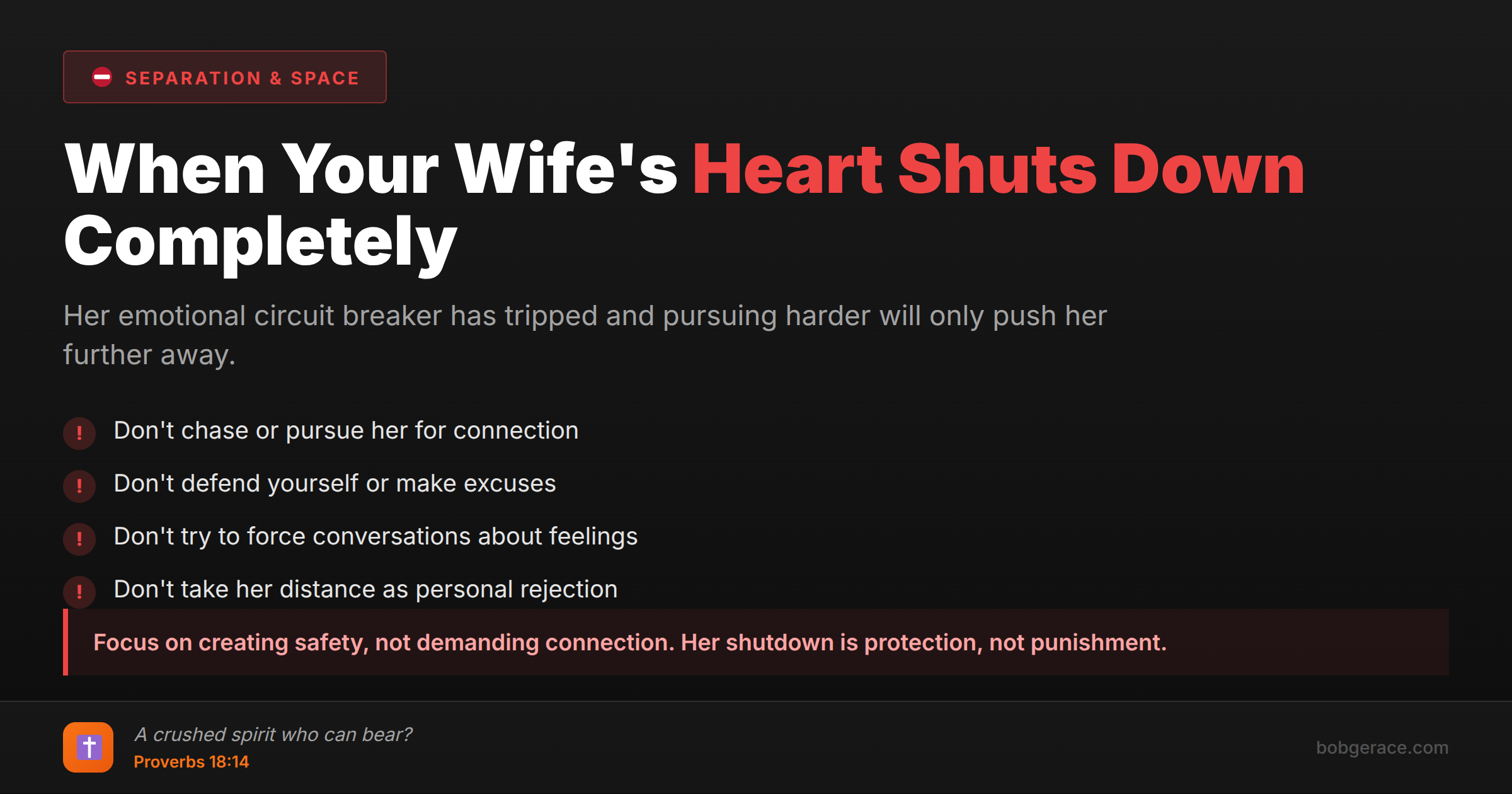
Attachment shutdown is your wife's emotional defense mechanism where she disconnects from the relationship to protect herself from further hurt or disappointment. It's like an emotional circuit breaker that trips when the system becomes overloaded. This isn't a conscious decision to punish you - it's her nervous system's way of surviving what feels like an unsafe emotional environment. When attachment shutdown occurs, she may seem present physically but feels miles away emotionally. She stops sharing her inner world, reduces physical affection, and creates emotional distance as a form of self-preservation.
The Full Picture
Attachment shutdown is one of the most misunderstood dynamics in struggling marriages. When your wife has emotionally shut down, she's not trying to hurt you - she's trying to protect herself.
Think of it like this: imagine touching a hot stove repeatedly. Eventually, your hand would pull back automatically before even making contact. That's what's happened in your marriage. Your wife's emotional system has learned to "pull back" before getting hurt again.
## The Warning Signs
Attachment shutdown doesn't happen overnight. It's usually preceded by months or years of: - Feeling unheard or dismissed - Repeated conflicts without resolution - Emotional needs going unmet - Trust being broken repeatedly - Feeling criticized or controlled
## What It Looks Like
When attachment shutdown occurs, you'll notice: - Emotional flatness - she seems numb or indifferent - Reduced communication - conversations become surface-level - Physical distance - less touch, affection, or intimacy - Protective behaviors - she guards her thoughts and feelings - Disengagement - she stops fighting for the relationship
## Why It Happens
This shutdown serves a crucial purpose: emotional survival. When someone we love repeatedly hurts us, our attachment system eventually says "enough" and creates distance to prevent further damage. It's not weakness - it's actually a sophisticated protective mechanism.
The challenge is that once this shutdown occurs, it becomes self-reinforcing. The more she withdraws, the more you might pursue or criticize, which confirms her need to stay protected.
What's Really Happening
From a clinical perspective, attachment shutdown represents a shift from anxious or secure attachment to avoidant attachment patterns. Your wife's nervous system has moved into a chronic state of hypervigilance and self-protection.
Neurologically, her brain has learned to suppress the attachment system - the very system designed to create closeness and connection. The parts of her brain responsible for bonding, trust, and emotional openness have essentially gone "offline" to protect her from perceived threats.
This isn't a character flaw or manipulation tactic. It's a trauma response. When someone experiences repeated relational injuries without repair, their brain adapts by creating emotional distance. The amygdala becomes hyperactive while the prefrontal cortex - responsible for connection and empathy - becomes less accessible.
What makes this particularly challenging is that attachment shutdown often triggers the opposite response in partners. When she withdraws, you might become more pursuing, more demanding of connection, or more critical of her distance. This creates a pursue-withdraw cycle that reinforces her need to stay shut down.
Recovery requires understanding that her shutdown isn't about you - it's about safety. Her nervous system needs to experience consistent safety before the attachment system can come back online. This means creating an environment where she can be vulnerable without fear of criticism, dismissal, or emotional overwhelm.
What Scripture Says
Scripture gives us profound insight into the human heart's need for safety and the damage that harsh words and actions can cause in relationships.
Proverbs 18:14 reminds us: *"A man's spirit will endure sickness, but a crushed spirit who can bear?"* When your wife has shut down, her spirit may be crushed from repeated wounds. This isn't dramatic language - it's the reality of what happens when someone's heart is repeatedly broken.
Ephesians 4:29 instructs: *"Let no corrupting talk come out of your mouths, but only such as is good for building up, as fits the occasion, that it may give grace to those who hear."* If your wife has shut down, examine whether your words have been building up or tearing down. Our speech has the power to create safety or fear.
1 Peter 3:7 specifically addresses husbands: *"Husbands, live with your wives in an understanding way, showing honor to the woman as the weaker vessel, since they are heirs with you of the grace of life, so that your prayers may not be hindered."* The word "weaker" here doesn't mean inferior - it means more delicate, requiring more careful handling.
Psalm 147:3 offers hope: *"He heals the brokenhearted and binds up their wounds."* God specializes in healing broken hearts, including your wife's. But healing requires safety, time, and often significant changes in how you approach the relationship.
Colossians 3:19 commands: *"Husbands, love your wives and do not be harsh with them."* Harshness - whether in tone, criticism, or emotional intensity - can drive someone into protective shutdown.
Luke 6:45 teaches: *"The good person out of the good treasure of his heart produces good, and the evil person out of his evil treasure produces evil, for out of the abundance of the heart his mouth speaks."* Your wife's shutdown may be reflecting what she's been receiving from your heart.
What To Do Right Now
-
1
Stop pursuing and give space - Respect her need for emotional distance without taking it personally or trying to force connection
-
2
Own your part completely - Acknowledge the specific behaviors and patterns that contributed to her shutdown without expecting immediate forgiveness
-
3
Focus on safety, not connection - Create an environment where she feels emotionally and physically safe before trying to rebuild intimacy
-
4
Change your approach fundamentally - Stop the criticisms, demands, and emotional intensity that triggered her protective response
-
5
Get professional help - Work with a marriage coach or therapist who understands attachment dynamics and can guide the healing process
-
6
Demonstrate sustained change - Show through consistent actions over months that you've genuinely changed, not just when you want something from her
Related Questions
- What is 'deactivation' and has she done it?
- When does a wife's attachment system shut off completely?
- What is 'emotional disengagement'?
- Is her shutdown protective or permanent?
- What attachment injuries lead to this kind of withdrawal?
- Can deactivated attachment reactivate?
- What is 'deactivation' and did I cause it?
- What does avoidant attachment look like in a wife?
- What are 'attachment injuries' and how many did I cause?
Also find Bob on
Subscribe for weekly videos on Christian marriage.
This 30 Days Matters
Attachment shutdown doesn't reverse on its own. Bob works with men whose wives are already emotionally gone—he'll see what's specific about your situation and what moves you have left.
Talk to Bob →