How do I be a good dad through this?
6 min read
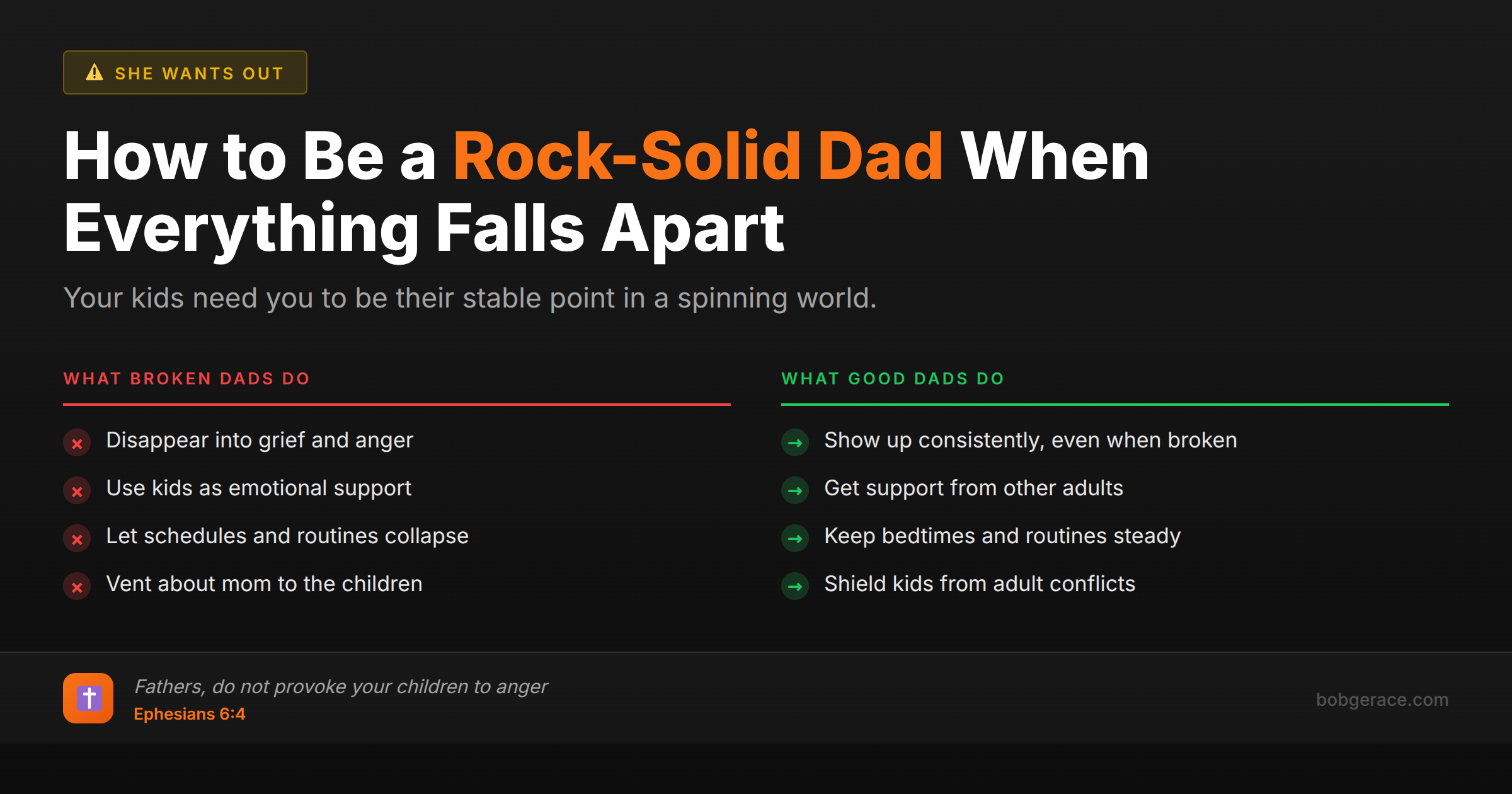
Being a good dad through marital crisis means becoming your children's steady anchor when everything else feels unstable. Your kids are watching how you handle this storm, and they need to see strength, consistency, and unconditional love from you now more than ever. The truth is, your marriage problems don't give you permission to check out as a father. In fact, this crisis demands that you step up your parenting game. Your children didn't choose this chaos, but they're living in it. They need you to be present, emotionally available, and fiercely protective of their sense of security. This means controlling your emotions around them, maintaining routines, and never using them as your emotional support system or turning them against their mother.
The Full Picture
Your children are experiencing their own trauma right now, even if they seem fine on the surface. They're scared, confused, and probably blaming themselves for the tension they feel at home. As their father, you have the power to either amplify their fear or become their source of stability.
The biggest mistake I see fathers make is either completely withdrawing from their kids because they're overwhelmed, or over-involving them in adult problems. Neither serves your children well. Withdrawal teaches them that dad abandons ship when things get tough. Over-involvement forces them to carry emotional burdens they're not equipped to handle.
Your children need three things from you right now: • Consistency - Keep your routines, your discipline style, and your availability predictable • Protection - Shield them from adult conflicts, legal discussions, and your emotional breakdowns • Presence - Be emotionally available, not just physically in the room scrolling your phone
Here's what good fathering looks like during crisis: You maintain bedtime stories even when you're exhausted. You still show up to their games even when you don't want to see your wife. You answer their questions honestly but age-appropriately. You reassure them that both parents love them, even when you're angry at their mother.
Remember: Your children's relationship with their mother is separate from your relationship with her. Don't poison that well, no matter how hurt you are. Your kids need both parents to be heroes in their story, not villains.
What's Really Happening
Children experiencing parental conflict show measurable increases in cortisol levels and stress responses that can impact their development long-term. Research consistently shows that children's adjustment during family crisis depends more on how parents manage the conflict than on the conflict itself.
From a developmental perspective, children in crisis often experience what we call 'parentification' - taking on adult emotional responsibilities they're not equipped to handle. When fathers lean on children for emotional support or share adult problems, it disrupts normal child development and creates anxiety disorders.
The most resilient children have at least one parent who remains emotionally regulated and consistent. This parent becomes what we call a 'secure base' - a safe harbor the child can return to when the world feels chaotic. Your ability to manage your own emotions directly impacts your child's nervous system regulation.
Children also engage in 'loyalty conflicts' during parental discord - feeling they must choose sides between parents they love. Fathers who speak negatively about the mother, even subtly, force children into impossible emotional positions that often result in depression and behavioral problems.
The good news: Children are remarkably resilient when they have one stable, emotionally available parent. Your consistency and emotional regulation can literally rewire their stress responses and teach them healthy coping mechanisms they'll use for life.
What Scripture Says
Scripture calls fathers to be protectors and nurturers, especially during difficult times. Deuteronomy 6:6-7 reminds us: *'These commandments that I give you today are to be on your hearts. Impress them on your children. Talk about them when you sit at home and when you walk along the road, when you lie down and when you get up.'* This speaks to consistent, daily engagement regardless of circumstances.
Ephesians 6:4 provides clear instruction: *'Fathers, do not exasperate your children; instead, bring them up in the training and instruction of the Lord.'* During crisis, it's easy to become irritable and take our stress out on our kids. God calls us to patience and intentional nurturing.
Psalm 68:5 declares that God is *'a father to the fatherless, a defender of widows.'* Even in your pain, you're called to reflect God's protective, providing heart to your children. They need to see God's love through your consistency and care.
1 Corinthians 13:4-7 isn't just about marriage - it's about how love acts in all relationships: *'Love is patient, love is kind... it keeps no record of wrongs.'* Your children need this kind of love from you, especially when you're hurting.
Your role as father is a sacred calling that doesn't diminish because your marriage is struggling. If anything, it becomes more crucial. You're showing your children what godly manhood looks like under pressure.
What To Do Right Now
-
1
Create and maintain daily routines that give your children predictability and security
-
2
Schedule one-on-one time with each child weekly, focusing entirely on them without discussing adult problems
-
3
Establish clear boundaries about what you will and won't discuss with your children regarding the marriage
-
4
Find a trusted friend or counselor to process your emotions instead of burdening your children
-
5
Continue attending all important events in your children's lives regardless of marital tension
-
6
Practice emotional regulation techniques so you can stay calm and present when your children need you
Related Questions
- How do I tell the kids?
- What do I say when kids ask what's happening?
- How do I co-parent during this?
- What do kids need most from dad during divorce?
- How do I model Christ to my kids in this?
- What legacy am I leaving them through this crisis?
- How do I not lose my mind right now?
- What does self-care look like in this season?
- How do I become the husband she needs?
Also find Bob on
Subscribe for weekly videos on Christian marriage.
Your Kids Need You Steady—Get a Coach
Parenting through marital crisis is its own skill set. A coach who knows your specific situation helps you stay the dad your kids need when everything else is shaking.
Talk to Bob →