Is trial separation ever a good idea?
6 min read
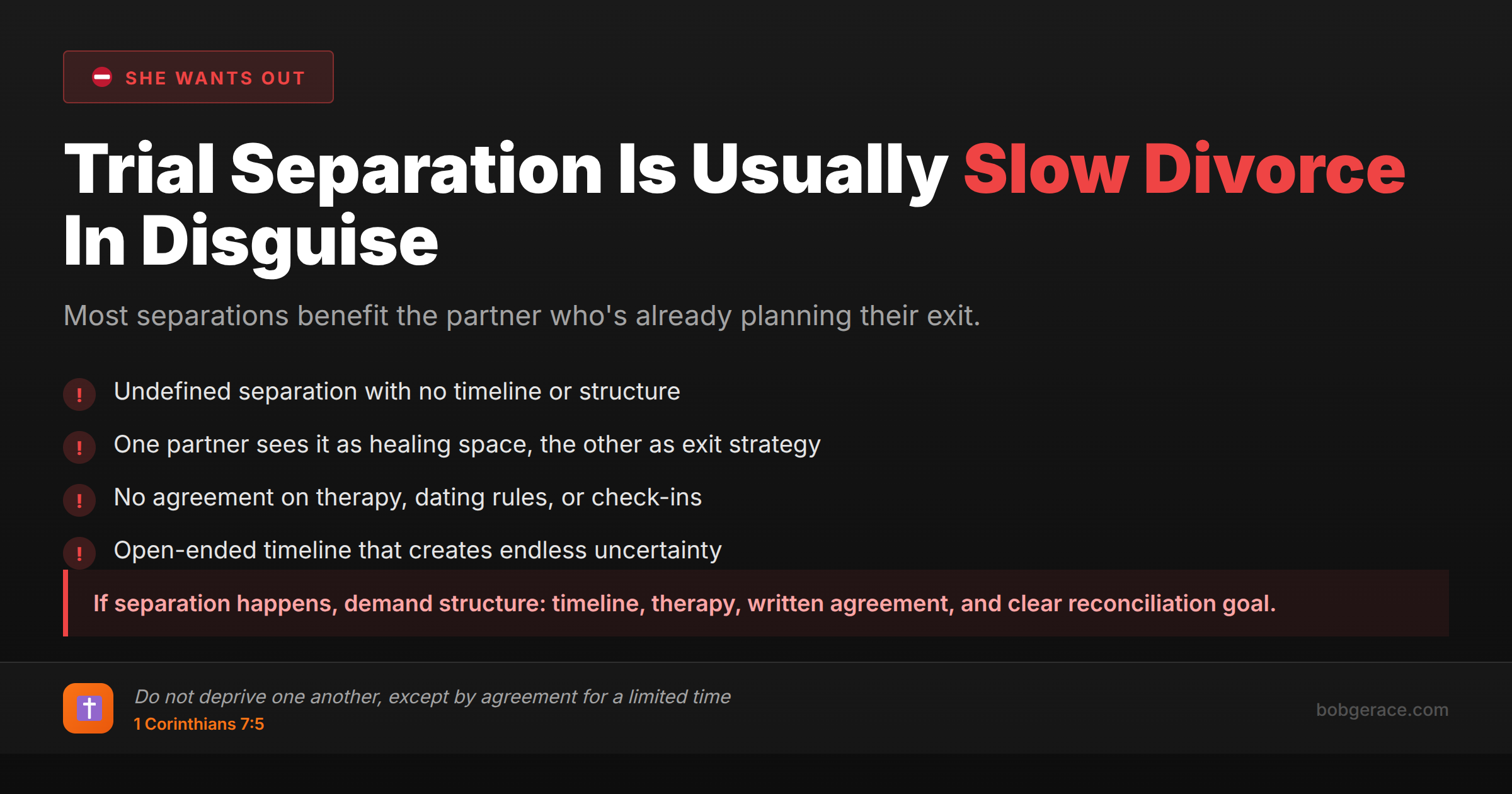
Trial separation can be a good idea, but only under very specific circumstances. If your wife is demanding space and threatening divorce, a structured separation might be your best shot at saving the marriage. The key word here is "structured." Most separations fail because they're really just divorce with training wheels - no rules, no timeline, no clear purpose. Here's what I've learned coaching hundreds of men: separation works when it creates space for real change, not when it's used as an escape hatch. If you're both committed to using the time to work on yourselves and the marriage, with clear boundaries and regular check-ins, it can provide the breathing room needed for healing. But if she's already emotionally checked out and just wants you gone, separation often becomes the first step toward permanent divorce.
The Full Picture
Trial separations occupy a dangerous middle ground in marriage. They're neither fully committed to the relationship nor honestly facing divorce. But in the right circumstances, they can provide exactly what a dying marriage needs: space to breathe and perspective to see clearly.
When separation can help: • High conflict situations where every conversation becomes a fight • Addiction or abuse issues that require professional intervention • Emotional overwhelm where both spouses need space to think clearly • Pattern breaking when destructive cycles seem impossible to interrupt
When separation usually fails: • One spouse has already emotionally divorced • It's used to avoid difficult conversations or decisions • No clear structure, timeline, or goals are established • It becomes a way to "test drive" single life
The biggest mistake men make is agreeing to separation without any structure. Your wife says she needs space, you move out, and suddenly you're living in limbo while she gets comfortable with life without you. This isn't separation - it's soft divorce.
A proper trial separation looks more like intensive care for your marriage. You establish clear boundaries about contact, dating others, finances, and parenting. You set a specific timeline - usually 3-6 months maximum. You both commit to individual work whether that's counseling, addressing personal issues, or developing new skills. Most importantly, you have regular check-ins to assess progress.
The goal isn't to make separation comfortable. It's to use the space to do the hard work of change while maintaining hope for reconciliation.
What's Really Happening
From a therapeutic perspective, trial separations can serve as a controlled intervention when marriages reach crisis points. Research shows that separations work best when they address specific, identifiable problems rather than general relationship dissatisfaction.
The psychological concept of differentiation is crucial here. Many couples become so emotionally fused that they can't see their individual contributions to marital problems. Separation can provide the emotional space necessary for each partner to develop clearer self-awareness and break reactive patterns.
However, attachment theory warns us about the risks. For individuals with anxious attachment styles, separation often triggers abandonment fears that can intensify destructive behaviors. Those with avoidant attachment may use separation to further distance themselves emotionally, making reconciliation less likely.
Structured separations work because they: • Maintain connection while reducing conflict • Allow for individual therapeutic work without daily triggers • Create conditions for new behavioral patterns to develop • Provide natural consequences that can motivate change
The key therapeutic principle is containment - creating safe boundaries that prevent the separation from becoming chaotic or punitive. Without structure, separations often trigger the very abandonment fears and control battles that damaged the marriage initially.
Clinically, I've observed that separations lasting longer than six months rarely result in reconciliation. The longer spouses live apart, the more they adapt to single life and the less motivated they become to do the difficult work of rebuilding their marriage.
What Scripture Says
Scripture takes marriage seriously and doesn't treat separation lightly. However, the Bible does acknowledge that there are times when spouses may need to live apart for legitimate reasons.
Paul addresses separation directly in 1 Corinthians 7:10-11: "A wife must not separate from her husband. But if she does, she must remain unmarried or else be reconciled to her husband. And a husband must not divorce his wife." This passage acknowledges that separation sometimes happens while maintaining hope for reconciliation.
The principle of Matthew 18:15-17 about conflict resolution applies to marriage: "If your brother or sister sins, go and point out their fault, just between the two of you. If they listen to you, you have won them over." Sometimes separation provides the space needed for this process to work when emotions are too high for productive conversation.
Ecclesiastes 3:1 reminds us "There is a time for everything, and a season for every activity under the heavens." This includes seasons of closeness and seasons of distance in marriage, though the goal should always be restoration.
The heart attitude matters immensely. Ephesians 4:26-27 says "In your anger do not sin: Do not let the sun go down while you are still angry, and do not give the devil a foothold." Separation should be about creating space for healing, not harboring resentment or planning revenge.
Ultimately, Malachi 2:16 tells us that God hates divorce. Any separation should be undertaken with the clear intention of doing whatever it takes to restore the marriage covenant. If separation becomes a way to ease into divorce rather than fight for the marriage, it contradicts God's design for permanent, covenant marriage.
What To Do Right Now
-
1
Define the specific problems separation is meant to address - don't agree to vague "we need space"
-
2
Establish a clear timeline with specific check-in dates - 3-6 months maximum with monthly reviews
-
3
Create written agreements about boundaries: contact frequency, dating others, finances, and children
-
4
Commit to individual counseling or coaching during separation - use the time for real personal growth
-
5
Set specific goals for what needs to change before reconciliation can happen
-
6
Schedule regular communication - weekly phone calls or meetings to discuss progress and feelings
Related Questions
- She wants separation — should I agree?
- Should I move out if she asks?
- What are the rules of separation?
- Can we separate and still work on things?
- What is 'structured separation' and does it work?
- What's the difference between space to heal and space to exit?
- Should I give her space or fight for her?
- What boundaries should I set?
- How long do I wait before giving up?
- What does 'standing' mean clinically?
Also find Bob on
Subscribe for weekly videos on Christian marriage.
Bring Your Separation Plan to Bob
Separation has a narrow window. A coach who knows your marriage can help you set the structure, hold the boundaries, and use this time to actually rebuild instead of drift toward divorce.
Talk to Bob →