What are the signs my marriage is falling apart?
5 min read
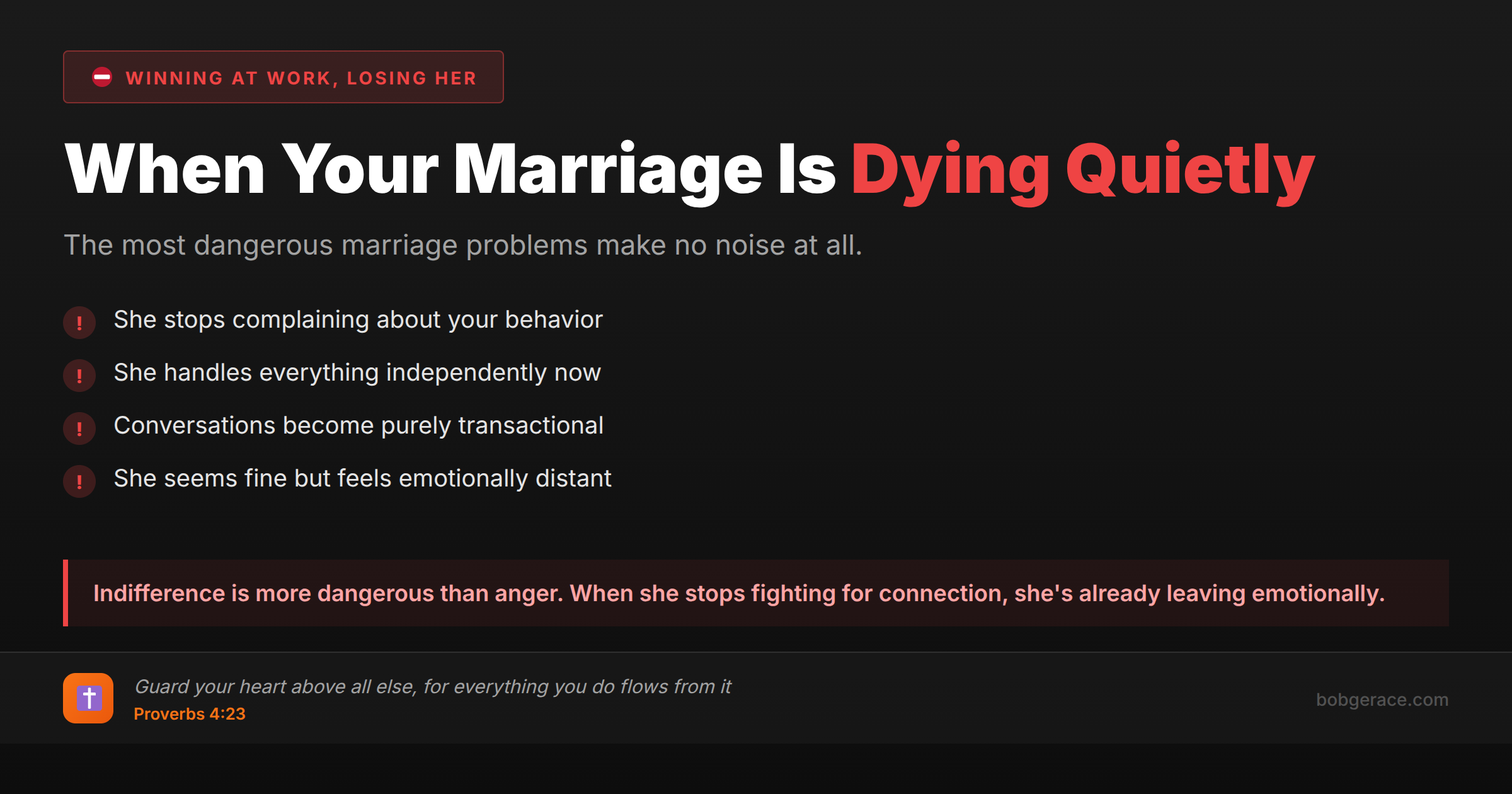
The earliest signs your marriage is falling apart are often the quietest ones. Your wife stops complaining. She stops asking you to engage. She becomes more independent, handles more on her own, and expects less from you. Affection drops. Conversation becomes transactional. She may seem fine on the surface, but underneath she has begun to detach. Indifference is more dangerous than anger. When she stops fighting for connection, she may be preparing to leave emotionally long before she says the words. Most men wake up when she says she is done. The signs usually started months or years earlier.
The Quiet Drift Before the Crisis
Most successful men do not see the marriage falling apart because the signs do not look like crisis. There is no screaming. No affair yet. No lawyer. Just a slow, steady drift that feels like normal life until one day she says she cannot do this anymore.
The earliest warning signs are behavioral. She stops initiating affection. She stops complaining about your work hours or your phone use because she has given up expecting change. She becomes more self-sufficient, handling kid schedules, social plans, and emotional needs without you. She may even seem happier because she has stopped waiting for you to show up.
You may notice less sex, but you rationalize it as stress or busyness. You may notice she is quieter, but you assume she is fine because she is not angry. You may notice she spends more time with friends or her own hobbies, and you feel relieved because it takes pressure off you. These are not signs of health. They are signs of detachment.
Many men describe this phase as everything seeming okay until it suddenly was not. But it was never sudden. The disconnection was building. She was grieving the marriage while still in it. By the time she says she is done, she has often been emotionally gone for months or longer. The crisis moment is not the beginning. It is the reveal.
Indifference, Resentment, and Emotional Shutdown
Attachment research shows that when a partner repeatedly bids for connection and gets no response, they eventually stop bidding. This is called learned helplessness in relationships. Your wife may have spent years asking you to be more present, more emotionally available, more engaged. When those bids went unmet, her nervous system adapted by shutting down the expectation.
Resentment builds in layers. Early on, she may have felt hurt or frustrated. Over time, that turned into resignation. She stopped expecting you to notice her, respond to her, or prioritize her. The resentment became a background hum, and she learned to function around it. This is why she may seem fine. She has adapted to your absence.
Indifference is the final stage before detachment. When she stops caring whether you come home on time, stops asking about your day, stops trying to connect physically or emotionally, she is no longer invested in changing the dynamic. She has moved from protest to despair to detachment. This is the most dangerous phase because her heart is no longer in the fight.
Many men misread this as peace. They think the nagging has stopped because things are better. In reality, the nagging stopped because she has stopped hoping. The absence of conflict is not the same as the presence of connection. When a wife becomes indifferent, the marriage is often closer to the edge than most men realize.
The Call to Watchfulness and Repentance
Scripture calls husbands to love their wives as Christ loved the church, giving himself up for her (Ephesians 5:25). This is not passive provision. It is active, sacrificial, attentive love. A man who is blind to his wife's heart is not leading well, no matter how much he provides or how hard he works.
Proverbs 4:23 says to guard your heart above all else, for everything you do flows from it. But guarding your heart also means guarding your marriage. It means staying awake to the condition of your wife's heart, not assuming everything is fine because there is no open conflict. Watchfulness is part of love.
Repentance is not just for moral failure. It is for blindness, neglect, and passivity. If you have missed the signs, if you have let your wife drift into loneliness while you focused on work or comfort or control, repentance means turning back toward her. It means acknowledging what you did not see and choosing to see now.
God is a God of restoration, but restoration requires honesty. You cannot fix what you will not name. The signs are there. The question is whether you are willing to look at them and respond before it is too late.
Action Steps
-
1
Ask her directly: 'Do you feel alone in this marriage?' Then listen without defending or explaining.
-
2
Track your own behavior for one week: How many times did you initiate non-sexual affection? How many real conversations did you have?
-
3
Identify one pattern she has complained about in the past (work hours, phone use, emotional distance) and change it this week without announcing it.
-
4
Stop assuming silence means peace. If she has stopped complaining, ask yourself if she has also stopped expecting you to change.
-
5
Get help now, not later. If you see these signs, do not wait until she says she is done. Talk to a coach, a pastor, or a counselor who understands marriage dynamics.
Related Questions
Also find Bob on
Subscribe for weekly videos on Christian marriage.
Do Not Wait Until She Says She Is Done
If you are seeing these signs, the time to act is now, not after she has one foot out the door. I help men see what they have been missing and rebuild connection before it is too late.
Talk to Bob →