How do I deal with intrusive images?
6 min read
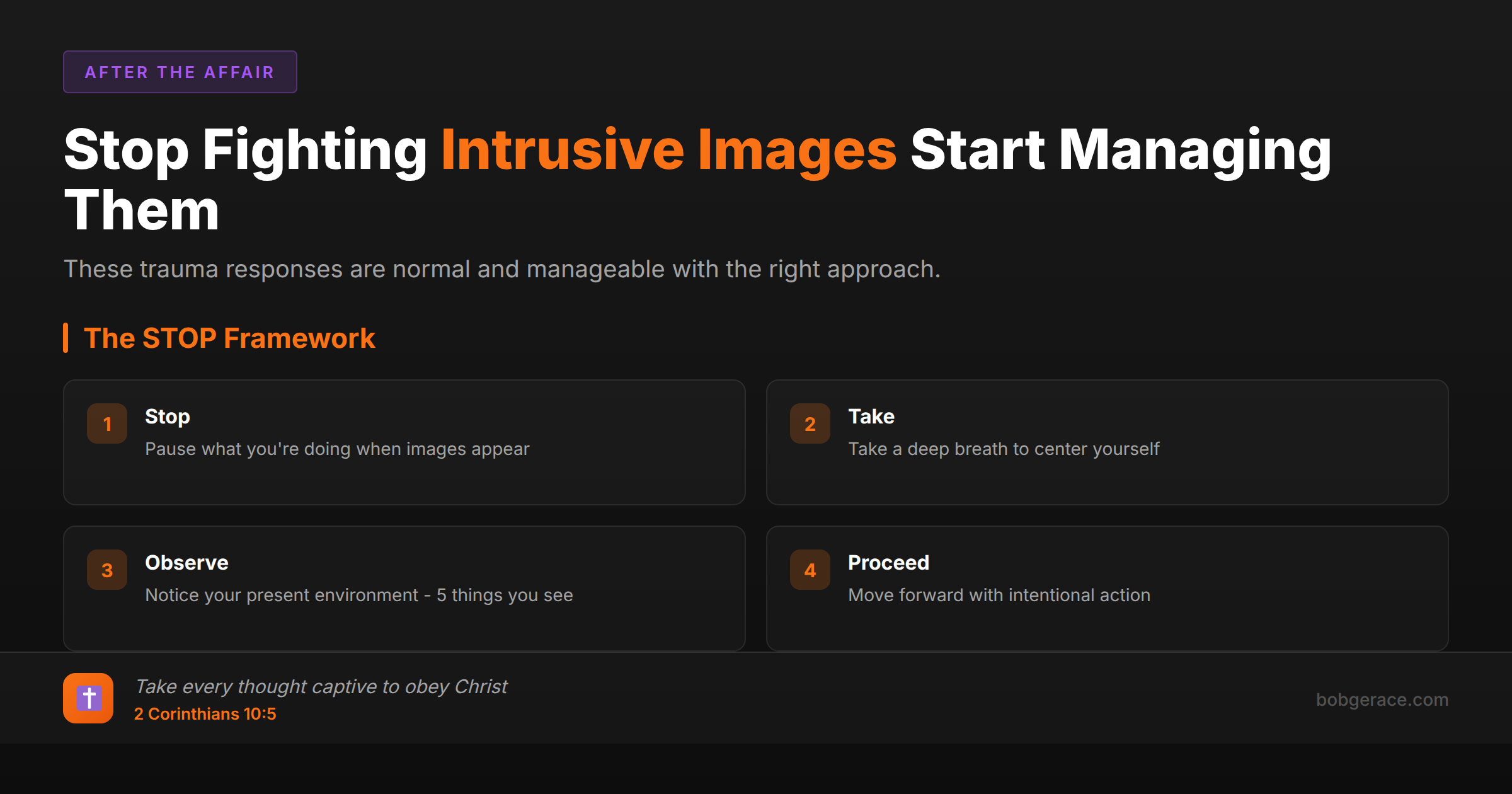
Intrusive images after discovering infidelity are normal trauma responses that can be managed with specific techniques. The key is understanding these aren't permanent and you have more control than you realize. Start by grounding yourself when images appear - name five things you can see, four you can hear, three you can touch. Don't fight the images directly; instead, acknowledge them and redirect your focus to something concrete in your present environment. Practice the 'STOP' technique: Stop what you're doing, Take a breath, Observe your surroundings, and Proceed with intention. These images lose power when you stop fearing them and start managing your response to them.
The Full Picture
Intrusive images are one of the most distressing symptoms people experience after discovering their spouse's affair. These unwanted mental pictures can hit you at any moment - while you're working, cooking dinner, or trying to sleep. You might see vivid scenes of your spouse with the other person, replay moments of discovery, or imagine scenarios that may not have even happened.
This is trauma, not weakness. Your brain is trying to process an overwhelming experience by replaying it, but this natural response becomes problematic when it happens constantly. The images feel so real and intense that many people think they're losing their minds or will never recover.
The cruel irony is that the harder you try to push these images away, the stronger they become. This happens because our brains don't process "don't think about" commands well - try not thinking about a pink elephant right now. See what I mean?
You're not broken, and this won't last forever. These images are your mind's way of trying to make sense of betrayal trauma. They're intense because betrayal by someone you trusted completely violates your fundamental sense of safety and reality. Your brain keeps replaying these scenes because it's desperately trying to understand and prepare for future threats.
The good news is that intrusive images respond well to specific techniques. You can learn to reduce their frequency, intensity, and duration. Most importantly, you can reclaim your mental space and peace.
What's Really Happening
From a clinical perspective, intrusive images are a hallmark symptom of betrayal trauma, which shares characteristics with PTSD. When we experience betrayal by an intimate partner, our nervous system activates threat-detection mechanisms that can become hypervigilant and dysregulated.
These images aren't random - they're your brain's attempt to //blog.bobgerace.com/marriage-healing-leadership-create-recovery-field/:create a coherent narrative from fragmented traumatic memories. The visual cortex and emotional processing centers become hyperactive while the prefrontal cortex (responsible for rational thinking) becomes suppressed. This is why the images feel so vivid and emotionally charged.
The key insight is that you don't need to eliminate these images completely to heal. Research shows that the most effective approach involves changing your relationship with the intrusive thoughts rather than trying to suppress them. Acceptance and Commitment Therapy (ACT) and Eye Movement Desensitization and Reprocessing (EMDR) have shown particular effectiveness for betrayal trauma.
Neuroplasticity means your brain can literally rewire itself. Every time you respond to intrusive images with grounding techniques instead of panic, you're strengthening new neural pathways. The goal isn't to never have another intrusive image - it's to reduce their power over you and your daily functioning. With consistent practice of evidence-based techniques, most people see significant improvement within 6-12 weeks.
What Scripture Says
Scripture acknowledges that our minds can be battlegrounds, but it also provides clear direction for finding peace and healing.
"We destroy arguments and every lofty opinion raised against the knowledge of God, and take every thought captive to obey Christ." - 2 Corinthians 10:5
This doesn't mean forcing intrusive images away, but rather choosing how to respond when they appear. Taking thoughts captive means acknowledging them without letting them control your actions or emotions.
"Do not be anxious about anything, but in everything by prayer and supplication with thanksgiving let your requests be made known to God. And the peace of God, which surpasses all understanding, will guard your hearts and your minds in Christ Jesus." - Philippians 4:6-7
God's peace can guard your mind even when intrusive images appear. This peace isn't the absence of difficult thoughts but the presence of God's comfort amid them.
"Finally, brothers, whatever is true, whatever is honorable, whatever is just, whatever is pure, whatever is lovely, whatever is commendable, if there is any excellence, if there is anything worthy of praise, think about these things." - Philippians 4:8
This verse gives us a framework for redirecting our thoughts toward truth and beauty rather than remaining trapped in painful imagery.
"You keep him in perfect peace whose mind is stayed on you, because he trusts in you." - Isaiah 26:3
When intrusive images appear, we can choose to fix our minds on God's character and faithfulness rather than the painful scenes our trauma wants to replay.
What To Do Right Now
-
1
Practice the 5-4-3-2-1 grounding technique: Name 5 things you can see, 4 you can hear, 3 you can touch, 2 you can smell, 1 you can taste
-
2
Use the STOP method: Stop what you're doing, Take a deep breath, Observe your present environment, Proceed with intentional action
-
3
Create a 'safe place' visualization you can immediately access - a detailed mental image of somewhere peaceful you can retreat to
-
4
Develop a brief prayer or scripture you can recite when images appear, focusing on God's presence rather than fighting the intrusion
-
5
Schedule specific 'worry time' - 10 minutes daily to acknowledge difficult thoughts rather than battling them all day long
-
6
Consider EMDR therapy or trauma-informed counseling if images persist beyond 6-8 weeks or significantly impact daily functioning
Related Questions
- How do I stop the mental movies?
- Why am I having intrusive thoughts/images?
- Why do I compare myself to him obsessively?
- What is 'mind movies' and how do I stop them?
- Why does sex feel contaminated now?
- What is the 'trauma loop' and how do I interrupt it?
- Why can't I think straight after hearing this?
- What is amygdala hijack and how do I get out of it?
- What's happening in my brain when I rage?
- What does trauma recovery look like?
Also find Bob on
Subscribe for weekly videos on Christian marriage.
This Is Where a Coach Helps
Intrusive images hit different in your marriage than someone else's. A coach who knows your story can help you figure out what's triggering yours and how to actually shut them down.
Talk to Bob →