How do I reclaim our intimacy?
6 min read
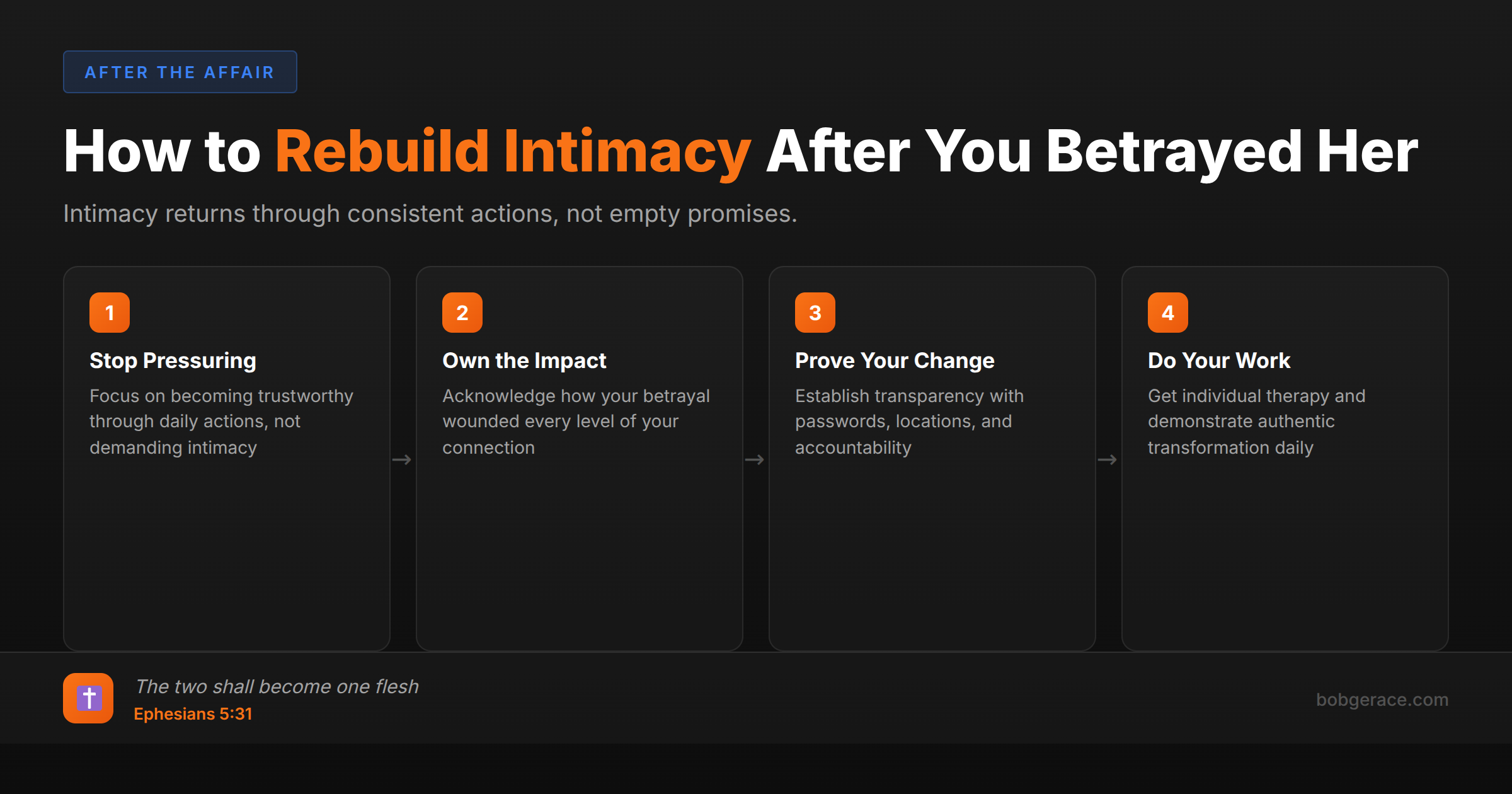
Reclaiming intimacy after an affair requires intentional action from both spouses, but it starts with your own heart work. True intimacy isn't just physical—it's the deep emotional, spiritual, and mental connection that makes marriage sacred. The betrayal has wounded this connection, but it can be healed through consistent effort, transparency, and time. The process begins with you taking full responsibility for your actions and demonstrating genuine change through your behavior, not just words. Your spouse needs to see authentic transformation in how you handle conflict, communicate your feelings, and prioritize the marriage. Intimacy returns gradually as trust is rebuilt through thousands of small, faithful actions that prove your commitment to being a different person than the one who chose deception.
The Full Picture
Let's be clear about what you're facing. The affair didn't just break trust—it shattered the intimate bond that makes marriage different from every other relationship. Intimacy is built on safety, vulnerability, and exclusivity. When you brought another person into that sacred space, you damaged all three foundations.
Intimacy operates on multiple levels: - Physical intimacy - Not just sex, but all forms of affectionate touch - Emotional intimacy - The ability to share feelings without fear of judgment or betrayal - Mental intimacy - Deep conversations, shared dreams, intellectual connection - Spiritual intimacy - Worshiping together, praying together, growing in faith as one
Right now, your spouse likely feels unsafe in all these areas. They're wondering: *If you could lie about this, what else aren't you telling me? If you could choose someone else physically, will you do it again? If you could compartmentalize your feelings this way, can I really trust you with my heart?*
The path back requires understanding that intimacy isn't something you can demand or rush. It's something you create conditions for through consistent, trustworthy behavior over time. Your spouse may want to restore intimacy but feels unable to risk being hurt again. This isn't punishment—it's self-protection.
Many unfaithful spouses make the mistake of focusing on what they're not getting instead of what they need to be giving. The question isn't "How can I get my spouse to be intimate with me again?" It's "How can I become the kind of person my spouse feels safe being intimate with?"
This work starts with brutal honesty about the damage done and unwavering commitment to becoming trustworthy again.
What's Really Happening
From a clinical perspective, affair //blog.bobgerace.com/marriage-healing-leadership-create-recovery-field/:recovery follows predictable patterns, and intimacy restoration is one of the most complex aspects. What we see consistently is that betrayed spouses experience what we call "intimate terrorism"—their nervous system has been conditioned to associate vulnerability with potential pain.
When someone has been betrayed, their brain literally rewires itself for hypervigilance. The anterior cingulate cortex, which processes emotional pain, shows similar activation patterns to physical injury. This means your spouse's reluctance toward intimacy isn't just emotional—it's neurological. Their brain is protecting them from what it perceives as a threat.
Three key factors determine intimacy recovery speed:
1. Trauma resolution: The betrayed spouse must process the traumatic impact before they can feel safe being vulnerable again. This often requires individual therapy and cannot be rushed.
2. Attachment repair: Affairs damage our fundamental attachment bonds. Secure attachment must be rebuilt through consistent attunement, responsiveness, and availability over time.
3. Somatic healing: The body holds trauma. Many betrayed spouses experience physical symptoms—panic attacks, insomnia, digestive issues. Physical healing often precedes emotional intimacy restoration.
What accelerates this process is the unfaithful partner's ability to hold space for their spouse's pain without becoming defensive or trying to "fix" it. Intimacy returns when the betrayed spouse feels truly seen, heard, and prioritized—not when they feel pressured to "get over it" and return to normal physical or emotional connection.
What Scripture Says
God designed marriage to be the most intimate human relationship, reflecting the unity between Christ and His church. Understanding His design helps us see both the magnitude of what was broken and the hope for restoration.
"Therefore a man shall leave his father and mother and hold fast to his wife, and the two shall become one flesh. This mystery is profound, and I am saying that it refers to Christ and the church." - Ephesians 5:31-32
One flesh isn't just physical—it's complete unity of heart, mind, and spirit. The affair fractured this oneness, but God's design remains His goal for your marriage.
"Above all else, guard your heart, for everything you do flows from it." - Proverbs 4:23
Intimacy requires an guarded heart—not closed off, but carefully protected and purely devoted. Your spouse is learning to guard their heart again after it was wounded. Respect this process.
"Love is patient, love is kind. It does not envy, it does not boast, it is not proud. It does not dishonor others, it is not self-seeking, it is not easily angered, it keeps no record of wrongs." - 1 Corinthians 13:4-5
This love must characterize your pursuit of renewed intimacy. Patient love doesn't pressure. Kind love doesn't demand. Selfless love prioritizes your spouse's healing over your own needs.
"Husbands, love your wives as Christ loved the church and gave himself up for her to make her holy, cleansing her by the washing with water through the word." - Ephesians 5:25-26
Christ's love was sacrificial, purifying, and devoted to the church's good. Your love must embody these same qualities as you work to restore intimacy.
"Be completely humble and gentle; be patient, bearing with one another in love." - Ephesians 4:2
Intimacy restoration requires bearing with your spouse's pain, fears, and healing timeline with gentleness and patience.
"Therefore, if anyone is in Christ, the new creation has come: The old has gone, the new is here!" - 2 Corinthians 5:17
God offers genuine transformation. Your spouse needs to see evidence of the "new creation" in how you love, communicate, and prioritize them before intimacy feels safe again.
What To Do Right Now
-
1
Stop pressuring for physical or emotional intimacy and start focusing entirely on becoming trustworthy through consistent daily actions and complete transparency
-
2
Have an honest conversation where you acknowledge the full impact of your betrayal on every level of intimacy without minimizing or defending
-
3
Establish new boundaries and accountability systems that demonstrate your commitment to fidelity, including sharing passwords, locations, and social interactions
-
4
Begin individual therapy to understand why you made the choices you did and to develop healthier coping mechanisms and communication skills
-
5
Create regular opportunities for emotional connection without any expectation of physical intimacy—daily check-ins, weekly date conversations, prayer together
-
6
Consistently demonstrate love through actions that meet your spouse's specific needs while respecting their boundaries and healing timeline completely
Related Questions
Ready to Do the Deep Work of Rebuilding Intimacy?
Reclaiming intimacy after an affair requires more than good intentions—it requires a proven process and expert guidance to navigate this delicate restoration.
Get Help Now →