How is limerence similar to drug addiction?
6 min read
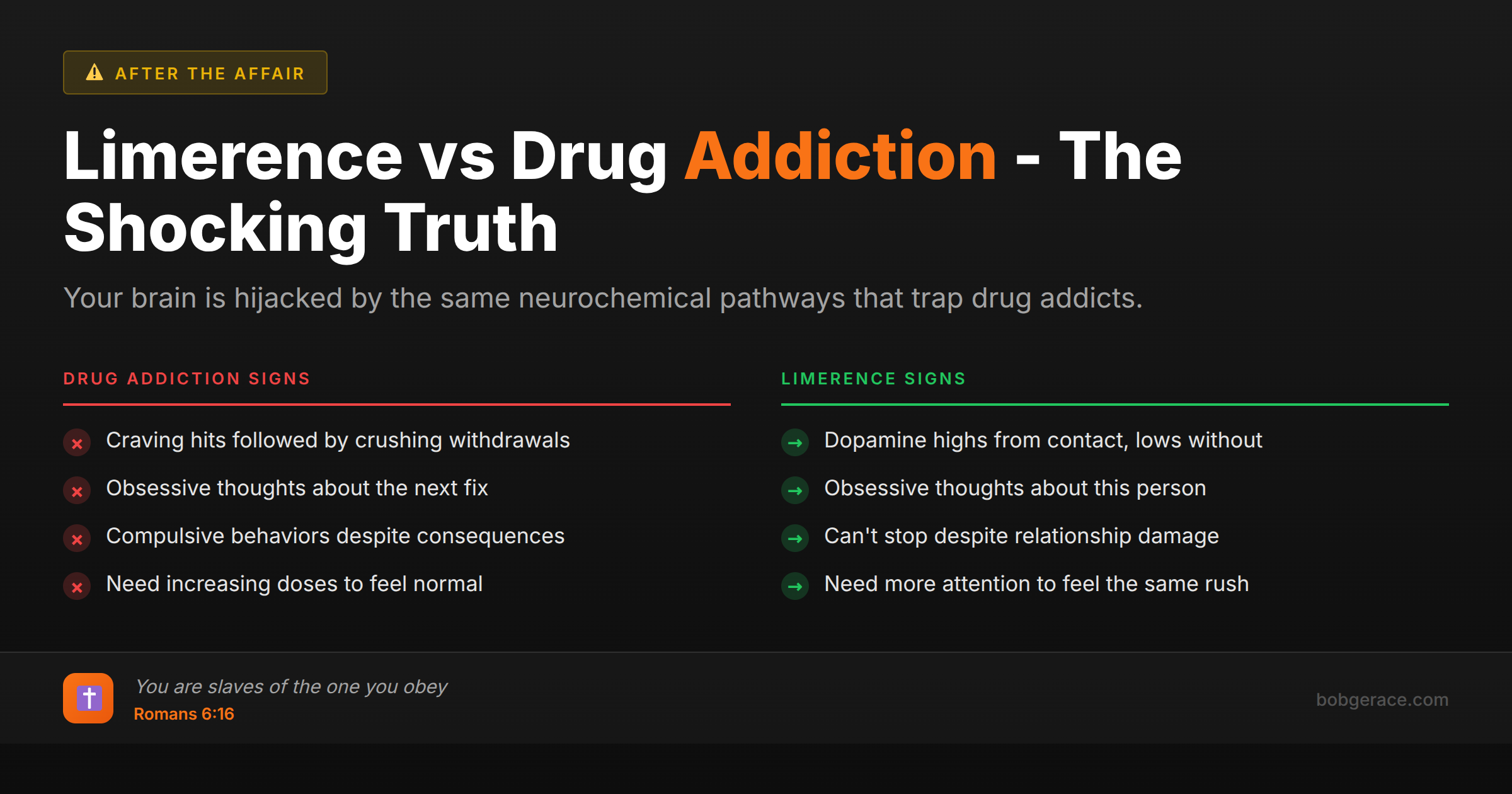
Limerence operates on the same neurochemical pathways as drug addiction, creating a powerful cycle of craving, reward, and withdrawal. Both conditions flood the brain with dopamine during moments of contact or hope, followed by crushing lows when that contact is absent. The obsessive thoughts, compulsive behaviors, and inability to stop despite negative consequences mirror addiction patterns exactly. Your brain literally becomes dependent on the neurochemical highs this person provides. Just like an addict needs increasing doses to feel normal, limerence demands more contact, more attention, more validation to achieve the same euphoric feeling. This isn't weakness or lack of willpower—it's a hijacked reward system that requires intentional intervention to break free.
The Full Picture
When you're experiencing limerence, your brain undergoes the same fundamental changes seen in substance addiction. The dopamine reward pathways that evolved to ensure survival—seeking food, water, and reproduction—get hijacked by obsessive romantic feelings.
The Neurochemical Storm
Every text, glance, or interaction with your limerent object triggers a massive dopamine release in the brain's reward center. This creates the same euphoric high that drugs produce, followed by an inevitable crash when the stimulation ends. Your brain begins to crave this neurochemical cocktail with increasing intensity.
The similarities are striking: - Tolerance: You need more contact to feel the same high - Withdrawal: Physical and emotional pain when separated - Craving: Obsessive thoughts and compulsive checking behaviors - Loss of control: Continuing despite knowing it's destructive - Neglect of responsibilities: Relationships, work, and health suffer
The Addiction Cycle
Limerence follows the classic addiction pattern: trigger → craving → using → temporary relief → guilt/shame → trigger. Each cycle strengthens the neural pathways, making the pattern more automatic and harder to break.
Brain scans of people in limerent states show hyperactivity in the same regions affected by cocaine addiction—the ventral tegmental area and caudate nucleus. The rational prefrontal cortex, responsible for decision-making and impulse control, shows decreased activity.
This isn't metaphorical—it's measurable brain chemistry. Understanding this helps remove the shame and provides a roadmap for recovery using proven addiction treatment principles.
What's Really Happening
From a clinical perspective, limerence represents one of the most profound examples of how our neurochemistry can override our conscious intentions. I've worked with clients whose brain scans during limerent episodes are virtually indistinguishable from those of cocaine users in active addiction.
The key difference is that substance addiction involves external chemicals, while limerence addiction involves the brain's own neurotransmitter system going haywire. The limerent object becomes the drug dealer, and every interaction becomes a hit. This creates a particularly insidious form of addiction because the 'drug' is a human being who may be unconsciously or consciously manipulating the reward schedule.
What makes limerence especially challenging is the intermittent reinforcement schedule it typically follows. Just like slot machines, unpredictable rewards create the strongest addiction patterns. When your limerent object responds sometimes but not always, your brain interprets this as 'almost winning' and doubles down on the obsessive behavior.
The withdrawal symptoms are real and measurable: elevated cortisol, disrupted sleep patterns, decreased appetite, and physical pain in the chest area. These aren't dramatic exaggerations—they're documented physiological responses to the absence of the addictive stimulus.
//blog.bobgerace.com/trauma-recovery-christian-marriage-heal-abandonment/:Recovery requires the same fundamental approach as substance addiction: complete cessation of contact (detox), cognitive behavioral interventions to rewire thought patterns, and rebuilding healthy reward pathways through alternative activities. Half-measures don't work because the brain's reward system doesn't negotiate.
What Scripture Says
Scripture warns us about the power of unchecked desire and provides clear guidance for breaking free from patterns that enslave us. The Bible doesn't specifically mention neurochemistry, but it perfectly describes the spiritual and psychological dynamics of addiction.
The Nature of Enslavement
*"Don't you know that when you offer yourselves to someone as obedient slaves, you are slaves of the one you obey—whether you are slaves to sin, which leads to death, or to obedience, which leads to righteousness?"* (Romans 6:16). Limerence creates a form of emotional slavery where your thoughts, time, and energy become controlled by another person.
*"All things are lawful for me, but not all things are helpful. All things are lawful for me, but I will not be dominated by anything"* (1 Corinthians 6:12). Paul understood that even permissible things can become addictive masters over our lives.
The Battle for Your Mind
*"We destroy arguments and every lofty opinion raised against the knowledge of God, and take every thought captive to obey Christ"* (2 Corinthians 10:5). The obsessive thought patterns of limerence must be actively captured and redirected toward Christ.
*"Do not conform to the pattern of this world, but be transformed by the renewing of your mind"* (Romans 12:2). Breaking addiction requires literally rewiring your brain's patterns through Scripture and prayer.
God's Power to Break Chains
*"So if the Son sets you free, you will be free indeed"* (John 8:36). Christ's power is greater than any neurochemical addiction.
*"No temptation has overtaken you that is not common to man. God is faithful, and he will not let you be tempted beyond your ability, but with the temptation he will also provide the way of escape"* (1 Corinthians 10:13).
God designed your brain's reward system for good purposes—to bond with your spouse, find joy in His presence, and pursue righteousness. Limerence hijacks this system, but Scripture provides the roadmap for restoration.
What To Do Right Now
-
1
Acknowledge the addiction: Stop minimizing this as 'just feelings' and recognize it as a neurochemical dependency that requires serious intervention
-
2
Implement complete contact cessation: Block all communication channels, social media, and remove physical reminders—this is your detox period
-
3
Create new dopamine sources: Establish healthy activities that naturally boost dopamine—exercise, creative pursuits, meaningful service to others
-
4
Practice thought-stopping techniques: When obsessive thoughts arise, immediately redirect to Scripture memorization or prayer—literally rewire the neural pathways
-
5
Build accountability structure: Share your struggle with a trusted friend or counselor who will check your progress and provide intervention when needed
-
6
Focus on marriage restoration: Channel the emotional energy you've been wasting on limerence into rebuilding intimacy and connection with your spouse
Related Questions
- What is limerence?
- What is the neuroscience of limerence?
- What brain chemicals are involved?
- What does dopamine addiction look like in affairs?
- What withdrawal looks like when affair ends?
- How long does limerence last?
- I keep making the same mistakes
- Why do I repeat patterns I hate?
- What are 'neural pathways' and why do patterns persist?
- How do I break destructive patterns?
Also find Bob on
Subscribe for weekly videos on Christian marriage.
You Can't White-Knuckle This Alone
Limerence rewires your brain. Bob works with men in active affairs every week—he knows how to map the exit for your specific situation, not just theory.
Talk to Bob →