What withdrawal looks like when affair ends?
6 min read
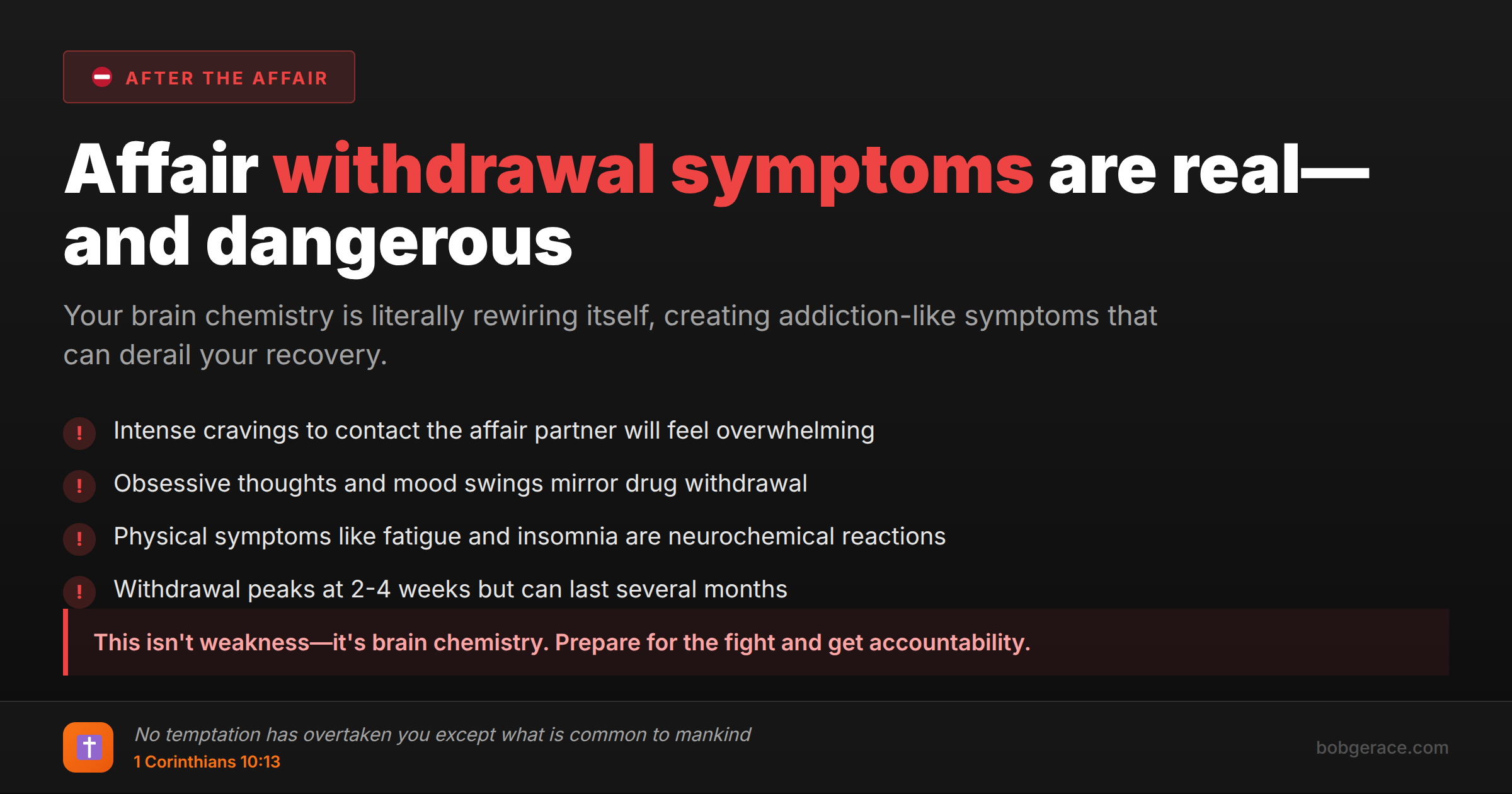
When an affair ends, withdrawal symptoms mirror those of drug addiction because your brain has been flooded with dopamine, oxytocin, and norepinephrine. You'll likely experience intense cravings to contact the affair partner, obsessive thoughts, mood swings, depression, anxiety, and physical symptoms like fatigue or insomnia. This isn't weakness—it's neurochemistry. The withdrawal typically peaks within the first 2-4 weeks and can last several months. Your brain is literally rewiring itself, breaking neural pathways that were reinforced by the affair relationship. Understanding this process is crucial for both the unfaithful spouse and the betrayed partner, as it explains why ending an affair feels so devastating despite knowing it was wrong.
The Full Picture
When someone ends an affair, they're not just ending a relationship—they're severing a neurochemical dependency that their brain has developed over months or years. The affair partner became a primary source of dopamine, the neurotransmitter associated with reward and pleasure. Every text, secret meeting, and intimate moment created powerful neural pathways that made the brain crave more contact.
The withdrawal symptoms typically include:
- Obsessive thoughts about the affair partner (intrusive memories, fantasies, constant wondering what they're doing) - Intense cravings to make contact through text, email, or social media - Emotional volatility - mood swings from despair to anger to numbness - Depression and anxiety as brain chemistry rebalances - Physical symptoms like fatigue, insomnia, loss of appetite, or headaches - Cognitive fog - difficulty concentrating or making decisions - Irritability toward spouse and family members
The severity depends on several factors: the length of the affair, the emotional intensity, how often contact occurred, and whether the ending was sudden or gradual. Affairs that involved daily communication and deep emotional connection typically produce more severe withdrawal.
Many people are shocked by the intensity of these feelings. They think, "I know this was wrong, so why do I feel like I'm dying inside?" The answer lies in brain chemistry. Your neural reward system doesn't understand morality—it only knows that a major source of chemical reward has been removed, and it's demanding that reward be restored.
This withdrawal phase is actually a critical part of recovery. It's your brain beginning the process of healing and rewiring. The intensity will decrease over time, but only if you maintain complete no-contact with the affair partner.
What's Really Happening
From a neurobiological perspective, affair withdrawal follows the same patterns we see in substance addiction recovery. During the affair, the brain's reward circuitry became hijacked by the intermittent reinforcement schedule of secret communication and meetings. This created what we call 'trauma bonding'—an addiction-like attachment that's actually stronger than healthy relationship bonds.
The key neurochemicals involved are dopamine (reward and craving), oxytocin (bonding and attachment), and norepinephrine (excitement and alertness). When these chemical surges suddenly stop, the brain experiences what's essentially a chemical crash. The prefrontal cortex, responsible for rational decision-//blog.bobgerace.com/emotional-neediness-christian-marriage-stop-making-her-mother/:making, becomes less active while the limbic system (emotional brain) goes into overdrive.
What makes this particularly challenging is that the brain interprets this withdrawal as a survival threat. The same neural pathways that would activate if you were starving or in physical danger are now firing because your 'attachment system' believes it's lost something essential for survival. This explains why people often describe affair withdrawal as feeling like they're 'dying' or 'going crazy.'
The good news is that neuroplasticity—the brain's ability to rewire itself—means recovery is absolutely possible. With complete no-contact, the neural pathways associated with the affair partner will gradually weaken. New, healthier pathways can be strengthened through consistent actions aligned with your values and commitment to your marriage. The brain can and will heal, but it requires patience and intentional effort during this vulnerable period.
What Scripture Says
Scripture addresses the reality of withdrawal from sin patterns with both compassion and truth. God understands that breaking free from sinful attachments involves genuine suffering, but He promises strength and restoration for those who turn to Him.
"No temptation has overtaken you except what is common to mankind. And God is faithful; he will not let you be tempted beyond what you can bear. But when you are tempted, he will also provide a way out so that you can endure it." (1 Corinthians 10:13) - This withdrawal period is a form of temptation to return to the affair. God promises you can endure it and that He'll provide escape routes from the cravings.
"Therefore, if anyone is in Christ, the new creation has come: The old has gone, the new is here!" (2 Corinthians 5:17) - Your brain is literally becoming new during this withdrawal process. The neural pathways associated with the affair are the 'old' being transformed into something new and healthy.
"He heals the brokenhearted and binds up their wounds." (Psalm 147:3) - The emotional pain you're experiencing is real brokenheartedness that needs divine healing. God specializes in binding up the wounds created by our own sinful choices.
"Cast all your anxiety on him because he cares for you." (1 Peter 5:7) - The anxiety, obsessive thoughts, and emotional turmoil can be brought directly to God. He cares about your struggle and wants to carry this burden with you.
"The Lord your God is with you, the Mighty Warrior who saves. He will take great delight in you; in his love he will no longer rebuke you, but will rejoice over you with singing." (Zephaniah 3:17) - Even in withdrawal, God delights in your decision to choose righteousness over sin.
God's design for healing involves both supernatural grace and natural processes—including the time needed for your brain to rewire itself back to health.
What To Do Right Now
-
1
Maintain absolute no-contact with the affair partner - block all forms of communication and remove triggers that remind you of them
-
2
Inform a trusted friend or counselor about your withdrawal symptoms so they can provide accountability and support during vulnerable moments
-
3
Establish new daily routines that don't include times when you typically contacted the affair partner, replacing those patterns with prayer or healthy activities
-
4
Write down your reasons for ending the affair and read them daily, especially when cravings intensify - your rational mind needs to guide your emotional brain
-
5
Increase physical exercise and prioritize sleep, as both help regulate the neurochemicals involved in withdrawal and speed the healing process
-
6
Begin investing specific time and energy into your marriage, creating new positive neural pathways associated with your spouse rather than just breaking old ones
Related Questions
- What is limerence?
- How long does limerence last?
- What is the neuroscience of limerence?
- How is limerence similar to drug addiction?
- What does dopamine addiction look like in affairs?
- What interrupts limerence vs. what strengthens it?
- Why does she seem like a different person?
- She seems cold and detached — is that avoidant attachment?
- What is 'emotional disengagement'?
- Why does she seem numb/flat/dead inside?
Also find Bob on
Subscribe for weekly videos on Christian marriage.
Your withdrawal doesn't follow the textbook
A coach who knows your marriage can see what's actually happening in your specific situation—and help you stay the course when your brain is screaming to contact her.
Talk to Bob →