Why does she seem high/manic about him?
6 min read
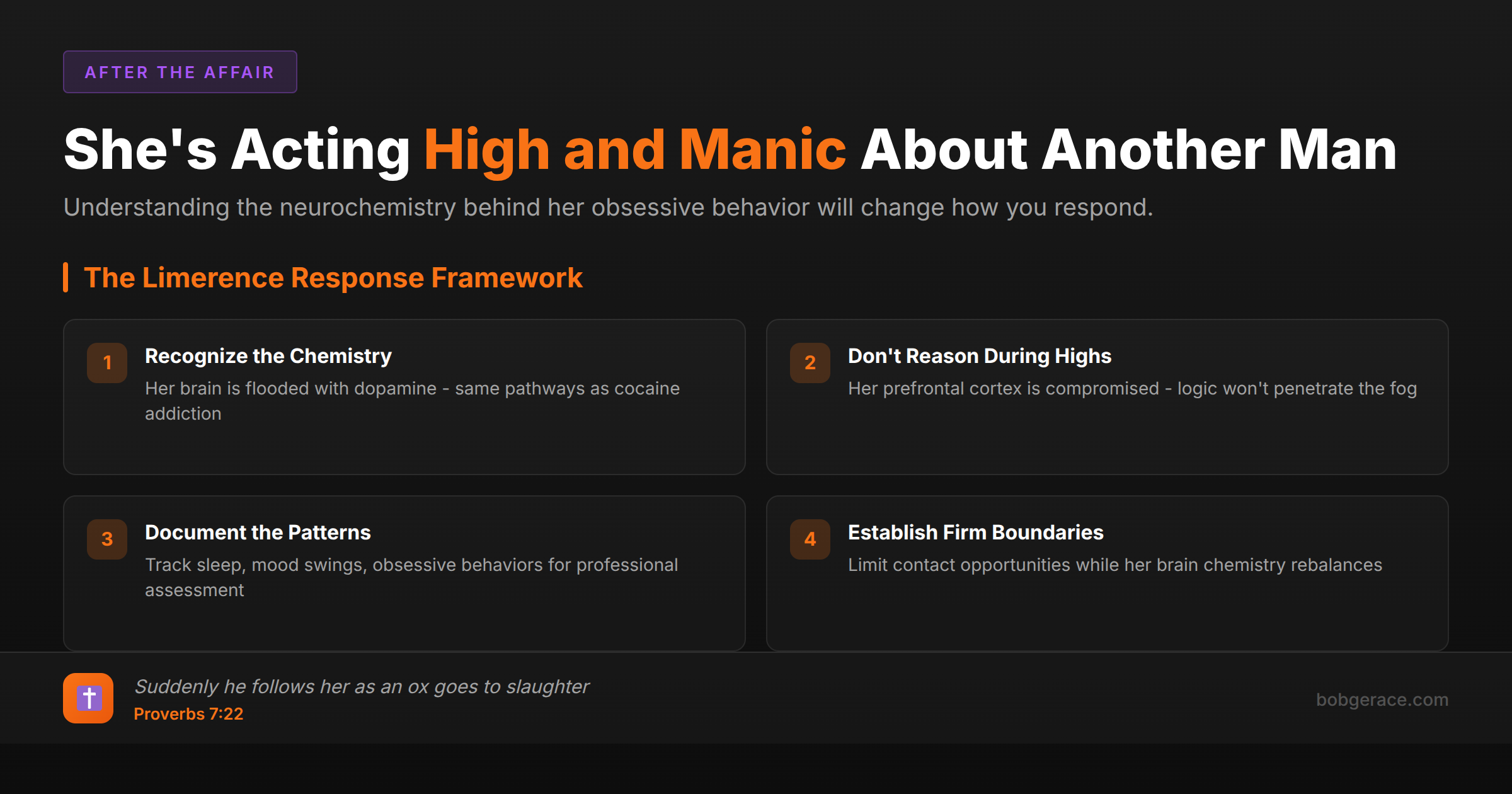
What you're witnessing is limerence - a neurochemical state that literally mimics drug intoxication. Her brain is flooded with dopamine, norepinephrine, and phenylethylamine, creating a natural high that makes her seem manic, euphoric, and completely unlike herself. This isn't voluntary behavior - it's brain chemistry. The same neural pathways activated by cocaine are firing when she thinks about him. She's experiencing racing thoughts, elevated mood, decreased need for sleep, and obsessive focus. Understanding this doesn't excuse her choices, but it explains why she seems so dramatically different from the woman you married.
The Full Picture
Your wife's manic behavior isn't personality change - it's neurochemical hijacking. When someone enters the limerence state, their brain chemistry undergoes dramatic alterations that create symptoms virtually identical to substance abuse or bipolar mania.
The dopamine flood is the primary culprit. Every text, call, or interaction with this other man triggers massive dopamine releases - the same neurotransmitter involved in cocaine addiction. This creates:
- Euphoric highs and crashing lows - Obsessive thinking patterns - Decreased need for sleep - Rapid, pressured speech - Poor judgment and decision-making - Inability to focus on normal responsibilities
Norepinephrine amplifies everything - heart rate, energy, attention, and arousal. She's literally in a state of chronic fight-or-flight activation. Phenylethylamine adds the "love drug" component, creating feelings of excitement and euphoria.
Serotonin levels plummet during limerence, similar to what happens in obsessive-compulsive disorder. This explains the intrusive thoughts, compulsive checking of messages, and inability to stop thinking about him.
The tragic irony? This neurochemical cocktail is temporary. Like any drug tolerance, the brain adapts. What feels like the greatest love of all time is actually a chemical dependency that will inevitably fade. But while it lasts, she's essentially intoxicated - making decisions from an altered state of consciousness that bears little resemblance to her true self.
What's Really Happening
From a clinical perspective, limerence creates a state of psychological intoxication that mirrors substance use disorders. Brain imaging studies show that people in limerent states have overactive reward centers and suppressed prefrontal cortex activity - the area responsible for judgment and impulse control.
The manic presentation includes classic symptoms: grandiosity ("this is true //blog.bobgerace.com/unconditional-love-christian-marriage/:love"), decreased sleep (staying up all night texting), distractibility (can't focus on family), and hypergraphia (excessive writing/texting). The similarity to bipolar mania isn't coincidental - both involve dysregulated dopamine systems.
Cognitive distortions become extreme during this phase. She may exhibit: - Magical thinking about the relationship - Minimization of consequences - Idealization of the other person - Catastrophic thinking about ending contact
The neuroplasticity factor is crucial to understand. Every interaction strengthens these neural pathways, making the addiction deeper. The brain literally rewires itself around this person, creating what researchers call "addictive love."
Recovery requires neurochemical rebalancing, which can take 6-24 months depending on the intensity and duration of the limerence. Like any addiction recovery, she may experience withdrawal symptoms when contact ends - depression, anxiety, obsessive thoughts, and physical discomfort. This isn't weakness; it's predictable neurobiology that requires professional support to navigate successfully.
What Scripture Says
Scripture warns us about the intoxicating nature of forbidden relationships and calls us to clear thinking. Proverbs 7:21-23 describes how seduction works: "With her many persuasions she entices him; with her flattering lips she seduces him. Suddenly he follows her as an ox goes to slaughter... until an arrow pierces through his liver; as a bird hastens to the snare, so he does not know that it will cost him his life."
The Bible acknowledges that sin can feel euphoric temporarily. Hebrews 11:25 speaks of "the temporary pleasures of sin" - God doesn't deny that forbidden things can create powerful feelings. But these feelings are deceptive and destructive.
1 Peter 5:8 reminds us that "your adversary the devil prowls around like a roaring lion, seeking someone to devour." The enemy uses our own brain chemistry against us, creating counterfeit experiences that feel profound but lead to destruction.
2 Corinthians 11:14-15 warns that "Satan disguises himself as an angel of light" - even his servants appear righteous. The neurochemical high of limerence can feel spiritual, like destiny or "God bringing someone into my life," when it's actually spiritual deception.
Romans 12:2 calls us to "be transformed by the renewing of your mind" - acknowledging that our thinking patterns need supernatural intervention. 1 Corinthians 10:5 instructs us to "take every thought captive to the obedience of Christ." Recovery from limerence requires this level of intentional mental discipline, empowered by the Holy Spirit.
God's design for marriage in Ephesians 5:22-33 provides the framework for genuine, lasting love - not the artificial high of limerence, but covenant commitment that deepens over time.
What To Do Right Now
-
1
Document the manic behaviors you're observing - sleep patterns, mood swings, obsessive behaviors - this will help professionals assess the severity
-
2
Stop trying to reason with her during high periods - her prefrontal cortex is compromised and logical arguments won't penetrate the neurochemical fog
-
3
Educate yourself about limerence and addiction recovery - understanding the neuroscience will help you respond strategically rather than emotionally
-
4
Establish firm boundaries about contact with the other person - like any addiction, continued use prevents recovery and deepens the neural pathways
-
5
Connect with a therapist experienced in limerence and infidelity - this requires specialized knowledge that general counselors may not possess
-
6
Focus on your own stability and self-care - you cannot rescue someone from neurochemical addiction, but you can maintain your own sanity and strength
Related Questions
- What is limerence?
- Is she in love or in limerence?
- How long does limerence last?
- What is the neuroscience of limerence?
- What brain chemicals are involved?
- How is limerence similar to drug addiction?
- Why does she seem like a different person?
- She says she's never felt this way before
- Is the affair fog real?
- When will she wake up?
Also find Bob on
Subscribe for weekly videos on Christian marriage.
Don't Navigate This Alone
When your wife's brain chemistry is working against you both, you need someone who's seen your exact situation and knows how to move through it. Bring this to a coach who knows your marriage.
Talk to Bob →