What does dopamine addiction look like in affairs?
6 min read
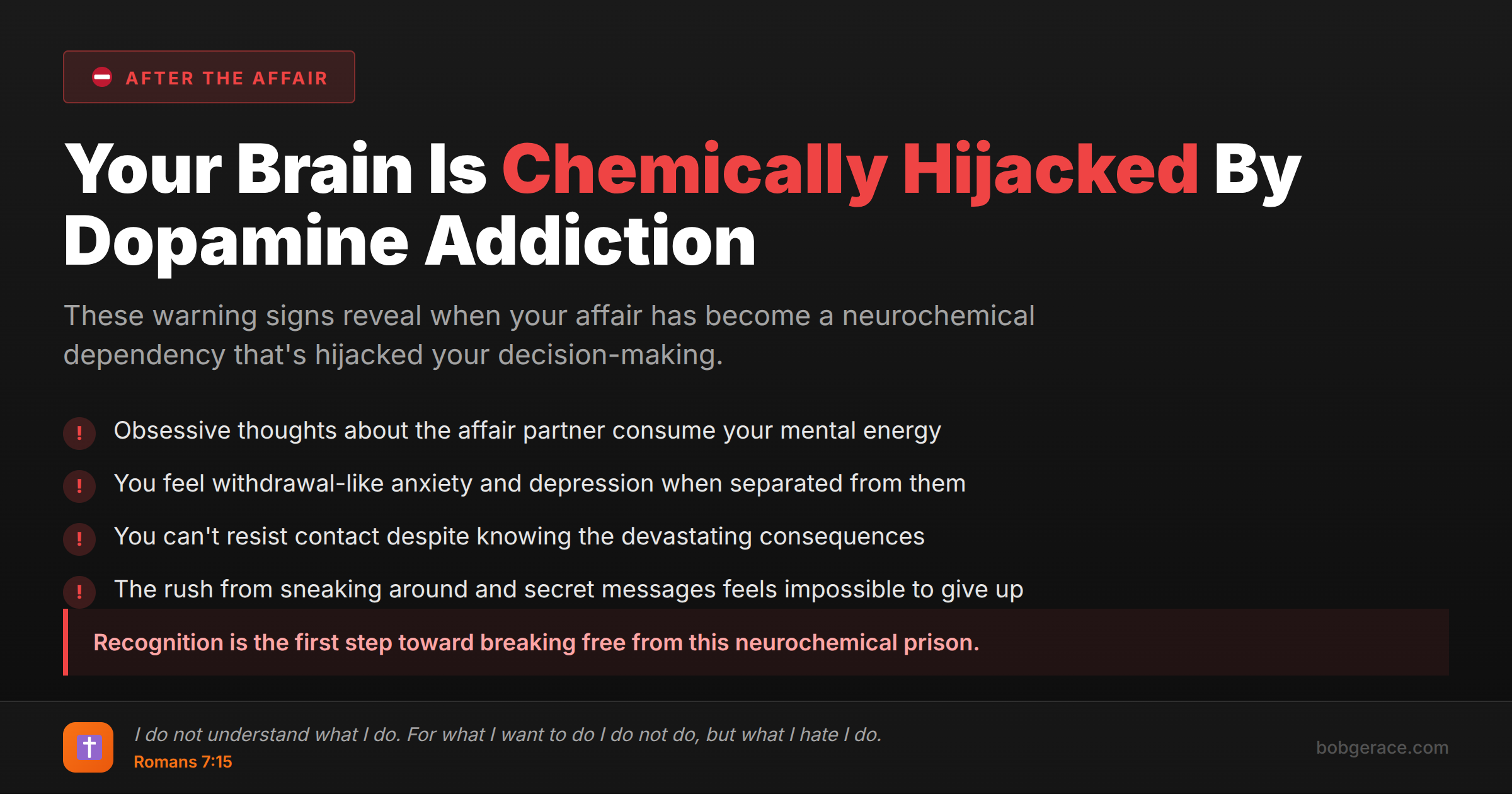
Dopamine addiction in affairs creates a powerful cycle where the brain craves the neurochemical high of secret encounters, forbidden communication, and emotional intensity. This addiction manifests as obsessive thoughts about the affair partner, inability to resist contact despite consequences, and withdrawal-like symptoms when separated. The person becomes dependent on the dopamine rush from sneaking around, receiving messages, or anticipating the next encounter. Unlike healthy relationships that develop steady, sustainable neurochemical patterns, affairs trigger intermittent reinforcement schedules that make the dopamine hits more intense and addictive. The secrecy, risk, and novelty all amplify dopamine release, creating a neurochemical dependency that feels impossible to break. Understanding this biological component helps explain why smart, moral people can make seemingly irrational decisions to continue destructive affairs.
The Full Picture
The Brain on Affairs: A Dopamine Roller Coaster
When someone enters an affair, their brain undergoes significant neurochemical changes that mirror addiction patterns. Dopamine, the neurotransmitter associated with reward and pleasure, floods the system during affair-related activities. This isn't just about physical encounters – the dopamine rush begins with anticipation, secret texting, planning meetings, and even thinking about the affair partner.
The Addiction Cycle
The addiction follows a predictable pattern: *craving* (obsessive thoughts about the affair partner), *ritual* (preparing for contact or meetings), *using* (engaging in affair behaviors), and *despair* (guilt, shame, and planning to stop). This cycle becomes self-reinforcing as the brain develops tolerance, requiring more frequent or intense affair behaviors to achieve the same neurochemical high.
Warning Signs of Dopamine Dependency
Key indicators include: inability to stop despite wanting to, obsessive checking of phones or social media, lying about whereabouts, emotional volatility when affair contact is interrupted, neglecting responsibilities, and experiencing withdrawal symptoms (anxiety, depression, irritability) when separated from the affair partner. The person may also exhibit classic addiction behaviors like minimizing consequences, making excuses, and promising to stop while continuing the behavior.
Why It Feels Impossible to Stop
The intermittent reinforcement schedule of affairs – where rewards come unpredictably – creates stronger neural pathways than consistent reinforcement. Combined with the novelty, risk, and secrecy factors, affairs trigger one of the most potent dopamine delivery systems the brain can experience, making them neurochemically more addictive than many substances.
What's Really Happening
From a neurobiological perspective, affair-related dopamine addiction hijacks the brain's reward system in ways that can override rational decision-making. The prefrontal cortex, responsible for executive function and moral reasoning, becomes less active during periods of high dopamine release, which explains why otherwise responsible individuals make destructive choices.
What makes affairs particularly addictive is the combination of multiple dopamine triggers happening simultaneously. The novelty activates the brain's seeking system, secrecy adds an element of risk that amplifies reward, and the emotional intensity creates what we call 'trauma bonding' – where stress hormones like cortisol actually strengthen the neurochemical attachment.
I often see clients who describe feeling 'crazy' or 'not like themselves' during affairs. This isn't hyperbole – their brains are literally operating under altered neurochemistry. The dopamine pathways become so dominant that they override normal cognitive processes, creating what appears to be temporary personality changes.
//blog.bobgerace.com/trauma-recovery-christian-marriage-heal-abandonment/:Recovery requires understanding that this is a neurobiological process, not just a moral failure. The brain needs time to reset its reward systems, typically 90-120 days of complete contact cessation with the affair partner. During this period, withdrawal symptoms are normal and expected. Therapeutic interventions focus on supporting healthy dopamine production through exercise, meaningful activities, and rebuilding the primary relationship while the neural pathways reorganize themselves.
What Scripture Says
Scripture speaks directly to the addictive nature of sin and its impact on our decision-making capacity. Romans 7:15 captures this struggle: *'I do not understand what I do. For what I want to do I do not do, but what I hate I do.'* This verse perfectly describes the neurochemical hijacking that occurs in dopamine addiction, where the brain's reward system overpowers conscious intentions.
1 Corinthians 6:12 warns: *'I have the right to do anything,' you say—but not everything is beneficial. 'I have the right to do anything'—but I will not be mastered by anything.'* The word 'mastered' here speaks to the enslaving nature of addiction, whether to substances or behaviors that trigger powerful neurochemical responses.
2 Peter 2:19 explains the mechanics of sin's bondage: *'They promise them freedom, while they themselves are slaves of depravity—for people are slaves to whatever has mastered them.'* Affairs promise emotional fulfillment and excitement but deliver neurochemical slavery that destroys the very relationships they claim to enhance.
1 Corinthians 10:13 offers hope: *'No temptation has overtaken you except what is common to mankind. And God is faithful; he will not let you be tempted beyond what you can bear. But when you are tempted, he will also provide a way out so that you can endure it.'* Even in the grip of dopamine addiction, God provides neurological and spiritual pathways to freedom.
The solution involves both spiritual discipline and practical wisdom. Romans 12:2 calls us to be *'transformed by the renewing of your mind,'* which includes allowing our neural pathways to reset through healthy practices and complete separation from addictive triggers.
What To Do Right Now
-
1
Acknowledge the addiction: Recognize that this is a neurochemical dependency, not just a relationship issue
-
2
Complete contact cessation: Cut all communication with the affair partner immediately - no exceptions
-
3
Expect withdrawal symptoms: Prepare for 2-4 weeks of anxiety, depression, and obsessive thoughts
-
4
Create dopamine alternatives: Exercise daily, engage in meaningful work, and invest in healthy relationships
-
5
Remove all triggers: Delete apps, change routes, avoid locations associated with the affair
-
6
Get professional support: Work with a therapist experienced in both addiction and affair recovery
Related Questions
- What is limerence?
- How is limerence similar to drug addiction?
- What withdrawal looks like when affair ends?
- Why does she seem high/manic about him?
- What is the neuroscience of limerence?
- What brain chemicals are involved?
- Why can't I just change?
- What are 'neural pathways' and why do patterns persist?
- What is 'automaticity' and how do behaviors become automatic?
- How long until new behaviors become automatic?
Also find Bob on
Subscribe for weekly videos on Christian marriage.
Your Brain Won't Fix This Alone
Dopamine addiction in your marriage needs a coach who knows your specific situation—not generic advice. Bob works with men in active affairs to break the cycle before it destroys everything.
Talk to Bob →