What is limerence?
6 min read
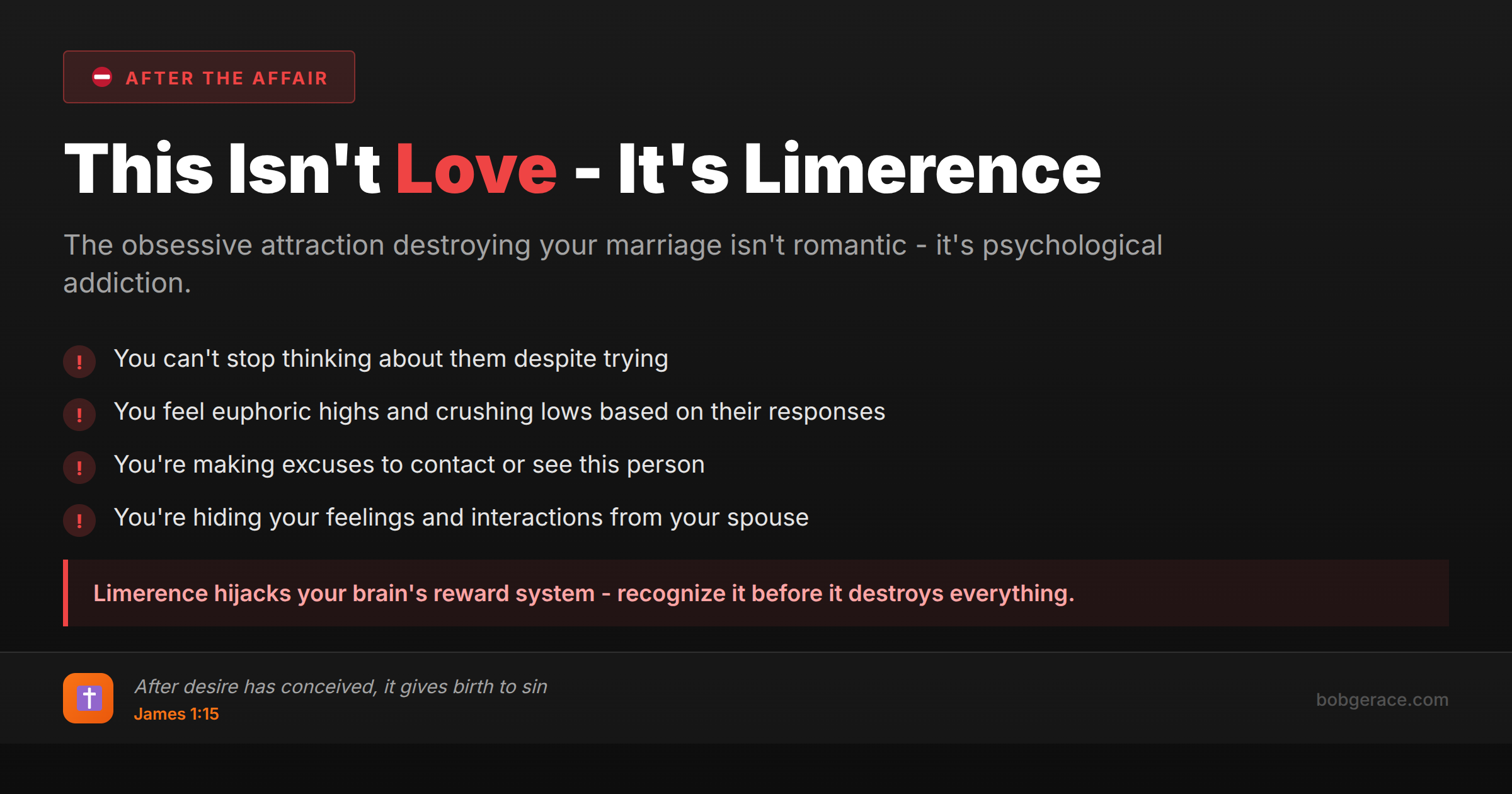
Limerence is an intense, obsessive state of romantic attraction that goes far beyond normal love or infatuation. Coined by psychologist Dorothy Tennov in 1979, it's characterized by intrusive thoughts about another person, an overwhelming need for reciprocation, and an inability to think rationally about the relationship. Unlike healthy love, limerence hijacks your brain's reward system, creating an addiction-like response. You experience euphoric highs when the other person shows interest and crushing lows when they don't respond as hoped. This isn't love – it's a psychological phenomenon that can destroy marriages, families, and your own emotional well-being if left unchecked.
The Full Picture
Limerence is one of the most dangerous emotional states a married person can experience. It creates what we call "affair fog" – a distorted mental state where reality becomes twisted and your spouse, children, and commitments suddenly seem less important than this new obsession.
## The Signs of Limerence
You know you're in limerence when: - Intrusive thoughts dominate your day (thinking about them 85% of your waking hours) - Physical symptoms appear (racing heart, butterflies, loss of appetite) - Idealization takes over (they can do no wrong) - Fear of rejection becomes paralyzing - Euphoria and despair cycle based on their responses - Reality distortion makes everything else seem gray and meaningless
## Why It's So Dangerous
Limerence literally rewires your brain. Neuroimaging studies show it activates the same reward pathways as cocaine addiction. Your brain floods with dopamine when you interact with this person, creating a chemical dependency that overrides rational thinking.
This isn't your fault – but it is your responsibility to address it. The longer you stay in this state, the more damage you'll do to your marriage and family. I've seen limerence destroy 20-year marriages in a matter of months because people mistook this obsession for "true love."
The cruel irony? Limerence always fades. What feels like the love of a lifetime is actually a temporary neurochemical storm that leaves devastation in its wake.
What's Really Happening
From a clinical perspective, limerence represents a dysregulation of the //blog.bobgerace.com/social-brain-christian-marriage-identity-relational/:brain's attachment and reward systems. The anterior cingulate cortex, which processes emotional pain, becomes hyperactive, while the prefrontal cortex – responsible for rational decision-making – shows decreased activity.
This neurochemical cocktail includes elevated dopamine (creating the addictive 'high'), norepinephrine (causing anxiety and obsessive thoughts), and decreased serotonin (similar to levels seen in OCD patients). The result is a perfect storm of obsession, anxiety, and poor judgment.
What makes limerence particularly destructive is its self-reinforcing nature. Intermittent reinforcement – when the object of limerence occasionally responds positively – actually strengthens the addiction. This explains why people in limerence often pursue relationships where they experience frequent rejection mixed with occasional encouragement.
Recovery requires understanding that these feelings, however intense, are not indicative of true compatibility or love. True love is characterized by genuine care for the other's wellbeing, realistic perception of their flaws, and the ability to maintain other relationships and responsibilities. Limerence lacks all of these qualities.
The good news is that limerence is treatable through cognitive-behavioral interventions, no-contact protocols, and in some cases, medication to restore neurochemical balance.
What Scripture Says
Scripture warns us repeatedly about the dangers of obsessive, selfish desire that masquerades as love. What the world calls limerence, the Bible identifies as destructive lust that leads us away from God's design for relationships.
James 1:14-15 explains the progression: "But each person is tempted when they are dragged away by their own evil desire and enticed. Then, after desire has conceived, it gives birth to sin; and sin, when it is full-grown, gives birth to death." Limerence follows this exact pattern – what starts as attraction becomes obsession, then destructive action.
1 Corinthians 13:4-7 gives us the true definition of love: "Love is patient, love is kind. It does not envy, it does not boast, it is not proud. It does not dishonor others, it is not self-seeking, it is not easily angered, it keeps no record of wrongs. Love does not delight in evil but rejoices with the truth. It always protects, always trusts, always hopes, always perseveres."
Limerence fails every one of these tests. It's impatient, unkind to your spouse, boastful about your "special connection," proud of your intense feelings, dishonoring to your marriage, completely self-seeking, and keeps detailed records of every interaction.
Philippians 4:8 provides the antidote: "Finally, brothers and sisters, whatever is true, whatever is noble, whatever is right, whatever is pure, whatever is lovely, whatever is admirable—if anything is excellent or praiseworthy—think about such things." Limerence forces you to dwell on impure, dishonoring thoughts.
Proverbs 4:23 warns: "Above all else, guard your heart, for everything you do flows from it." When we fail to guard our hearts, limerence can take root and destroy everything we've built.
What To Do Right Now
-
1
Acknowledge the truth: This isn't love – it's limerence, and it will destroy your marriage if you don't act immediately
-
2
Go no contact: Cut all unnecessary communication with this person. Block their number, social media, avoid places they frequent
-
3
Confess to your spouse: This requires professional guidance, but secrets fuel limerence while honesty begins to break its power
-
4
Remove all reminders: Delete photos, messages, gifts – anything that triggers the obsessive thoughts
-
5
Flood your mind with truth: Write down your spouse's positive qualities and your marriage's value. Read this daily
-
6
Get professional help: Limerence requires intervention. Don't try to handle this alone – the stakes are too high
Related Questions
- Is she in love or in limerence?
- How long does limerence last?
- Can I wait out the limerence?
- Why does she seem like a different person?
- Is the affair fog real?
- What is the neuroscience of limerence?
- Why does she prefer him to me?
- She says he 'gets' her — what does that mean?
- She seems happier when I'm not around
Also find Bob on
Subscribe for weekly videos on Christian marriage.
This Needs a Coach Who Knows Your Story
Limerence doesn't break the same way in every marriage. Talk to Bob about what's actually happening in yours—not just the textbook version.
Talk to Bob →