Can I wait out the limerence?
5 min read
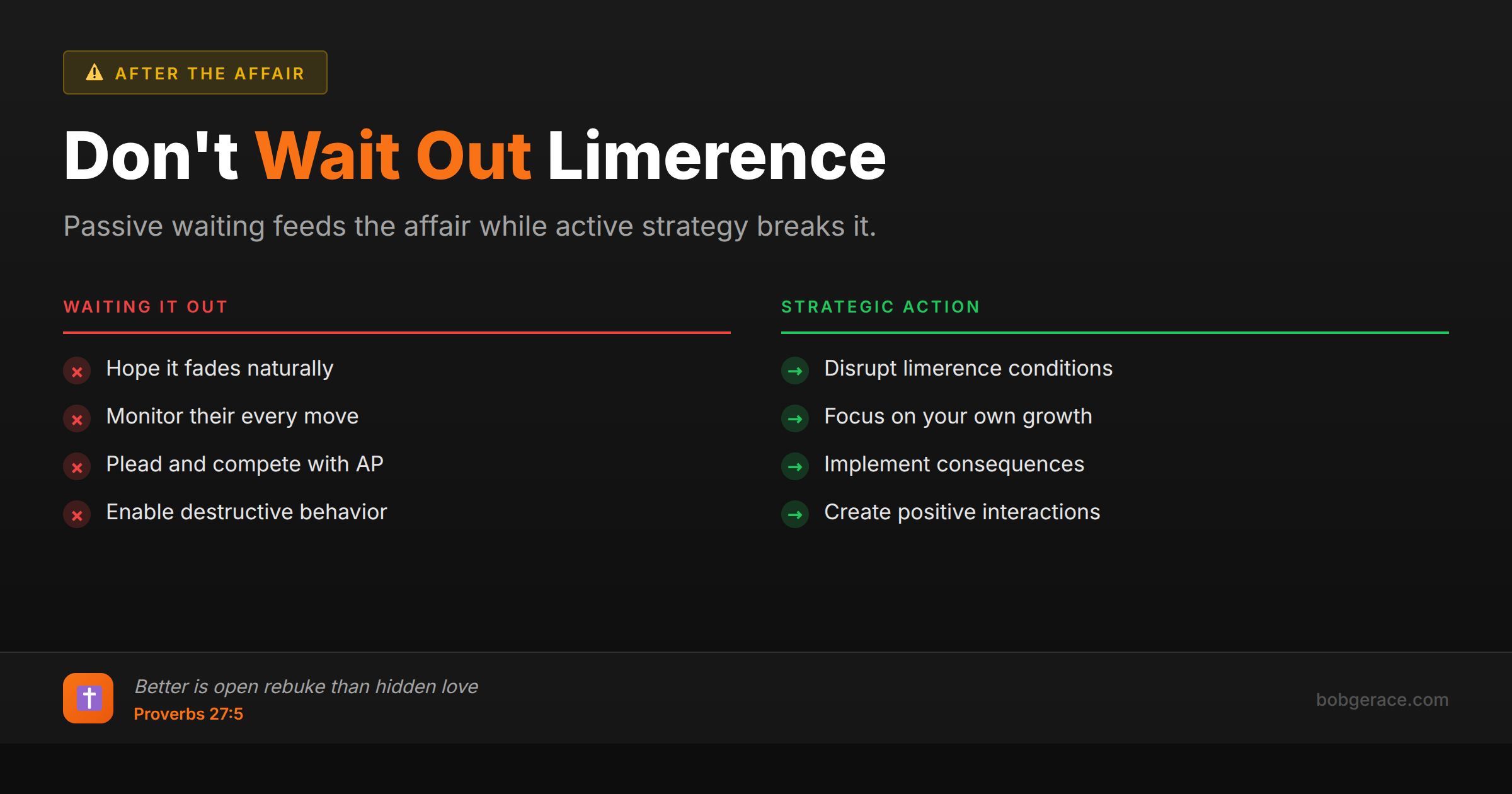
While limerence typically lasts 18 months to 3 years, simply waiting it out is rarely effective and often backfires. The passive approach allows the affair partner to maintain their grip while you remain stuck in limbo, often making things worse. Limerence doesn't just fade on its own—it feeds on uncertainty, intermittent contact, and emotional intensity. Without active intervention, your spouse can cycle in and out of limerent episodes for years. The key isn't waiting for it to end, but understanding how to actively disrupt the conditions that keep it alive while positioning yourself strategically for reconnection.
The Full Picture
The harsh reality about waiting out limerence is that it rarely works the way you hope it will.
Most betrayed spouses think limerence is like a fever that will eventually break if they just wait long enough. They've read that it lasts 18 months to 3 years and figure they can outlast it. But this passive approach fundamentally misunderstands how limerence actually works.
Limerence isn't just about time—it's about conditions. It thrives on uncertainty, intermittent reinforcement, and obstacles. When you simply wait it out, you're often inadvertently providing the perfect conditions for it to continue.
Here's what typically happens when you try to wait it out:
- You become part of the obstacle that intensifies their limerence - The affair partner gets unlimited time to deepen their hold - Your spouse experiences no consequences, making the affair feel sustainable - You remain in reactive mode instead of taking strategic action - The limerence can cycle—ending and restarting multiple times
The most dangerous part? Limerence can transform into genuine attachment if given enough time and the right conditions. What starts as an obsessive infatuation can develop into real emotional bonds, making recovery far more difficult.
Successful affair recovery requires active intervention, not passive waiting. You need to understand the specific dynamics feeding your spouse's limerence and take strategic action to disrupt them while simultaneously creating conditions for reconnection with you.
What's Really Happening
From a clinical perspective, waiting out limerence is problematic because it misunderstands the neurochemical process involved. Limerence creates addiction-like patterns in the brain through intermittent dopamine releases triggered by uncertainty and anticipation.
When you passively wait, several things happen neurologically. First, the brain continues receiving those intermittent dopamine hits that maintain the addictive cycle. Second, the absence of consequences allows the neural pathways to strengthen rather than weaken. Third, your spouse's brain begins forming lasting memory consolidation around the affair partner.
The research shows that limerence duration isn't just about time—it's about environmental factors. Obstacles actually intensify limerent feelings through what we call 'frustration attraction.' When you wait passively, you often become the obstacle that makes the affair partner seem more desirable.
Moreover, passive waiting typically increases your own trauma responses. You remain hypervigilant, checking their phone, monitoring their behavior, living in //blog.bobgerace.com/combat-conversations-christian-marriage-fight-connection/:fight-or-flight mode. This reactive state makes you less attractive to your spouse and more likely to push them toward the affair partner.
The most effective approach involves strategic intervention that disrupts the neurochemical cycle while creating new, positive neural pathways toward you. This requires understanding your spouse's specific triggers and implementing targeted strategies rather than hoping time alone will solve the problem.
What Scripture Says
Scripture consistently calls us to active faith rather than passive waiting when facing difficult circumstances. While God's timing is perfect, He rarely calls us to sit idly by when we can take righteous action.
Proverbs 27:5-6 teaches us: *"Better is open rebuke than hidden love. Faithful are the wounds of a friend; profuse are the kisses of an enemy."* Sometimes love requires confrontation, not passive acceptance of destructive behavior.
Galatians 6:1 instructs: *"Brothers, if anyone is caught in any transgression, you who are spiritual should restore him in a spirit of gentleness. Keep watch on yourself, lest you too be tempted."* This speaks to active restoration, not passive waiting.
The parable in Luke 15:11-32 shows us the father's response to his prodigal son. Notice the father didn't chase after the son, but neither did he pretend everything was fine. He let natural consequences play out while maintaining his own dignity and household.
1 Corinthians 13:7 tells us love *"bears all things, believes all things, hopes all things, endures all things."* But this endurance isn't passive—it's active perseverance while working toward restoration.
Matthew 18:15-17 gives us the biblical model for addressing sin: progressive steps of accountability, not indefinite tolerance. Even Jesus took action to cleanse the temple rather than waiting for the money changers to leave voluntarily.
God calls us to be wise as serpents and gentle as doves (Matthew 10:16)—strategic yet loving in our approach to marital restoration.
What To Do Right Now
-
1
Stop all passive behaviors that inadvertently feed the limerence—checking up on them, pleading, or trying to compete with the affair partner
-
2
Implement strategic consequences that make the affair unsustainable while maintaining your dignity and showing you won't enable the behavior
-
3
Focus intensively on your own growth and attractiveness—physically, emotionally, and spiritually—rather than monitoring their every move
-
4
Create positive interactions when possible that remind your spouse of your best qualities without appearing desperate or needy
-
5
Establish clear boundaries about what you will and won't tolerate, then consistently enforce them without constant threats or ultimatums
-
6
Get professional guidance to develop a personalized strategy based on your specific situation rather than generic advice or wishful thinking
Related Questions
Stop Waiting and Start Winning
Every day you wait passively is another day the affair partner strengthens their hold. Get the strategic intervention plan you need now.
Get My Plan →