How long does limerence last?
6 min read
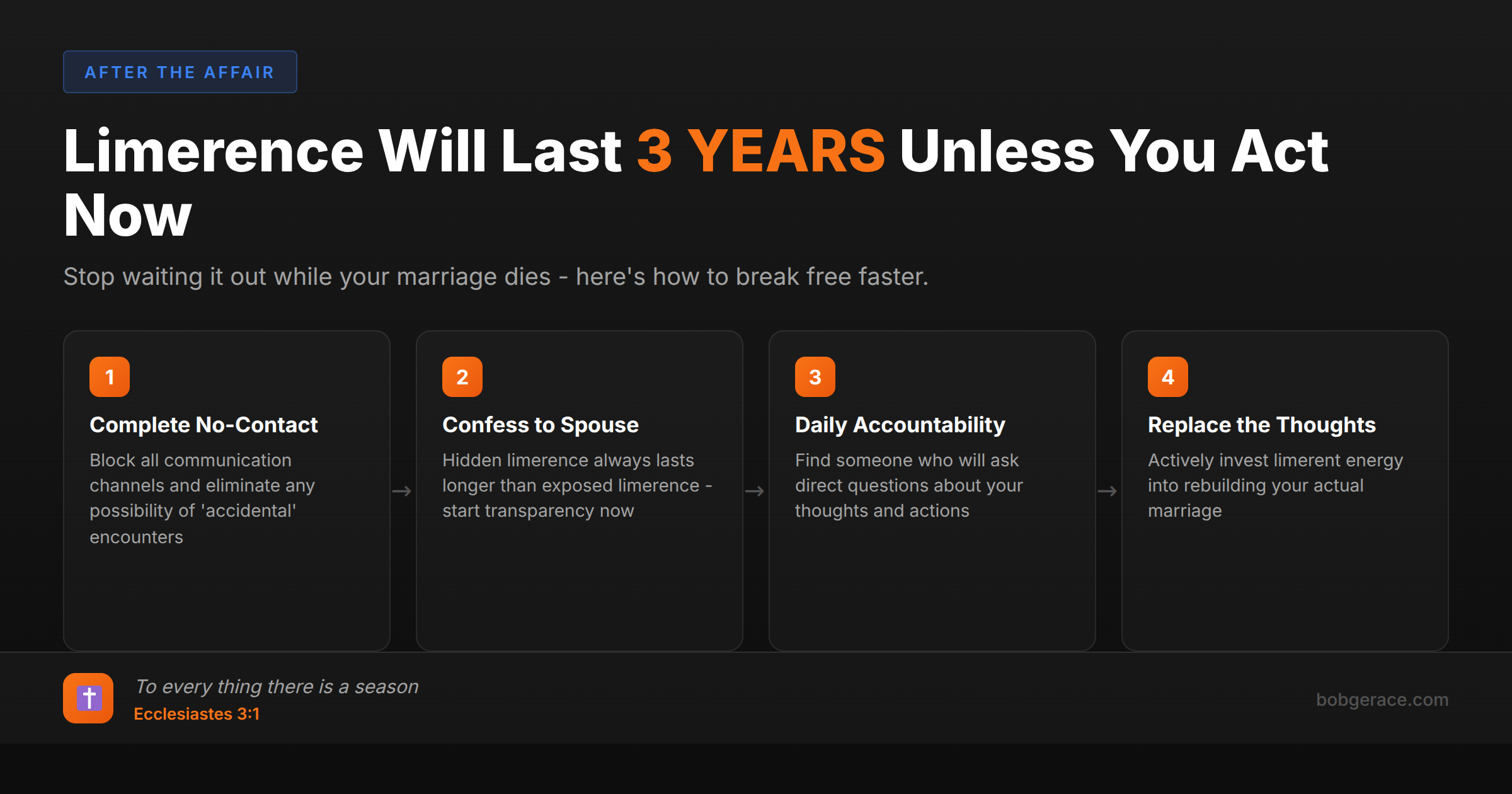
Limerence typically lasts between 18 months to 3 years, with most cases peaking around 6-18 months before gradually declining. However, this timeline can vary significantly based on several factors including contact frequency with the limerent object, reciprocation of feelings, and whether active steps are taken to address it. Without intervention, limerence can persist much longer - sometimes 5-7 years or more, especially when intermittent contact or hope keeps the obsessive thoughts alive. The good news is that limerence is temporary by nature, but waiting it out while your marriage suffers isn't the answer. With proper boundaries, no-contact protocols, and focused effort on rebuilding your marriage, you can significantly shorten this timeline and begin healing both yourself and your relationship.
The Full Picture
## Understanding Limerence's Natural Timeline
Limerence follows predictable stages, and understanding these can help you recognize where you are and what to expect. The intrusive thinking stage typically begins within weeks of meeting someone and can intensify rapidly. During this phase, thoughts of the other person consume 85-100% of waking hours.
The peak intensity phase usually occurs between months 6-18, where the obsessive thoughts, physical symptoms, and emotional highs and lows are most severe. This is when people often make their most destructive decisions - leaving spouses, abandoning families, or engaging in affairs.
Factors that extend limerence include: - Continued contact with the limerent object - Intermittent reinforcement (occasional texts, calls, or meetings) - Uncertainty about the other person's feelings - Lack of closure or definitive rejection - Refusing to implement no-contact boundaries - Not addressing underlying marital issues
What shortens limerence: - Complete no-contact with the other person - Active investment in your marriage - Professional counseling or coaching - Accountability systems - Spiritual disciplines and community support - Addressing personal emotional needs healthily
The decline phase can happen naturally after 2-3 years, but why wait when your marriage is hemorrhaging? Every day you remain in limerence is another day your spouse suffers and your family foundation weakens. The goal isn't to endure limerence - it's to actively break free from it.
What's Really Happening
From a neurobiological perspective, limerence creates addiction-like patterns in the //blog.bobgerace.com/marriage-pre-programming-christian-train-brain-before-crisis/:brain. The dopamine and norepinephrine surges associated with thinking about or interacting with the limerent object create powerful reinforcement cycles that can persist for years without intervention.
Research shows that the brain's reward system during limerence mirrors that of cocaine addiction. The same areas light up on brain scans - the ventral tegmental area and nucleus accumbens. This explains why people often describe feeling 'addicted' to someone during limerence. It's not just an emotional description; it's neurologically accurate.
The timeline varies based on several clinical factors. Individuals with anxious attachment styles tend to experience longer, more intense limerence. Those with underlying depression or anxiety may also see extended timelines as the limerence temporarily medicates these conditions.
Intermittent reinforcement is particularly destructive to recovery timelines. Even small contacts - seeing social media posts, brief text exchanges, or chance encounters - can reset the neurochemical cycle and extend limerence significantly. This is why complete no-contact is clinically essential, not just morally advisable.
The good news is that neuroplasticity allows the brain to rewire itself. With consistent no-contact and active investment in healthy relationships, new neural pathways can form within 90-120 days, though complete resolution of limerence typically takes longer.
What Scripture Says
Scripture addresses the temporary nature of intense emotions and the importance of not being ruled by feelings. Ecclesiastes 3:1 reminds us *"To every thing there is a season, and a time to every purpose under heaven."* Limerence has a season, but we're not meant to passively wait it out while neglecting our covenant responsibilities.
1 Corinthians 10:13 provides hope: *"There hath no temptation taken you but such as is common to man: but God is faithful, who will not suffer you to be tempted above that ye are able; but will with the temptation also make a way to escape, that ye may be able to bear it."* God provides escape routes from limerence, but we must actively choose them.
The Bible warns against being ruled by emotions rather than wisdom. Proverbs 4:23 instructs us to *"Keep thy heart with all diligence; for out of it are the issues of life."* We're called to guard our hearts actively, not let obsessive feelings run their natural course while our marriages suffer.
James 1:14-15 explains the progression of temptation: *"But every man is tempted, when he is drawn away of his own lust, and enticed. Then when lust hath conceived, it bringeth forth sin: and sin, when it is finished, bringeth forth death."* Limerence follows this pattern - what begins as attraction can destroy marriages and families if allowed to run its course.
2 Corinthians 10:5 calls us to take *"captive every thought to make it obedient to Christ."* This is our blueprint for dealing with limerent thoughts - not passively enduring them, but actively bringing them under God's authority.
Galatians 6:7 reminds us that *"whatsoever a man soweth, that shall he also reap."* The seeds we sow during limerence - whether toward our marriage or the other person - will determine the harvest we receive.
What To Do Right Now
-
1
Implement complete no-contact with the limerent object immediately - block all communication channels, social media, and eliminate any possibility of 'accidental' encounters
-
2
Confess the situation to your spouse and begin transparency measures - hidden limerence always lasts longer than exposed limerence
-
3
Establish daily accountability with a same-sex friend, pastor, or counselor who will ask direct questions about your thoughts and actions
-
4
Replace limerent thoughts with active marriage investment - for every minute you used to think about the other person, spend two minutes focused on your spouse
-
5
Begin professional marriage coaching or counseling within the next two weeks - don't try to navigate this alone while your marriage suffers
-
6
Create physical and emotional boundaries that protect your marriage long-term - develop a plan for how you'll handle future attractions before they become limerent
Related Questions
Don't Wait for Limerence to End Naturally
Your marriage can't survive years of limerence. Let me help you break free now and rebuild what matters most.
Get Help Now →