How long was it going on?
6 min read
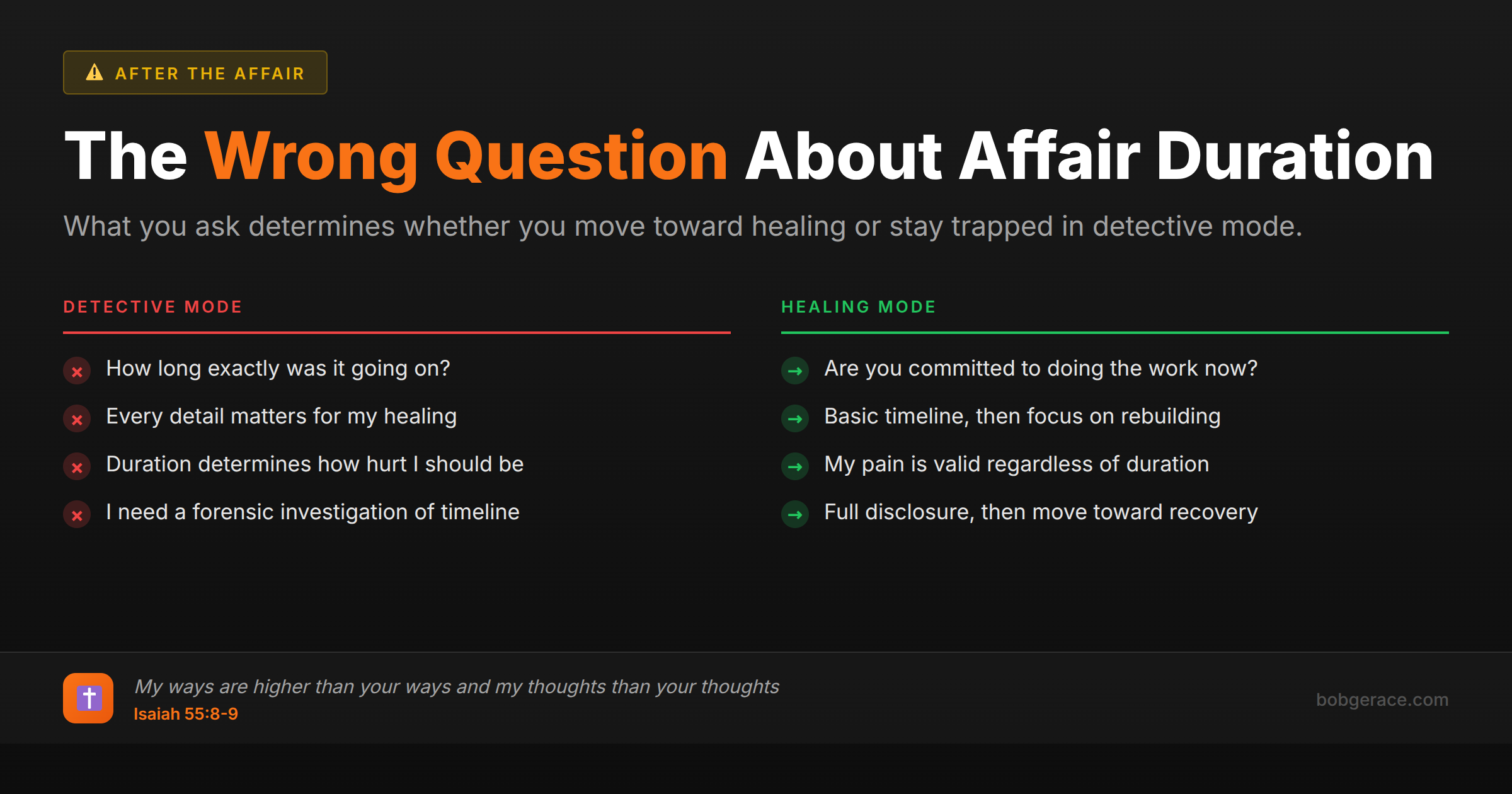
The length of an affair is one of the first questions betrayed spouses ask, and it's completely understandable. Whether it was weeks, months, or years, you're trying to make sense of the deception and measure the depth of betrayal. Here's what I want you to know: while duration matters for understanding the scope of what happened, it doesn't determine your marriage's potential for healing. A three-month emotional affair can be just as devastating as a two-year physical one. What impacts recovery more is the willingness of both partners to do the hard work of rebuilding trust, addressing underlying issues, and creating new patterns of intimacy and honesty. The timeline tells you what happened, but your choices moving forward determine what happens next.
The Full Picture
When you discover an affair, the question "How long?" becomes an obsession. You're trying to piece together a puzzle where crucial pieces have been hidden from you. You start analyzing every business trip, late night at work, and unexplained mood change. This detective work feels necessary, but it can also become a prison.
Understanding why duration feels so important:
- Measuring betrayal: We naturally want to quantify pain. A longer affair feels like deeper betrayal - Assessing deception: The longer it went on, the more elaborate the lies had to become - Evaluating commitment: You're wondering how someone could maintain a double life for extended periods - Calculating investment: Longer affairs often involve more emotional and sometimes financial investment
The reality about affair duration:
Short affairs (weeks to months) often stem from impulsive decisions, unmet needs, or crisis periods. They may involve less elaborate deception but can still cause profound damage to trust and intimacy.
Longer affairs (months to years) typically involve deeper emotional investment and more systematic deception. They may indicate more serious underlying marital issues but aren't necessarily harder to overcome with proper intervention.
What matters more than duration:
- The unfaithful spouse's attitude toward the affair and recovery - Both partners' willingness to address root causes - The quality of professional help you receive - Your commitment to rebuilding rather than just surviving
Remember, some couples recover beautifully from long-term affairs while others struggle with brief encounters. Duration informs the story but doesn't write the ending.
What's Really Happening
From a therapeutic standpoint, clients often become fixated on affair duration because it represents their attempt to create a coherent narrative from chaos. This is a normal trauma response - the mind seeks patterns and explanations to restore a sense of control and predictability.
However, research shows that affair duration correlates less with recovery outcomes than other factors. What predicts successful recovery includes: the unfaithful partner's empathy and remorse, the betrayed partner's ability to process trauma without getting stuck in rumination, and both partners' commitment to addressing systemic relationship issues.
Longer affairs often involve what we call "compartmentalization" - the ability to maintain separate emotional and cognitive spaces for different relationships. This isn't necessarily indicative of deeper character flaws, but rather a psychological defense mechanism that allowed the affair to continue.
The danger in focusing too heavily on duration is that it can lead to "pain Olympics" - comparing your situation to others or getting stuck in the analysis phase rather than moving toward //blog.bobgerace.com/divine-healing-christian-marriage-beyond-therapy/:healing. While understanding the timeline is important for full disclosure and rebuilding trust, obsessing over it can actually delay recovery.
I encourage couples to view duration as one piece of information rather than the determining factor in their healing journey. The goal is integration - understanding what happened while focusing energy on creating the relationship you both want moving forward.
What Scripture Says
Scripture acknowledges that the duration and depth of sin can have varying consequences, but it consistently emphasizes God's greater capacity for redemption and restoration regardless of how long we've been separated from His design for our lives.
God's perspective on time and healing:
*"For my thoughts are not your thoughts, neither are your ways my ways," declares the Lord. "As the heavens are higher than the earth, so are my ways higher than your ways and my thoughts than your thoughts."* (Isaiah 55:8-9)
God doesn't measure betrayal the way we do. His capacity for healing isn't limited by human timelines or the duration of our failures.
The power of genuine repentance:
*"If we confess our sins, he is faithful and just and will forgive us our sins and purify us from all unrighteousness."* (1 John 1:9)
Whether the affair lasted weeks or years, God's forgiveness is complete when there's genuine repentance. This doesn't minimize consequences, but it opens the door to restoration.
Focus on restoration over retribution:
*"Brothers and sisters, if someone is caught in a sin, you who live by the Spirit should restore that person gently."* (Galatians 6:1)
The goal isn't to punish based on duration but to restore relationship. This requires wisdom, boundaries, and often professional help, but the heart orientation is toward healing.
*"He heals the brokenhearted and binds up their wounds."* (Psalm 147:3)
God specializes in healing what seems irreparably broken, regardless of how long the breaking took.
The biblical model focuses less on the duration of sin and more on the depth of repentance and the commitment to walk in truth moving forward.
What To Do Right Now
-
1
Get the basic timeline without obsessing over every detail - you need enough information for full disclosure, not a forensic investigation
-
2
Recognize that your need to know duration is normal and valid, but don't let it become the primary focus of your healing
-
3
Address the immediate safety issues - STD testing, financial security, and emotional support systems regardless of affair duration
-
4
Focus conversations with your spouse on their current commitment to change and recovery rather than relitigating the timeline
-
5
Seek professional help from a marriage counselor experienced in affair recovery to guide you through disclosure and rebuilding
-
6
Set boundaries around detective work - gather necessary information, then redirect energy toward healing and moving forward
Related Questions
- Why did she cheat?
- Does she love him?
- Is it about sex or emotion?
- What's the difference between emotional and physical affairs?
- Do I need to know all the details?
- What does research say about disclosure?
- I just found out — what do I do in the next hour?
- How do I confirm she's actually cheating?
- What evidence should I secure?
- Should I confront immediately or wait?
Also find Bob on
Subscribe for weekly videos on Christian marriage.
Your Marriage Isn't a Timeline
You're not stuck analyzing details alone. A coach who knows your specific story can help you focus on what actually rebuilds trust in your marriage.
Talk to Bob →