What percentage of affair relationships last?
6 min read
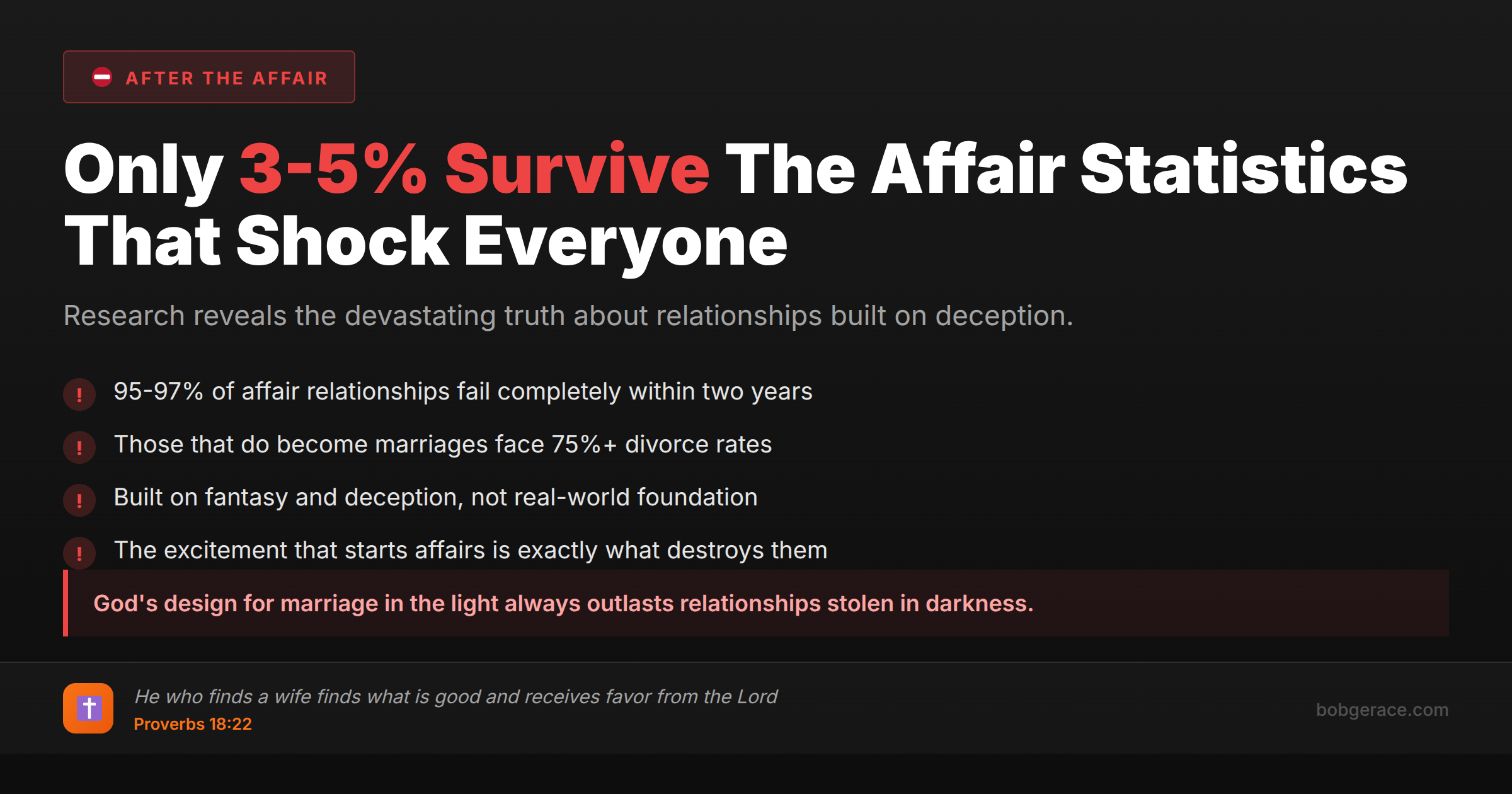
Research consistently shows that only 3-5% of affair relationships result in lasting marriages or long-term partnerships. Multiple studies over decades have confirmed this sobering statistic, with some research indicating the number could be even lower. The overwhelming majority of affairs end within two years, and those that do progress to marriage face divorce rates of 75% or higher. This isn't surprising when you consider that affair relationships are built on deception, fantasy, and the artificial high of forbidden romance rather than the real-world foundation needed for lasting love. The very circumstances that make affairs feel exciting - secrecy, novelty, and escape from responsibility - are precisely what make them unsustainable as genuine relationships.
The Full Picture
The harsh reality is that affair relationships are built to fail. When we look at comprehensive research spanning multiple decades, the statistics are remarkably consistent across different studies and populations.
The 3-5% success rate represents relationships that not only survived the transition from affair to legitimate relationship but also lasted at least five years. Even this small percentage faces ongoing challenges that most marriages don't encounter.
Why do affairs fail so consistently? First, they're built on a foundation of deception. Partners who were willing to lie and betray their spouses often struggle with trust issues in their new relationship. Second, the "affair fog" - that intoxicating feeling of new romance - inevitably fades, leaving partners to confront the reality of who they actually are outside the fantasy.
The transition from secret affair to public relationship is brutal. Suddenly, the excitement of forbidden love becomes the mundane reality of grocery shopping, bill paying, and dealing with the social consequences of how the relationship began. Friends and family often struggle to accept relationships that began in betrayal.
Financial and custody battles from previous marriages add enormous stress. The guilty parties often face significant financial consequences, social ostracism, and complicated co-parenting arrangements that put constant pressure on the new relationship.
Most tellingly, 75% of marriages that begin as affairs end in divorce - a rate significantly higher than first marriages. The very character traits that enabled the affair - impulsiveness, poor boundary-setting, and inability to work through difficult periods - often sabotage the new relationship when it faces its first real challenges.
What's Really Happening
From a clinical perspective, affair relationships face what I call "foundational deficit disorder" - they're missing the essential building blocks that create lasting partnerships.
Neurochemically, affairs operate on addiction pathways. The brain releases dopamine and norepinephrine during secretive encounters, creating an artificial high that feels like love but is actually chemical dependency. When the secrecy ends, so does the neurochemical rush, leaving partners wondering where the "spark" went.
The attachment patterns in affairs are inherently insecure. Partners bond through shared deception and fantasy rather than authentic vulnerability and //blog.bobgerace.com/christian-marriage-patience-stop-demanding-trust-timeline/:trust-building. This creates what we call "trauma bonding" - an intense but unstable connection that crumbles under normal relationship stressors.
Cognitive dissonance plays a huge role in maintaining affairs but also in their eventual failure. The mental gymnastics required to justify betraying a spouse eventually exhaust the brain's capacity for rationalization. When reality sets in, most people realize they've built their new relationship on values that contradict their deeper beliefs about integrity and commitment.
The "grass is greener" mentality that fueled the original affair doesn't disappear with a new partner. People who left marriages for affairs often find themselves susceptible to the same patterns when their new relationship encounters difficulties. Without addressing the underlying character issues that enabled the first betrayal, they're statistically likely to repeat the pattern.
Successful relationships require the ability to work through conflict, communicate honestly, and choose commitment during difficult seasons - skills that affairs actively undermine rather than develop.
What Scripture Says
Scripture provides clear wisdom about why relationships built on deception inevitably fail and why God's design for marriage offers the only sustainable path forward.
"He who finds a wife finds what is good and receives favor from the Lord" (Proverbs 18:22). God's design is for relationships to be found and built in His light, not stolen in darkness. Affairs represent the opposite of finding - they're about taking what belongs to another.
"Can a man scoop fire into his lap without his clothes being burned?" (Proverbs 6:27-28). This passage specifically addresses adultery, warning that the consequences are inevitable. The 3-5% success rate proves this biblical truth - playing with fire leads to getting burned.
"What God has joined together, let no one separate" (Matthew 19:6). Affairs attempt to separate what God has joined, and they also try to create unions outside of God's blessing. Without divine foundation, these relationships lack the spiritual resources needed for lasting success.
"All hard work brings a profit, but mere talk leads only to poverty" (Proverbs 14:23). Real love requires the hard work of commitment, communication, and character development. Affairs offer the "mere talk" of romance without the substantial work of building genuine partnership.
"Above all else, guard your heart, for everything you do flows from it" (Proverbs 4:23). The heart that's capable of sustaining betrayal over months or years needs transformation before it can sustain authentic love. This is why affairs fail - they flow from unguarded, undisciplined hearts.
God's merciful design offers redemption for everyone involved, but it requires facing truth rather than chasing fantasy. The low success rate of affair relationships points us back to His better way.
What To Do Right Now
-
1
Face the statistical reality: 95-97% of affair relationships fail, often causing more pain than staying would have
-
2
If you're in an affair, end all contact immediately - every day you continue decreases your chances of saving your marriage
-
3
Seek individual counseling to understand why you're susceptible to fantasy-based thinking instead of dealing with real issues
-
4
If your spouse had an affair, don't assume they'll be happier with the other person - statistics show they almost certainly won't be
-
5
Focus on addressing the real issues in your marriage rather than escaping to a statistically doomed alternative
-
6
Get connected with a coach who can help you rebuild on solid ground rather than shifting sand
Related Questions
Don't Let Statistics Become Your Reality
Whether you're in an affair or your spouse is, the clock is ticking. Get the clear-headed guidance you need to navigate this crisis before it's too late.
Get Help Now →