How do I find other men?
6 min read
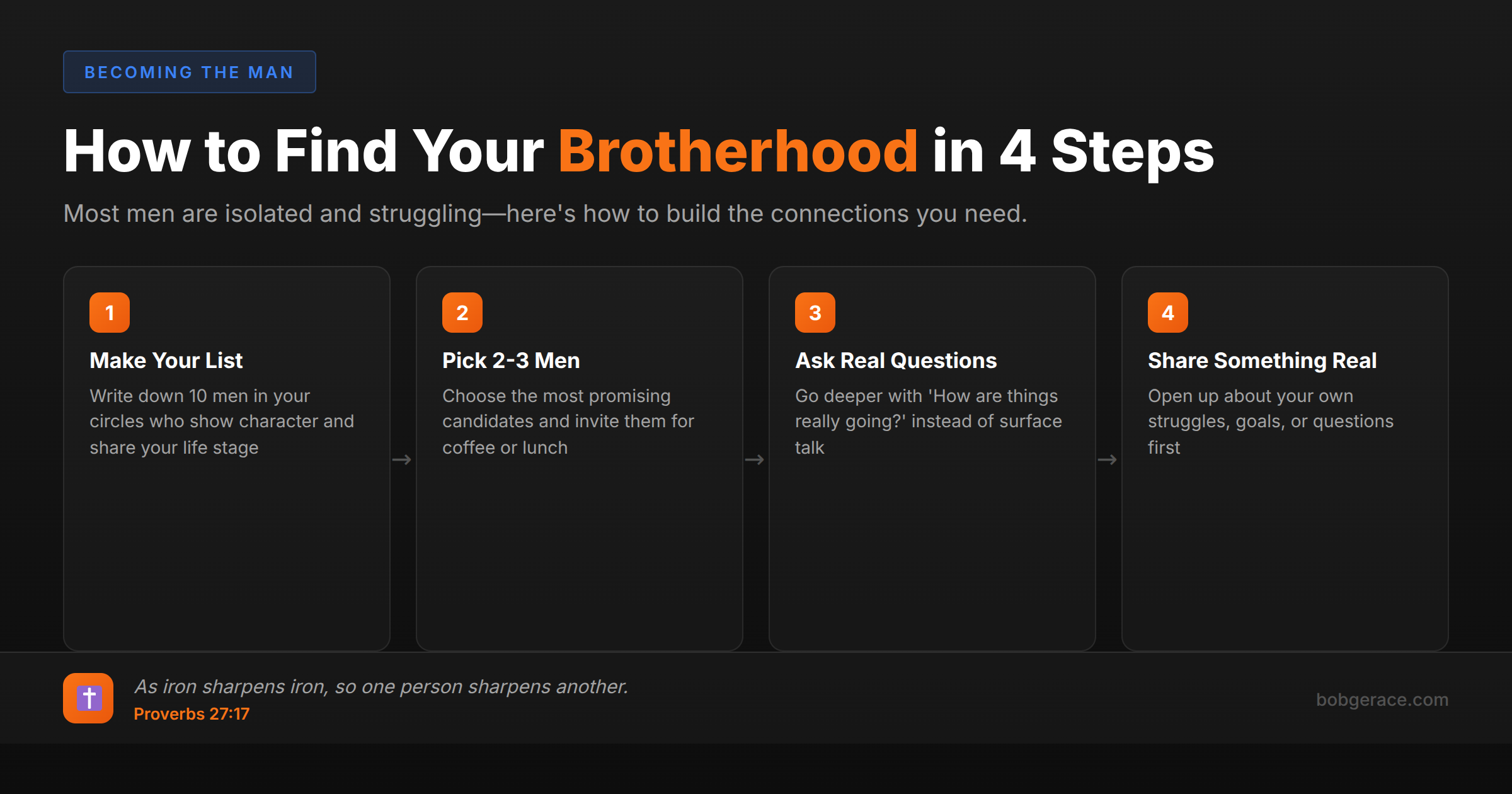
Finding other men for accountability and brotherhood requires intentional effort and strategic thinking. Most men today are isolated, struggling with the same issues you face - they just don't know how to connect authentically. The key is looking in places where men already gather around shared values: your church, workplace, neighborhood, or community activities. Start with men who demonstrate character and similar life situations. Don't wait for perfect candidates or instant deep friendship. Begin with surface-level connections and gradually build trust. Be the initiator - invite someone for coffee, suggest meeting regularly, or join existing men's groups. Remember, you're not looking for a best friend immediately; you're looking for men willing to grow together. Quality trumps quantity every time.
The Full Picture
The crisis of male friendship in our culture runs deep. Most men have plenty of acquaintances but few real friends - guys who actually know what's happening in their lives, their struggles, their marriages. This isn't just about loneliness; it's about missing a crucial component of becoming the man God designed you to be.
Why Men Struggle to Connect: - We've been conditioned to compete rather than collaborate - Vulnerability feels dangerous and unfamiliar - We mistake activity partnerships (golf, work projects) for actual friendship - Past betrayals or rejections make us gun-shy - We assume other men have it all figured out
The Reality Check: Every man around you is fighting battles you know nothing about. That guy who seems to have the perfect marriage? He's probably struggling too. The difference between thriving and surviving often comes down to having other men who will speak truth into your life.
Where to Look Strategically: - Church small groups or men's ministries - shared faith foundation - Workplace colleagues - similar life pressures and schedules - Neighborhood dads - common concerns about family and community - Hobby or sports groups - shared interests create natural conversation - Service organizations - men committed to something beyond themselves
The goal isn't finding men exactly like you - it's finding men committed to growth, honesty, and becoming better husbands and fathers. Start broad, then go deep with those who prove trustworthy.
What's Really Happening
From a therapeutic perspective, male social isolation has reached epidemic proportions, with profound impacts on mental health and marital satisfaction. Research consistently shows that men with strong male friendships report higher life satisfaction, better stress management, and more stable marriages.
The challenge lies in how men are socialized. Unlike women, who are typically encouraged to develop emotional intimacy skills from childhood, men often learn to connect through shared activities rather than emotional disclosure. This creates a paradox: men need deep connection but lack the practiced skills to create it.
Psychological Barriers to Male Connection: - Emotional alexithymia - difficulty identifying and expressing emotions - Shame-based thinking - fear that vulnerabilities will be used against them - Hypercompetitive conditioning - viewing other men as threats rather than allies - Avoidant attachment patterns - learned self-reliance that resists interdependence
The Neurobiological Reality: Men's brains are wired for connection just like women's, but testosterone influences how that connection is expressed. Men often bond through shared challenges, problem-solving, and side-by-side activities rather than face-to-face emotional conversations.
Successful male friendships typically develop through what I call 'graduated vulnerability' - starting with shared experiences and gradually increasing emotional transparency as trust builds. The key is understanding that authentic male friendship isn't about becoming more like female friendship patterns - it's about developing healthy masculine intimacy that honors how men naturally connect while still fostering genuine accountability and support.
What Scripture Says
God's design for men includes deep, accountable relationships with other men. Scripture is filled with examples of men who strengthened each other through brotherhood, accountability, and shared mission.
Iron Sharpens Iron: *"As iron sharpens iron, so one person sharpens another."* (Proverbs 27:17) This isn't about casual friendship - it's about men who challenge each other to become sharper, better versions of themselves. Real brotherhood involves friction that produces growth.
The Power of Two: *"Though one may be overpowered, two can defend themselves. A cord of three strands is not quickly broken."* (Ecclesiastes 4:12) You weren't meant to face life's battles alone. Other men provide strength when yours fails and perspective when you're too close to see clearly.
Confession and Healing: *"Therefore confess your sins to each other and pray for each other so that you may be healed."* (James 5:16) Notice this doesn't say confess only to God or to your wife. Men need other men who can hear their struggles without judgment and point them toward healing.
David and Jonathan's Covenant: *"Jonathan made a covenant with David because he loved him as himself."* (1 Samuel 18:3) This represents covenant friendship - men committed to each other's success, protection, and spiritual growth.
Jesus and His Inner Circle: Even Jesus chose twelve men and had an even closer relationship with Peter, James, and John. If the Son of God needed male companionship and accountability, how much more do we?
The Mission Together: *"How good and pleasant it is when God's people live together in unity!"* (Psalm 133:1) God blesses men who unite around His purposes, strengthening each other for the work He's called them to do.
What To Do Right Now
-
1
Make a list of 10 men in your current circles (church, work, neighborhood) who demonstrate character and share similar life stages
-
2
Choose 2-3 men from your list and initiate simple connection - coffee, lunch, or a specific activity you both enjoy
-
3
Ask one strategic question during each interaction: 'How are things really going?' or 'What's the biggest challenge you're facing right now?'
-
4
Share something real about your own life - a struggle, goal, or question you're wrestling with to model vulnerability
-
5
Suggest regular connection if the conversation goes well - monthly breakfast, weekly text check-ins, or joining/starting a men's group together
-
6
Follow through consistently for at least 3 months before evaluating the friendship's potential for deeper accountability
Related Questions
Ready to Build the Brotherhood You Need?
Don't navigate marriage and life alone. Let's develop a strategy for finding and building the male relationships that will strengthen every area of your life.
Get Support →