How do I separate fear from wisdom?
6 min read
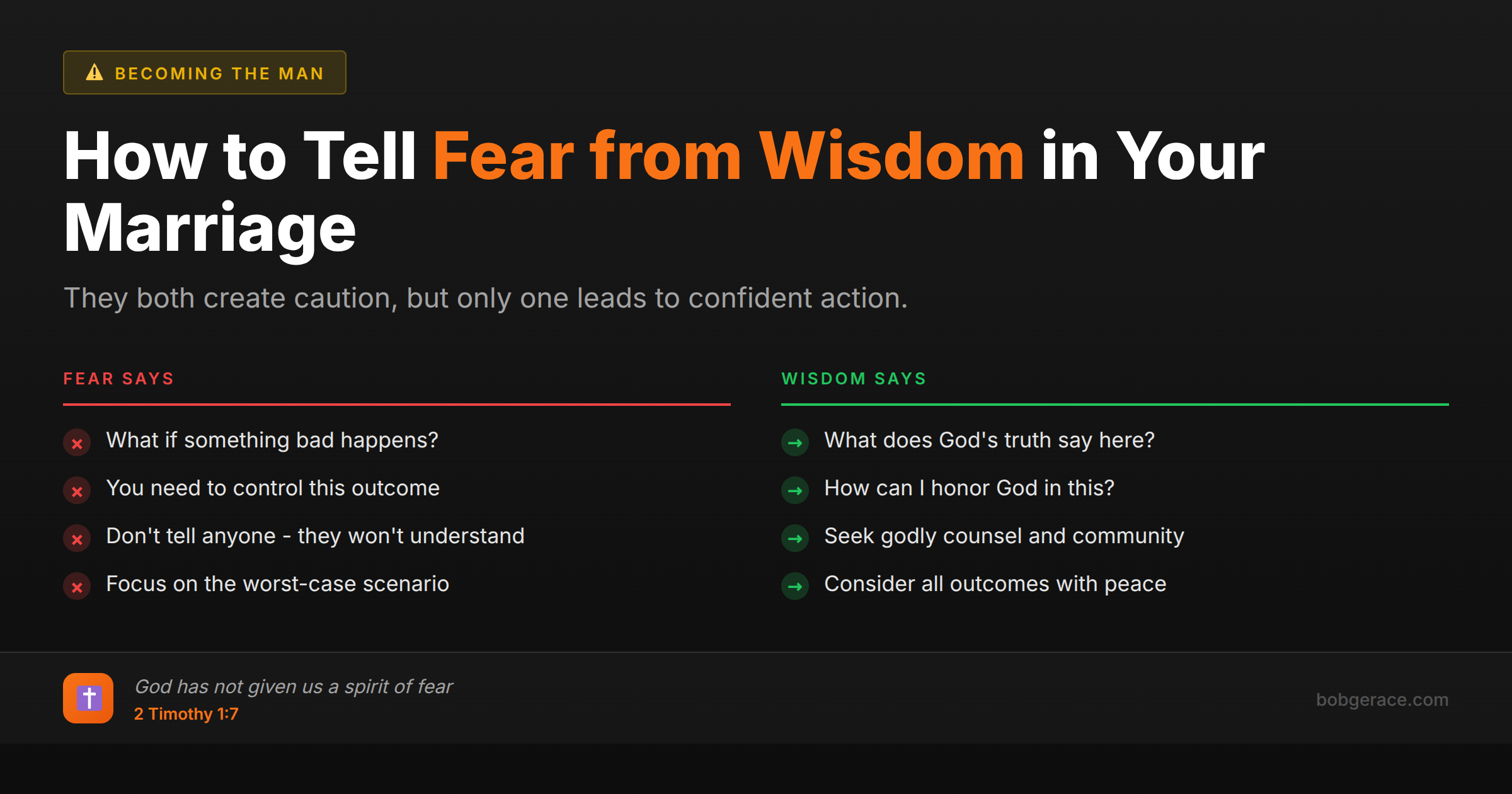
Fear and wisdom can feel similar because both create caution, but they have opposite sources and outcomes. Fear comes from a place of anxiety, creates paralysis, and focuses on worst-case scenarios. Wisdom comes from God's truth, creates confident action, and considers all outcomes with peace. The key difference is this: fear asks 'What if something bad happens?' while wisdom asks 'What does God's truth say about this situation?' Fear makes you smaller and more isolated. Wisdom makes you stronger and draws you closer to God and healthy people. Learning to recognize which voice is speaking takes practice, but it's one of the most important skills you can develop for your marriage and life.
The Full Picture
Let's be honest - this distinction trips up even mature believers. Fear and wisdom both whisper caution in your ear, both make you pause before acting, and both claim to protect you. No wonder you're confused.
But here's what I've learned after years of coaching women through difficult marriages: fear and wisdom have completely different fingerprints once you know what to look for.
Fear's signature moves: - Creates urgency without clarity ("I have to decide NOW") - Focuses on controlling outcomes ("If I just do X, then Y won't happen") - Isolates you from wise counsel ("No one would understand") - Breeds more fear (one worry spawns ten more) - Makes you feel smaller and more helpless - Pushes you toward extremes (all or nothing thinking)
Wisdom's signature moves: - Creates appropriate urgency with clear thinking - Focuses on faithful obedience regardless of outcomes - Draws you toward godly counsel and community - Breeds more peace and confidence - Makes you feel grounded in God's character - Leads to measured, principled responses
Here's the thing that might surprise you: wisdom doesn't always feel comfortable. Sometimes God's wisdom calls you to difficult conversations, firm boundaries, or uncomfortable changes. But even when wisdom leads you into hard territory, it does so with a settled peace that fear can never provide.
The game-changer is learning to check your fruit. Fear produces anxiety, isolation, and reactive decisions. Wisdom produces peace, community, and principled action. The path that leads to more of God's character in your life - that's wisdom talking.
What's Really Happening
Neurologically, fear and wisdom activate different parts of your brain, which explains why they feel so different once you know what to notice.
Fear triggers your amygdala - the brain's alarm system. When this happens, your thinking becomes narrow and reactive. You'll notice physical symptoms: racing heart, shallow breathing, tension in your shoulders. Your thoughts become repetitive and catastrophic. Time feels either too slow or too fast.
Wisdom engages your prefrontal cortex - the brain's executive center. This creates what we call 'cognitive flexibility.' You can hold multiple perspectives simultaneously, consider long-term consequences, and access your values and principles. Your body feels more settled, even when facing difficult realities.
Here's what's particularly important for women in challenging marriages: chronic stress can make fear feel normal. If you've been living in survival mode, your amygdala has been hyperactive for so long that fear-based thinking feels like 'being realistic' or 'being careful.'
The antidote isn't positive thinking - it's nervous system regulation. When you're regulated (through prayer, deep breathing, movement, safe relationships), you can access the parts of your brain where wisdom lives. This is why Scripture emphasizes 'be still and know that I am God.' Stillness isn't just spiritual advice - it's neurological necessity for good decision-making.
Practically, this means creating space between trigger and response. Even sixty seconds of intentional breathing can shift you from amygdala-driven fear to prefrontal cortex-driven wisdom.
What Scripture Says
Scripture makes it clear that God has not given us a spirit of fear (2 Timothy 1:7). The fear that paralyzes, confuses, and isolates doesn't come from Him. But the 'fear of the Lord' - that's different. That's reverential awe that leads to wisdom.
'The fear of the Lord is the beginning of wisdom' (Proverbs 9:10). This isn't cowering fear - it's recognizing God's authority and character as the foundation for all good decision-making. When you're anchored in who God is, you can face difficult realities without being overwhelmed by them.
'If any of you lacks wisdom, let him ask God, who gives generously to all without reproach' (James 1:5). Notice this promise - God gives wisdom generously. He's not stingy with guidance. He wants you to have clarity more than you want to have it.
But here's the part we often skip: 'But let him ask in faith, with no doubting' (James 1:6). Faith here doesn't mean blind optimism. It means trusting God's character enough to believe He will guide you, even when the path isn't immediately clear.
'Above all else, guard your heart, for everything you do flows from it' (Proverbs 4:23). Your heart - your inner life, your core beliefs about God and yourself - this is where either fear or wisdom takes root. What you believe about God's goodness, His sovereignty, His love for you - these beliefs shape whether you approach life from fear or wisdom.
'Peace I leave with you; my peace I give you. Do not let your hearts be troubled and do not be afraid' (John 14:27). Jesus directly connects His peace with the absence of fear. His peace isn't the absence of problems - it's the presence of His character in the midst of problems.
What To Do Right Now
-
1
Take the body check: Notice your physical state when making this decision. Racing heart and tight chest usually signal fear. Settled breathing and relaxed shoulders usually signal wisdom.
-
2
Ask the outcome question: Fear asks 'How can I control this?' Wisdom asks 'How can I honor God in this?' If your focus is on controlling outcomes rather than faithful obedience, pause.
-
3
Check your community: Fear isolates you ('No one would understand'). Wisdom draws you toward godly counsel. If you're avoiding wise people's input, that's usually fear talking.
-
4
Test the fruit: What is this decision producing in your life? More anxiety and confusion (fear) or more peace and clarity (wisdom)? The fruit reveals the root.
-
5
Pray for wisdom specifically: Use James 1:5. Ask God to show you the difference between your fear and His wisdom in this specific situation. Be specific in your request.
-
6
Give it 24 hours: Unless there's genuine urgent danger, wait a day before making fear-driven decisions. Wisdom rarely changes overnight, but fear often does.
Related Questions
- How do I make this decision?
- What factors should I weigh?
- What does wise counsel look like?
- How do I separate hope from denial?
- What if I make the wrong choice?
- What does discernment require?
- What role does Scripture play in discernment?
- How do I distinguish my desires from God's direction?
- How do I hear God when I'm in crisis?
Also find Bob on
Subscribe for weekly videos on Christian marriage.
Stuck Between Fear and Wisdom in Your Marriage?
A coach who knows your specific situation can help you tell the difference when it matters most. You don't have to keep second-guessing yourself alone.
Talk to Bob →