What does wise counsel look like?
6 min read
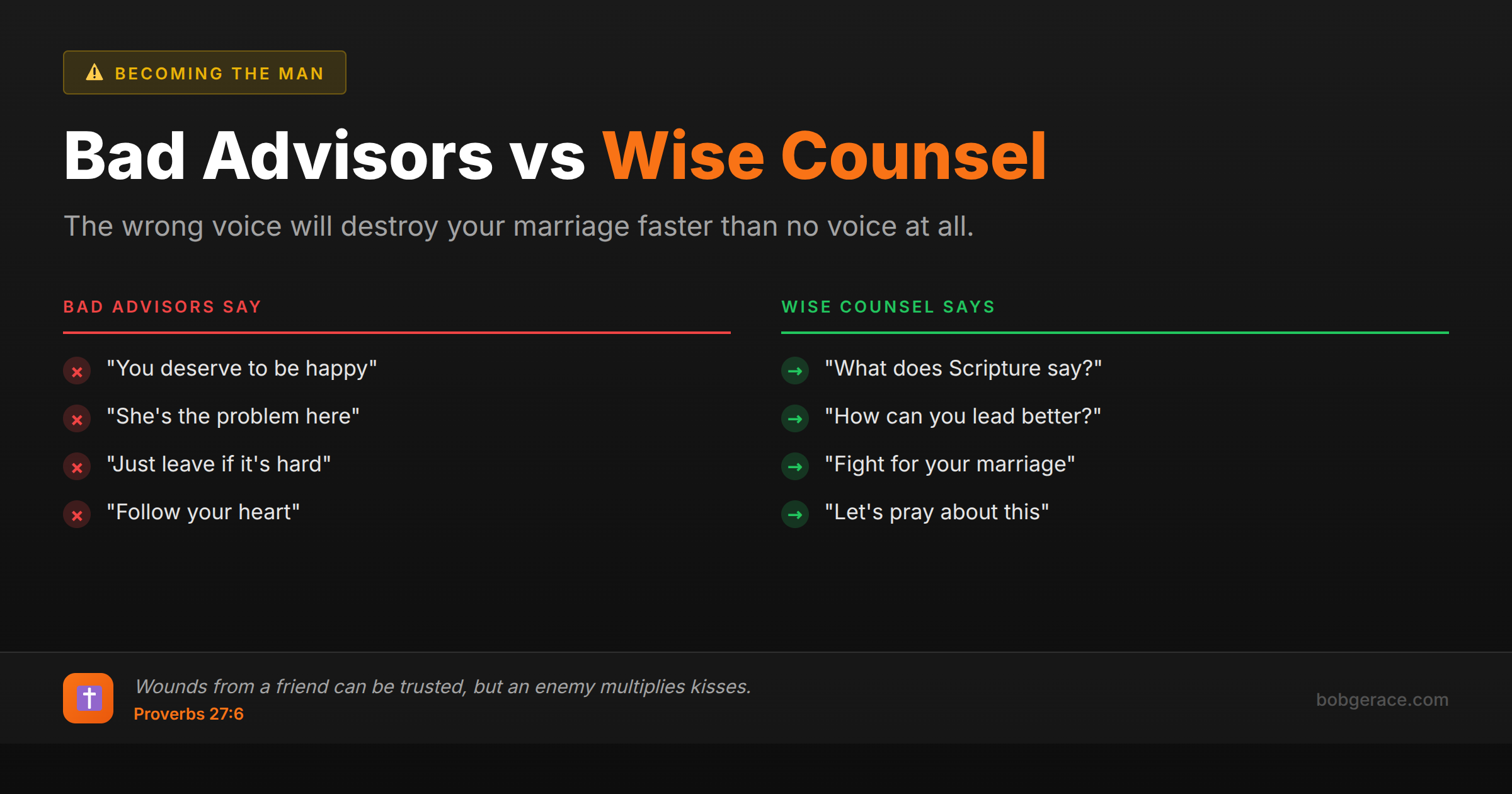
Wise counsel comes from people who demonstrate godly character, speak truth in love, and point you toward Scripture rather than just cultural solutions. These counselors listen more than they speak, ask probing questions to help you see clearly, and aren't afraid to challenge you when necessary. They've walked through difficult seasons themselves and can offer both empathy and practical wisdom. Most importantly, wise counselors help you discern God's voice rather than substituting their voice for His. They equip you to make decisions rather than making decisions for you, always pointing you back to biblical principles and the transformative power of Christ in your marriage.
The Full Picture
Finding wise counsel isn't about finding someone who tells you what you want to hear. In fact, it's often the opposite. When your marriage is in crisis, you'll encounter two types of advisors: those who validate your feelings and those who challenge your perspective. Wise counsel does both – but in the right proportion and at the right time.
Wise counselors possess several key characteristics. First, they demonstrate fruit of the Spirit in their own lives – love, joy, peace, patience, kindness, goodness, faithfulness, gentleness, and self-control. You can observe this in how they treat their spouse, their children, and others around them. Second, they have a track record of giving advice that leads to restoration rather than destruction. You can trace their counsel back to see marriages healed, relationships restored, and people growing in Christ-likeness.
They also understand the difference between empathy and enablement. A wise counselor will weep with you in your pain but won't excuse sin – yours or your spouse's. They'll help you see your own contribution to marital problems while also validating legitimate concerns about your spouse's behavior. This balance is crucial because healing requires both personal responsibility and appropriate boundaries.
Perhaps most importantly, wise counselors are comfortable with complexity. They don't offer quick fixes or simple formulas. Instead, they help you navigate the messy realities of marriage while holding onto biblical truth. They understand that God's timing is different from our timing, and they'll help you discern when to wait, when to act, when to confront, and when to extend grace.
What's Really Happening
From a therapeutic perspective, wise counsel operates on multiple levels simultaneously. Effective counselors create what we call a 'secure base' – a relationship where you feel safe to explore difficult truths about yourself and your marriage. This safety isn't about comfort; it's about trust that allows for honest self-examination.
Wise counselors also demonstrate what research calls 'differentiated' thinking. They can hold multiple perspectives simultaneously without becoming emotionally reactive. When you're describing your marriage problems, a differentiated counselor won't immediately take sides or get caught up in the drama. Instead, they maintain emotional equilibrium while helping you see patterns you might be missing.
Another crucial element is their ability to recognize and address trauma responses. Many marriage conflicts are actually trauma responses in disguise. A wise counselor will help you identify when you're operating from a triggered state versus when you're making decisions from a place of clarity. They understand that lasting change requires addressing these deeper emotional wounds, not just surface-level behaviors.
Finally, effective counselors practice what we call 'therapeutic restraint.' They resist the urge to fix you or give you all the answers. Instead, they ask questions that help you discover truth for yourself. This approach builds your capacity for discernment rather than creating dependency on their wisdom.
What Scripture Says
Scripture provides clear guidance about seeking and recognizing wise counsel. Proverbs 27:6 tells us, 'Wounds from a friend can be trusted, but an enemy multiplies kisses.' True wise counsel sometimes hurts initially because it exposes areas where we need to grow. Counselors who only affirm and never challenge may feel good in the moment, but they're not helping you mature.
Proverbs 19:20 instructs us to 'Listen to advice and accept discipline, and at the end you will be counted among the wise.' Notice the connection between accepting discipline and becoming wise. Wise counselors will discipline you – not harshly, but with the kind of loving correction that leads to growth.
Galatians 6:1 shows us the heart behind wise counsel: 'Brothers and sisters, if someone is caught in a sin, you who live by the Spirit should restore that person gently.' The goal is always restoration, not condemnation. Wise counselors are driven by hope for your marriage's healing, not by a desire to prove they're right.
Proverbs 15:22 reminds us that 'Plans fail for lack of counsel, but with many advisers they succeed.' This doesn't mean seeking advice from everyone, but rather having multiple sources of godly wisdom. Wise counsel often comes through a community of believers who know you well and love you enough to speak truth.
Finally, 1 Thessalonians 5:14 gives counselors their mandate: 'Warn those who are idle and disruptive, encourage the disheartened, help the weak, be patient with everyone.' Wise counselors know when to warn, when to encourage, and when to simply be patient with your process.
What To Do Right Now
-
1
Evaluate your current advisors by their fruit – do their marriages and families reflect the wisdom they're giving you?
-
2
Ask potential counselors about their approach to marriage restoration versus their approach to individual happiness
-
3
Look for counselors who ask you probing questions rather than immediately offering solutions
-
4
Seek advisors who are familiar with your specific challenges but aren't currently in crisis themselves
-
5
Choose counselors who will pray with you and point you to Scripture, not just therapeutic techniques
-
6
Establish boundaries with well-meaning friends who offer advice but lack the maturity to guide you wisely
Related Questions
- How do I make this decision?
- What factors should I weigh?
- How do I separate fear from wisdom?
- How do I separate hope from denial?
- What does discernment require?
- How do you hear God in this?
- How do I discern God's will for my marriage?
- What role does wise counsel play?
- What if godly people disagree on what I should do?
- Should I get outside perspective?
Also find Bob on
Subscribe for weekly videos on Christian marriage.
Bring Your Actual Marriage to a Coach
Wise counsel works when someone knows your story — the patterns, the history, what's actually happening in your house. That's what coaching does.
Talk to Bob →