What does humble leadership look like?
6 min read
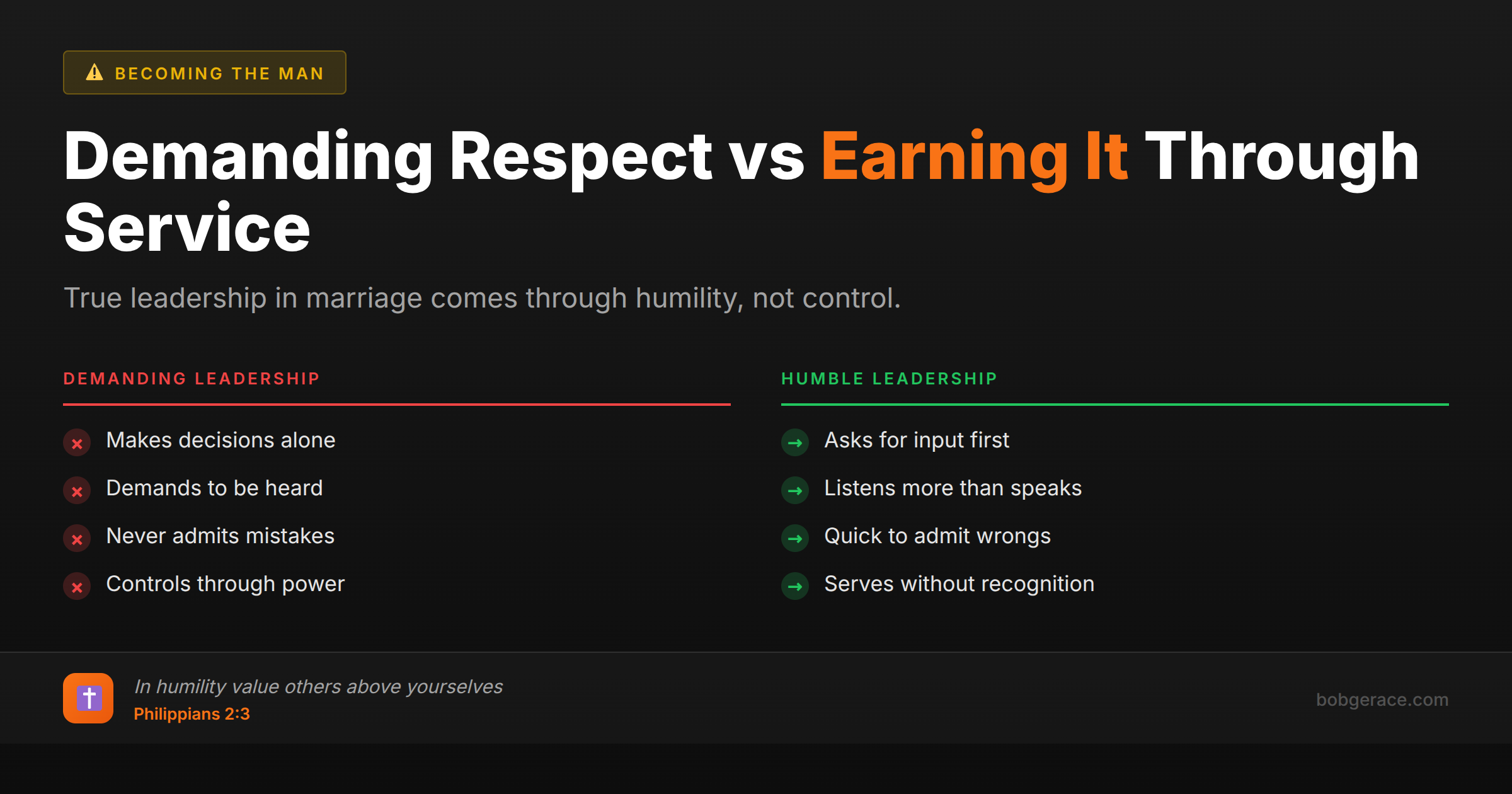
Humble leadership in marriage means leading through service, not domination. It's about putting your wife's needs alongside your own, listening more than you speak, and being quick to admit when you're wrong. A humble leader doesn't demand respect—he earns it through consistent character and selfless action. This kind of leadership looks like taking initiative without being controlling, making decisions together rather than unilaterally, and showing strength through vulnerability. It's leading by example rather than by demand, and understanding that true authority comes from love and service, not from power or position.
The Full Picture
Humble leadership is the most powerful form of leadership, especially in marriage. It's not weak—it's incredibly strong. When you lead with humility, you're choosing to use your strength to lift others up rather than to dominate them.
In practical terms, humble leadership means:
- You listen first, speak second. Before making decisions that affect your family, you genuinely seek input from your wife - You admit mistakes quickly. When you're wrong, you own it without making excuses or shifting blame - You serve without keeping score. You look for ways to make your wife's life easier, not because you have to, but because you want to - You lead by example. Your actions consistently match your words - You're secure enough to be vulnerable. You can share your struggles, fears, and uncertainties
The key difference between humble leadership and weak leadership is intentionality and strength. A weak man avoids decisions and responsibility. A humble leader takes responsibility but does so with his wife's best interests at heart, not just his own convenience.
Humble leadership also means being teachable. You don't have to have all the answers. You can learn from your wife, from other couples, and from your mistakes. This creates an environment where both of you can grow together rather than one person always having to be "right."
The result? Your wife feels heard, valued, and protected. She sees a man who is strong enough to be gentle, confident enough to admit weakness, and secure enough to put her needs first. This kind of leadership naturally invites respect and partnership rather than demanding it.
What's Really Happening
From a psychological perspective, humble leadership activates the attachment system in the most positive way possible. When a husband leads with humility, he's sending clear signals of safety, reliability, and emotional availability to his wife.
Research in relationship dynamics shows that partners who feel heard and valued by their spouse show significantly higher levels of relationship satisfaction and commitment. Humble leadership creates what we call "secure functioning"—both partners feel safe to be vulnerable and authentic.
The neurobiological impact is profound. When your wife experiences you as humble and servant-hearted, her nervous system can relax. She's not constantly in a defensive posture, wondering if you're going to steamroll her opinions or dismiss her concerns. This relaxation allows for deeper intimacy and connection.
However, many men struggle with humble leadership because they confuse it with being passive or weak. There's often underlying anxiety about losing control or respect. What we find clinically is the opposite—men who lead with genuine humility report feeling more respected and appreciated by their wives.
The key is understanding that humble leadership is actually a position of tremendous strength. It requires emotional regulation, self-awareness, and the confidence to prioritize the relationship over your ego. These are advanced emotional skills that create the kind of leadership that naturally invites partnership rather than resistance.
What Scripture Says
Scripture gives us the clearest picture of what humble leadership looks like, and it starts with Christ Himself.
Philippians 2:3-4 - "Do nothing out of selfish ambition or vain conceit. Rather, in humility value others above yourselves, not looking to your own interests but each of you to the interests of the others."
This is the foundation of humble leadership—genuinely caring about your wife's interests as much as your own.
Ephesians 5:25 - "Husbands, love your wives, just as Christ loved the church and gave himself up for her."
Christ's love was sacrificial, putting the needs of others first. This is active, intentional leadership through service.
1 Peter 5:3 - "Not lording it over those entrusted to you, but being examples to the flock."
True leadership isn't about using authority to control—it's about setting an example worth following.
Matthew 20:26-27 - "Whoever wants to become great among you must be your servant, and whoever wants to be first must be slave of all."
Jesus completely flipped the world's understanding of leadership. Greatness comes through serving others.
Proverbs 27:5-6 - "Better is open rebuke than hidden love. Wounds from a friend can be trusted, but an enemy multiplies kisses."
Humble leadership sometimes means having difficult conversations with love and truth.
James 1:19 - "Everyone should be quick to listen, slow to speak and slow to become angry."
This is practical wisdom for how humble leaders communicate—they listen more than they talk.
What To Do Right Now
-
1
Ask before assuming - Before making decisions that affect both of you, genuinely ask for your wife's input and really listen to her response
-
2
Practice the 24-hour rule - When you're wrong about something, commit to admitting it within 24 hours without making excuses
-
3
Serve daily without announcement - Do one thing each day to make your wife's life easier, and don't mention it or expect recognition
-
4
Lead with questions, not demands - Instead of telling your wife what to do, ask "What do you think about..." or "How can we handle this together?"
-
5
Show vulnerability appropriately - Share one struggle or uncertainty you're facing and ask for your wife's wisdom or support
-
6
Practice grateful leadership - End each day by telling your wife one thing you appreciate about her contribution to your family or relationship
Related Questions
- What does masculine leadership look like?
- What is servant leadership practically?
- How do I lead without controlling?
- What does Jesus model about masculine leadership?
- How do I lead when I've lost credibility?
- What does rebuilding trust as a leader require?
- What does 'taking responsibility' actually look like?
- How do I receive correction as from the Lord?
- What does repentance look like for accumulated sin?
- What does 'godly sorrow' look like in practice?
Also find Bob on
Subscribe for weekly videos on Christian marriage.
Leading Your Marriage Takes More Than Concepts
You've got the idea. Now you need someone who knows your specific marriage—where you're stuck, where she's shut down, what humble leadership actually looks like in your house. That's what coaching does.
Talk to Bob →