What is self-sabotage serving?
6 min read
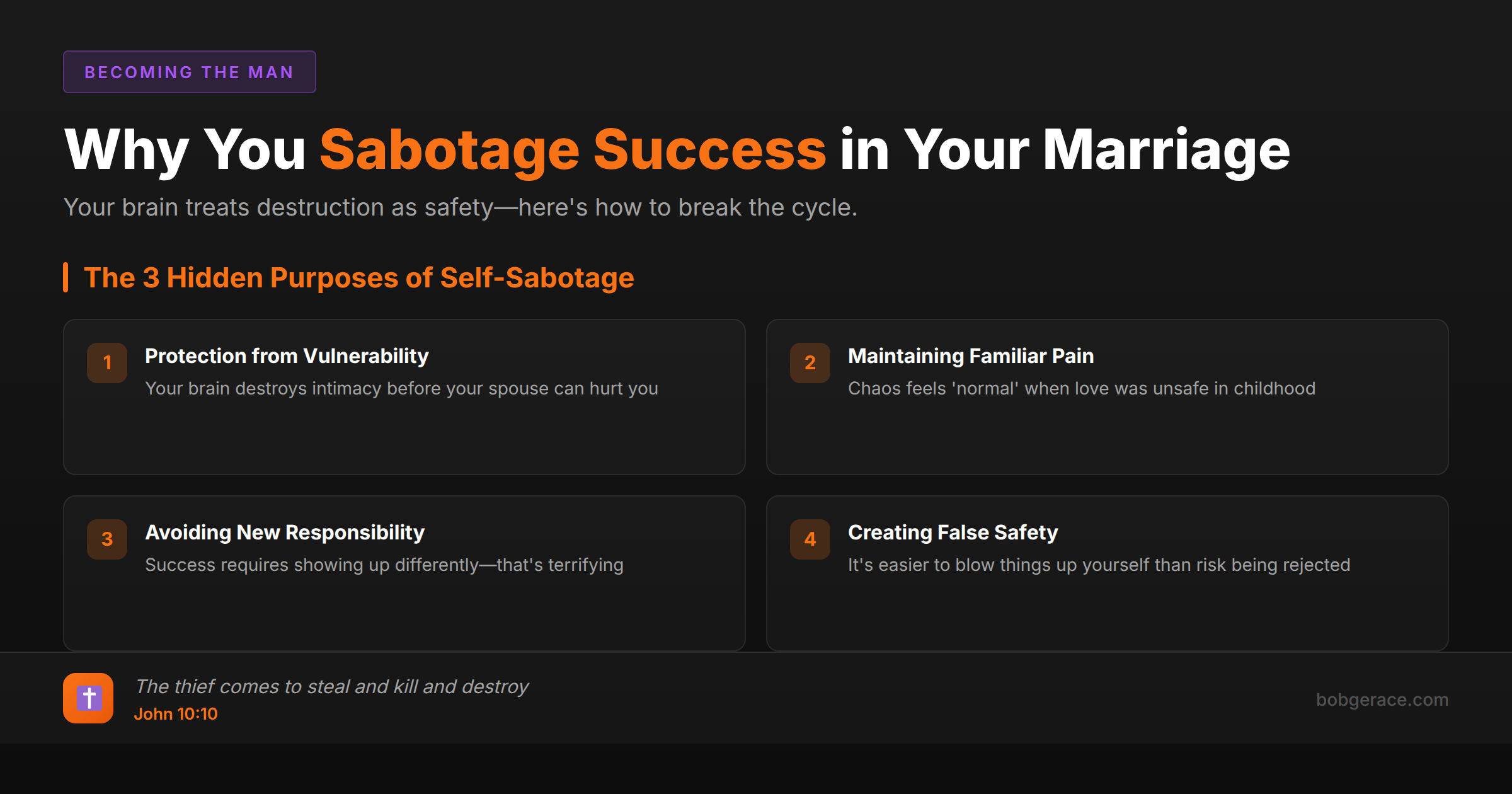
Self-sabotage in marriage typically serves three hidden purposes: protection from vulnerability, maintaining familiar patterns of pain, and avoiding the responsibility that comes with a thriving relationship. Your brain treats sabotage as a twisted form of safety - it's easier to blow things up yourself than risk being hurt by your spouse. This destructive pattern often stems from childhood experiences where love felt unsafe or unpredictable. When marriage starts going well, your nervous system panics and creates chaos to return to what feels 'normal.' Understanding what your self-sabotage is protecting you from is the first step toward stopping it and building the marriage you actually want.
The Full Picture
Let me be straight with you - self-sabotage isn't random destruction. It's your psyche's misguided attempt to solve a problem, even though it creates bigger ones.
Self-sabotage serves as emotional armor. When things get good in your marriage, vulnerability increases. Your brain, wired from past experiences, interprets closeness as danger. So it creates distance through fights, affairs, or withdrawal. It's saying, "I'll hurt me before you can hurt me."
It maintains the status quo. Believe it or not, your nervous system finds comfort in familiar dysfunction. If you grew up in chaos, peace feels foreign and threatening. Self-sabotage returns you to the emotional temperature you're used to, even though it's miserable.
It avoids the weight of success. A thriving marriage requires showing up fully - being seen, being accountable, being present. That's terrifying for someone who's spent years hiding behind walls. Sabotage keeps you small and "safe" from the demands of genuine intimacy.
It confirms negative beliefs. If you believe you don't deserve love, sabotage provides evidence. "See? I always mess things up. I'm unlovable." It's a twisted form of being "right" about yourself.
The cruel irony? The very thing protecting you from pain is creating the pain you're trying to avoid. Your marriage suffers, your spouse withdraws, and you end up with exactly what you feared - rejection and isolation. Breaking this cycle requires recognizing that your self-sabotage has been a survival strategy, not a character flaw.
What's Really Happening
From a clinical perspective, self-sabotage operates through what we call "trauma bonding with familiar pain." The brain develops neural pathways that associate dysfunction with safety, creating a neurological addiction to chaos.
This manifests through several psychological mechanisms. Attachment trauma creates an approach-avoidance conflict - you desperately want connection but fear it simultaneously. Negative core beliefs formed in childhood drive behaviors that confirm these beliefs, creating a self-fulfilling prophecy. Hypervigilance keeps you scanning for threats in intimacy, leading to preemptive strikes against your own relationship.
The autonomic nervous system plays a crucial role. When marriage improves, the parasympathetic system should activate, creating calm and connection. Instead, past trauma triggers the sympathetic nervous system, flooding you with fight-flight chemicals that drive sabotaging behaviors.
Complex PTSD often underlies chronic self-sabotage patterns. Developmental trauma creates a fragmented sense of self that struggles with sustained intimacy. The internal critic becomes hyperactive, generating shame that fuels destructive choices.
Recovery requires neuroplasticity - literally rewiring your brain to associate safety with connection rather than chaos. This happens through consistent corrective experiences, trauma processing, and developing distress tolerance skills. The goal isn't eliminating the impulse to sabotage, but creating space between the impulse and the action.
What Scripture Says
Scripture reveals that self-sabotage stems from believing lies about our identity and God's heart toward us. The enemy's primary strategy is deception, and self-sabotage is often the fruit of swallowing lies about our worth and God's intentions.
"The thief comes only to steal and kill and destroy; I have come that they may have life, and have it abundantly." (John 10:10) Self-sabotage is the thief's work within us, stealing the abundant life God designed for marriage. When we sabotage our relationships, we're agreeing with destruction rather than life.
"We demolish arguments and every pretension that sets itself up against the knowledge of God, and we take captive every thought to make it obedient to Christ." (2 Corinthians 10:5) Self-sabotage begins in the thought life. Destructive patterns start with lies we believe about ourselves, our spouse, and our future.
"Above all else, guard your heart, for everything you do flows from it." (Proverbs 4:23) The heart's condition determines our actions. A heart wounded by past betrayals will create behaviors that protect against future pain, even when that protection destroys what we most desire.
"And we know that in all things God works for the good of those who love him, who have been called according to his purpose." (Romans 8:28) This promise directly confronts the fear driving self-sabotage - that good things won't last. God is committed to our good, including our marriage's health.
"There is no fear in love. But perfect love drives out fear, because fear has to do with punishment." (1 John 4:18) Self-sabotage is fear-driven behavior. As we experience God's perfect love, fear loses its power to drive destructive choices.
What To Do Right Now
-
1
Identify your sabotage triggers - Notice what situations, feelings, or conversations typically precede your destructive behaviors. Keep a journal for two weeks tracking patterns.
-
2
Name the lie you're believing - Ask yourself: 'What am I afraid will happen if this relationship succeeds?' Write down the specific fears driving your sabotage.
-
3
Create a pause practice - When you feel the urge to sabotage, commit to waiting 24 hours before acting. Use this time to pray and process the emotions underneath.
-
4
Develop a truth statement - Counter the lies with Scripture-based truth about your identity and God's heart for your marriage. Speak this truth daily.
-
5
Build accountability - Tell one trusted person about your sabotage patterns and give them permission to speak into your life when they see warning signs.
-
6
Practice staying present - When anxiety about the future drives sabotage, return to the present moment through deep breathing, gratitude, or physical grounding exercises.
Related Questions
- What is 'repetition compulsion'?
- What is 'secondary gain' from destructive behavior?
- What does my pattern protect me from?
- What would I have to face if I actually changed?
- Why do I repeat patterns I hate?
- What parts of me resist change?
- What role did my childhood play in my anger patterns?
- What attachment injuries did I experience?
- What unmet needs from childhood am I still seeking?
- What is the 'inner critic' and why does it sabotage?
Also find Bob on
Subscribe for weekly videos on Christian marriage.
Your Pattern Has a Name
A coach who knows your history can see what you're protecting and help you stop running the same loop. You don't have to figure this out alone.
Talk to Bob →