What is the cycle of abuse/reconciliation?
6 min read
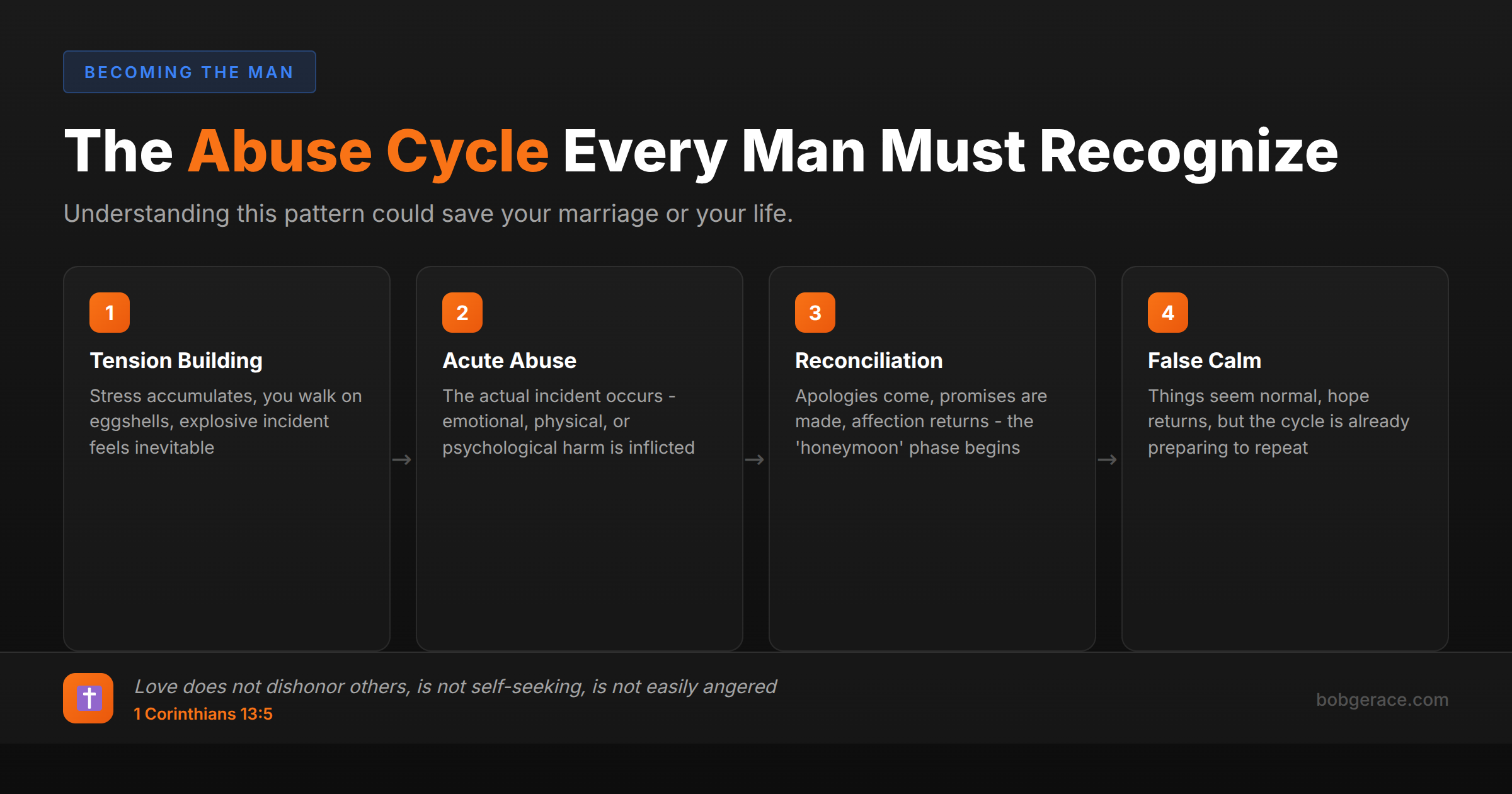
The cycle of abuse/reconciliation is a predictable pattern that occurs in abusive relationships, consisting of four distinct phases: tension building, acute abuse, reconciliation (honeymoon), and calm. During tension building, stress accumulates and the victim walks on eggshells. The acute abuse phase involves the actual incident - emotional, physical, or psychological harm. This is followed by reconciliation, where the abuser apologizes, promises change, and may shower the victim with affection. Finally, there's a calm period where things seem normal, giving false hope that change has occurred. This cycle repeats and typically escalates over time, becoming more frequent and severe. Understanding this pattern is crucial because it explains why victims often return to abusive situations and why they may defend their abuser during the 'honeymoon' phase.
The Full Picture
The cycle of abuse, first identified by psychologist Lenore Walker, is one of the most important concepts to understand if you're questioning whether your marriage involves abusive dynamics. This isn't just about physical violence - it applies to emotional, psychological, financial, and spiritual abuse as well.
Phase 1: Tension Building - You feel like you're walking on eggshells. Your spouse becomes increasingly irritable, critical, or withdrawn. You find yourself trying harder to please them, adjusting your behavior to avoid conflict. The atmosphere feels charged, and you sense something is coming.
Phase 2: Acute Abuse - The explosion happens. This could be yelling, name-calling, threats, isolation, destroying property, or physical violence. You're left feeling shocked, hurt, and confused. This phase can last minutes, hours, or days.
Phase 3: Reconciliation (Honeymoon) - Your spouse apologizes, sometimes tearfully. They blame stress, work, or external factors. They promise it will never happen again and may shower you with gifts, affection, or attention. They seem genuinely remorseful, and you see glimpses of the person you fell in love with.
Phase 4: Calm - Life feels normal again. Your spouse is kind and attentive. You begin to hope that maybe they really have changed this time. You might even question whether the abuse was as bad as you remember.
Here's what makes this cycle so dangerous: it creates trauma bonding. The intermittent reinforcement of love and abuse actually strengthens the emotional attachment. Each honeymoon phase gives you hope and makes you more invested in 'making it work.'
What's Really Happening
From a clinical perspective, the cycle of abuse is a form of psychological conditioning that creates trauma bonds stronger than healthy attachments. The unpredictable nature of when love versus abuse will occur triggers the same neurochemical responses seen in gambling addiction - dopamine hits during the reconciliation phase that keep victims psychologically hooked.
What I see in my practice is that victims often focus on the honeymoon phase as 'proof' that their partner can change, while minimizing the abuse phases as aberrations. This is a survival mechanism called cognitive dissonance - the mind's way of reducing psychological conflict by downplaying the severity of trauma.
The cycle typically accelerates over time. Early in the relationship, you might see this pattern play out over months. As the relationship progresses, it can compress to weeks, then days. The honeymoon phase often becomes shorter or disappears entirely, while the abuse phases intensify.
Crucially, this cycle is intentional, even if subconsciously so. The abuser's remorse serves a function - it prevents you from leaving while maintaining their access to you as a target. Real change requires the abuser to take full responsibility, seek professional help, and demonstrate sustained behavioral change over years, not just during brief honeymoon periods.
If you recognize this pattern, understand that hoping for change while remaining in the cycle enables its continuation. Breaking free requires external support and often professional intervention.
What Scripture Says
Scripture is clear about how we should treat one another, especially within marriage, and the cycle of abuse violates fundamental biblical principles about love, respect, and relationship.
Love is not manipulative: *'Love is patient, love is kind. It does not envy, it does not boast, it is not proud. It does not dishonor others, it is not self-seeking, it is not easily angered, it keeps no record of wrongs'* (1 Corinthians 13:4-5). True biblical love doesn't cycle between harm and affection - it's consistent and honoring.
We're called to wisdom and discernment: *'Do not be yoked together with unbelievers. For what do righteousness and wickedness have in common? Or what fellowship can light have with darkness?'* (2 Corinthians 6:14). While often applied to salvation, this principle speaks to not binding ourselves to destructive patterns.
God desires truth in relationships: *'Therefore each of you must put off falsehood and speak truthfully to your neighbor, for we are all members of one body'* (Ephesians 4:25). The false promises and manipulation inherent in the abuse cycle contradict God's design for honest, trustworthy relationships.
We're called to protect the vulnerable: *'Defend the weak and the fatherless; uphold the cause of the poor and the oppressed. Rescue the weak and the needy; deliver them from the hand of the wicked'* (Psalm 82:3-4). This includes protecting yourself when you're in a position of vulnerability.
God doesn't call you to enable sin by accepting cyclical abuse. Biblical submission never means accepting harmful treatment or enabling someone's destructive behaviorr patterns.
What To Do Right Now
-
1
Document the pattern - keep a private journal noting incidents, apologies, and calm periods to see the cycle clearly
-
2
Create a safety plan - identify safe people, places, and resources you can access during crisis moments
-
3
Connect with support - reach out to trusted friends, family, or professionals who can provide perspective and help
-
4
Stop making excuses - recognize that stress, work, or other factors don't justify abusive behavior toward you
-
5
Establish firm boundaries - communicate clear consequences for abusive behavior and follow through consistently
-
6
Seek professional guidance - contact a counselor experienced in abuse dynamics to help you navigate your specific situation safely
Related Questions
- What is 'love bombing'?
- How do I distinguish hoovering from genuine pursuit?
- What are signs he's just scared not changed?
- What is 'intermittent reinforcement'?
- What is 'performative remorse'?
- What are red flags that this is manipulation?
- I keep making the same mistakes
- Why do I repeat patterns I hate?
- What is 'repetition compulsion'?
- What does chronic anger do to my nervous system?
Also find Bob on
Subscribe for weekly videos on Christian marriage.
You Need a Coach Who Knows Your Story
If you're seeing this cycle in your marriage, you need a human who can hear what's actually happening in your specific situation and help you figure out what safe looks like for you.
Talk to Bob →