What are signs he's just scared not changed?
6 min read
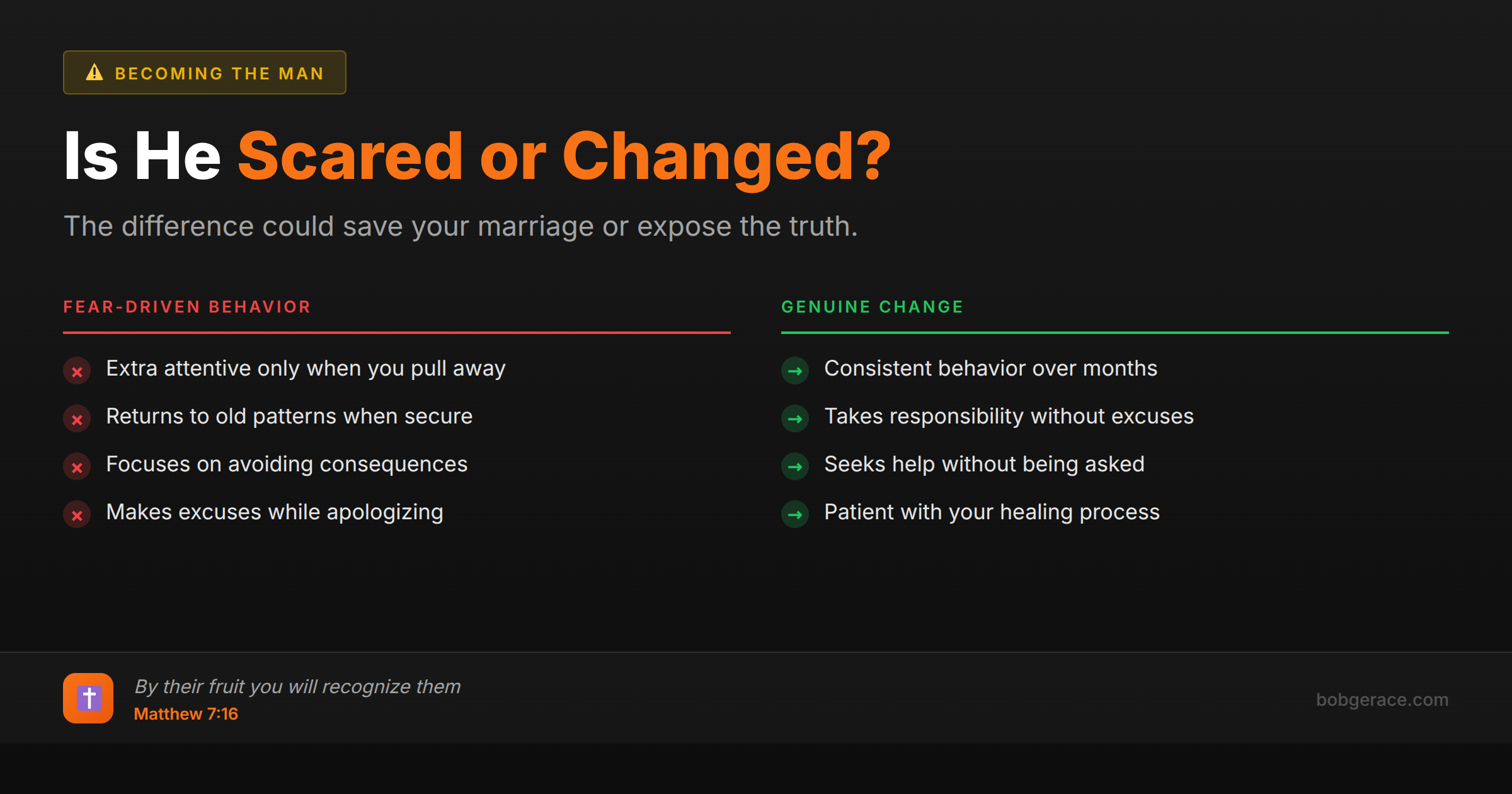
When a man is scared rather than truly changed, you'll notice his efforts are inconsistent and tied to consequences rather than conviction. He may be extra attentive when he senses you pulling away, but returns to old patterns when he feels secure again. Fear-driven behavior focuses on avoiding immediate consequences - losing you, the kids, or his reputation - rather than addressing the heart issues that created the problems. Genuine change shows up as consistent behavior over time, regardless of whether you're watching or threatening to leave. A truly changed man takes responsibility without making excuses, seeks help proactively, and demonstrates patience with your healing process without pressuring you for forgiveness or trust.
The Full Picture
Understanding the difference between fear and genuine transformation can save you years of heartache and false hope.
When men face the possibility of losing their marriage, many will make dramatic temporary changes driven purely by panic. This fear-based response looks like change on the surface, but it lacks the deep heart transformation that creates lasting behavioral shifts.
Fear-driven changes typically include:
- Reactive improvements - He only steps up when you're at your breaking point - Performance-based behavior - His efforts are calculated to get specific responses from you - Conditional cooperation - He's helpful when he wants something or senses danger - Surface-level adjustments - He modifies visible behaviors but underlying attitudes remain unchanged - Impatient timeline - He expects quick forgiveness and restored trust
Genuine change, by contrast, involves:
- Proactive growth - He seeks help and makes improvements without ultimatums - Consistent character - His behavior remains steady whether you're watching or not - Heart-level transformation - He addresses root issues, not just symptoms - Patient rebuilding - He understands trust is earned over time through consistent actions - Accountability seeking - He welcomes oversight and feedback from mentors or counselors
The key distinction is motivation. Fear focuses on avoiding consequences, while genuine change focuses on becoming the man God calls him to be. One is external pressure, the other is internal conviction. One fades when the pressure lifts, the other grows stronger over time.
What's Really Happening
From a psychological perspective, fear-based behavioral changes activate our survival mechanisms rather than our growth systems. When someone changes primarily due to external pressure or threatened loss, they're operating from their limbic system - the part of the brain responsible for fight, flight, or freeze responses.
This creates several predictable patterns. First, the changes are unsustainable because they require constant mental energy to maintain behaviors that aren't internally motivated. Second, there's often underlying resentment because the person feels coerced rather than choosing growth. Third, once the immediate threat subsides, the brain naturally returns to established neural pathways and familiar behaviors.
Genuine transformation, however, involves neuroplasticity - the brain's ability to form new neural connections through repeated intentional practice. This requires internal motivation, consistent repetition over months, and usually some form of external support or accountability. The person must see personal value in the change, not just external benefit.
Watch for these clinical red flags that indicate fear rather than change: cycling between extreme efforts and complete withdrawal, defensiveness when discussing long-term patterns, focus on your reactions rather than his growth, and timeline pressure around forgiveness. True change shows up as steady progress, ownership of past harm, patience with your healing process, and sustained effort regardless of your response.
What Scripture Says
Scripture gives us clear wisdom about discerning true repentance from fear-driven responses. "Even godly sorrow brings repentance that leads to salvation and leaves no regret, but worldly sorrow brings death" (2 Corinthians 7:10). Worldly sorrow - which includes fear of consequences - produces temporary behavioral changes but not heart transformation.
"By their fruit you will recognize them" (Matthew 7:16). Jesus taught us to evaluate people by their consistent actions over time, not their words or temporary improvements. Fruit takes seasons to develop and is produced naturally from healthy roots. If the root system hasn't changed, the fruit will eventually return to its original nature.
"Above all else, guard your heart, for everything you do flows from it" (Proverbs 4:23). God is concerned with heart transformation, not behavior modification. When someone is merely scared, they're managing their behavior while leaving their heart unchanged. This creates internal conflict and eventual behavioral regression.
"The simple believe anything, but the prudent give thought to their steps" (Proverbs 14:15). God calls us to be wise and discerning, not naive. It's not unloving to require evidence of genuine change over time rather than accepting promises and short-term improvements.
"Test everything; hold fast what is good" (1 Thessalonians 5:21). We're commanded to test what we're told against reality. This includes testing whether someone's changes are genuine or fear-driven.
"Do not be yoked together with unbelievers" (2 Corinthians 6:14). While often applied to marriage choice, this principle extends to not binding ourselves to people whose values and character haven't genuinely aligned with God's standards.
What To Do Right Now
-
1
Document patterns over 3-6 months - Track his consistency when you're not in crisis mode and when he feels secure in the relationship
-
2
Look for proactive growth - Notice whether he seeks counseling, mentorship, or spiritual growth without you demanding it
-
3
Test his patience - Observe his response when you don't quickly offer forgiveness, trust, or positive reinforcement for his changes
-
4
Evaluate his focus - Determine if he's more concerned with your healing and his character growth, or with getting things 'back to normal'
-
5
Seek outside perspective - Ask trusted friends, family, or counselors what they observe about the sustainability of his changes
-
6
Protect your heart - Don't make major decisions based on fear-driven improvements; wait for proven character transformation over time
Related Questions
- How do I know if he's really changing?
- Is he manipulating me or actually different?
- How do I tell performance from genuine change?
- What are the markers of genuine behavior change?
- What distinguishes remorse from guilt?
- What is 'white-knuckling' vs. internalized change?
- What are markers of genuine remorse vs. guilt?
- He's said he'll change before — why believe him now?
- What if he's just scared I'll leave?
Also find Bob on
Subscribe for weekly videos on Christian marriage.
Bring Your Specific Situation to Bob
You're watching his behavior, trying to decode what's real. A coach who knows your marriage can help you see what you can't see alone.
Talk to Bob →