What is 'love bombing'?
6 min read
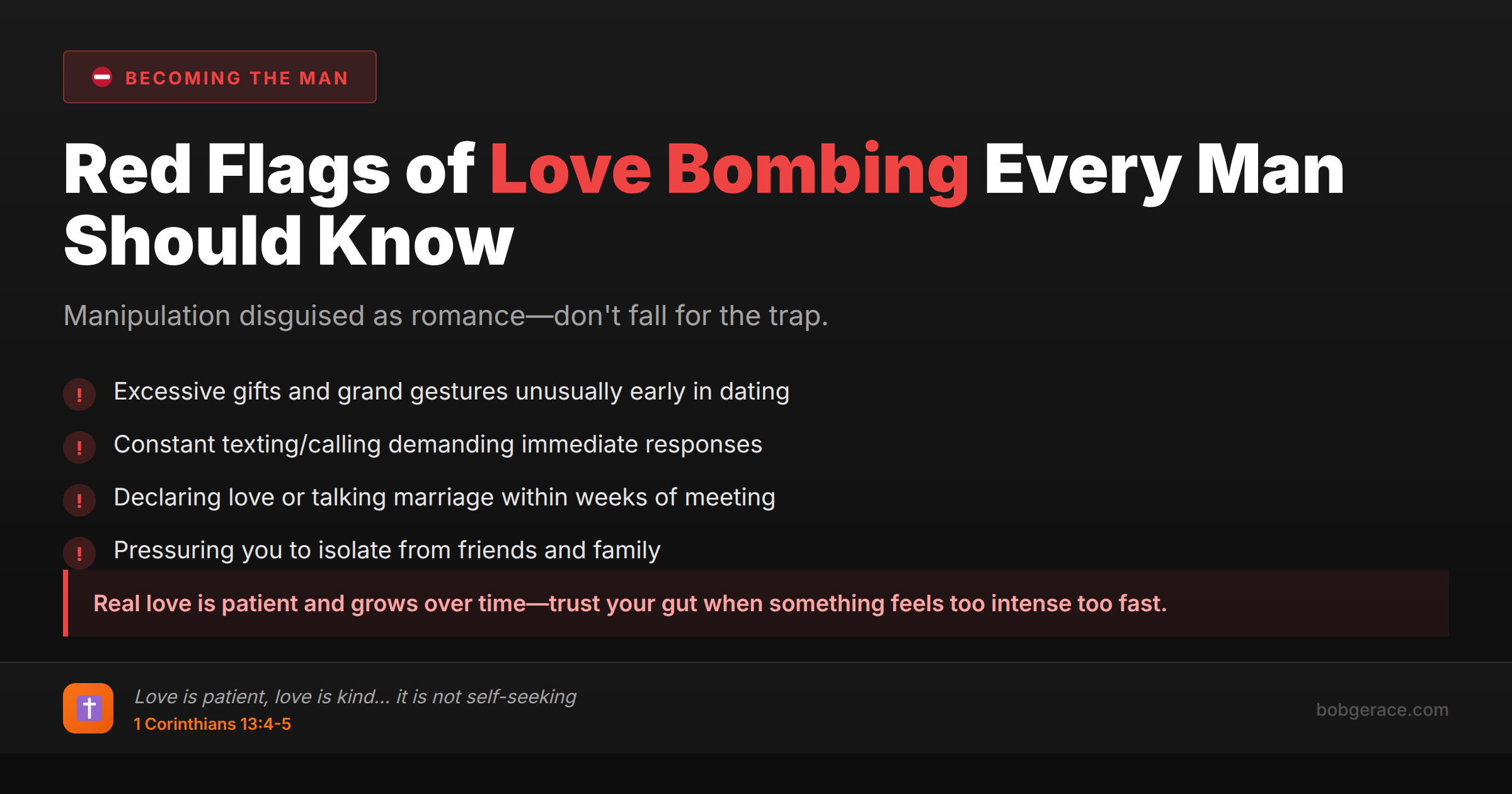
Love bombing is an intense, overwhelming display of affection, attention, and gifts designed to gain control over someone in the early stages of a relationship. It's not genuine love—it's a calculated manipulation tactic where someone showers you with excessive praise, constant communication, expensive gifts, and declarations of love unusually early in the relationship. While it might feel incredible at first, love bombing creates an artificial high that becomes addictive. The person doing it is studying your reactions, learning your weaknesses, and creating dependency. Once they feel they have control, the behavior typically shifts dramatically, leaving you confused and desperately trying to get back to that initial 'high' they provided.
The Full Picture
Love bombing looks like a fairy tale romance on the surface, but it's actually a sophisticated form of emotional manipulation. The pattern is predictable: excessive attention, premature declarations of love, constant texting or calling, expensive or overly thoughtful gifts, and intense focus on your every word and reaction.
The bomber typically moves the relationship forward at breakneck speed—talking about your future together, wanting to spend every moment with you, and making you feel like you've found your 'soulmate' within weeks or even days of meeting. They seem to understand you perfectly and give you exactly what you've always wanted in a partner.
But here's what's really happening beneath the surface: they're gathering intelligence about your emotional needs, insecurities, and desires. Every gift, every compliment, every gesture is designed to create an emotional addiction to their approval and presence.
The most dangerous aspect is how it affects your brain chemistry. The constant highs from their attention trigger dopamine releases that create genuine addiction-like responses. When they eventually withdraw this attention (and they will), you experience something similar to withdrawal, desperately trying to earn back their approval.
Red flags to watch for: they claim you're 'different from everyone else' very quickly, they want to isolate you from friends and family under the guise of wanting you 'all to themselves,' they get upset when you need space or time with others, and their attention feels overwhelming rather than comfortable. Trust your instincts—healthy love develops gradually and respects boundaries.
What's Really Happening
From a clinical perspective, love bombing is a deliberate psychological manipulation strategy often employed by individuals with narcissistic tendencies or other personality disorders. It exploits our fundamental human need for connection and validation, creating an artificial trauma bond that can be incredibly difficult to break.
The neurochemical impact is significant. The intense attention and validation trigger massive dopamine and oxytocin releases—the same chemicals involved in addiction and bonding. This creates what we call an 'intermittent reinforcement schedule' where the victim becomes psychologically dependent on the bomber's approval and presence.
What makes this particularly insidious is that love bombers are often skilled at identifying people who are vulnerable—those with low self-esteem, recent losses, or histories of emotional neglect. They position themselves as the answer to all your emotional needs, creating a dependency that serves their need for control.
The transition from love bombing to devaluation is typically gradual but devastating. Once the bomber feels secure in their control, they begin withdrawing affection, becoming critical, or creating chaos. The victim, now addicted to the original high, will often sacrifice their own boundaries, values, and relationships to try to return to the love bombing phase.
Recognition is the first step toward healing. Understanding that your intense feelings were chemically manufactured, not based on genuine compatibility, helps break the psychological hold. Recovery requires rebuilding your sense of self-worth independent of external validation and learning to recognize healthy versus manipulative relationship patterns.
What Scripture Says
Scripture provides clear guidance about recognizing authentic love versus manipulation. 1 Corinthians 13:4-7 gives us the gold standard: 'Love is patient, love is kind. It does not envy, it does not boast, it is not proud. It does not dishonor others, it is not self-seeking, it is not easily angered, it keeps no record of wrongs. Love does not delight in evil but rejoices with the truth. It always protects, always trusts, always hopes, always perseveres.' Notice that biblical love is patient—it doesn't rush or overwhelm.
Proverbs 27:6 warns us: 'Wounds from a friend can be trusted, but an enemy multiplies kisses.' Love bombers multiply kisses—they overwhelm with affection to hide their true intentions. Genuine love includes honesty, even when it's uncomfortable.
1 John 4:18 teaches that 'perfect love drives out fear.' Love bombing actually creates fear—fear of losing their approval, fear of not measuring up, fear of being alone. Healthy, godly love creates security and peace, not anxiety and desperation.
Matthew 7:16 instructs us to recognize people by their fruits: 'By their fruit you will recognize them.' Look at the long-term patterns and results, not just the immediate feelings. Does this person's love create freedom, growth, and connection with others, or does it create isolation, confusion, and dependency?
Galatians 5:22-23 describes the fruit of the Spirit: 'love, joy, peace, forbearance, kindness, goodness, faithfulness, gentleness and self-control.' Authentic love produces these qualities in both giver and receiver. If a relationship creates chaos, anxiety, or compulsive behavior, it's not reflecting God's design for love.
God designed love to be a source of strength, growth, and freedom—not control or manipulation.
What To Do Right Now
-
1
Document the pattern: Write down specific behaviors that feel overwhelming or too intense for how long you've known them.
-
2
Slow things down: Insist on a reasonable pace for the relationship, regardless of their pressure to move faster.
-
3
Maintain your connections: Don't isolate from friends and family, even if they want 'exclusive' time with you.
-
4
Trust your gut: If something feels 'too good to be true' or overwhelming, pay attention to that instinct.
-
5
Set boundaries: Test their response to reasonable limits—healthy people respect boundaries, manipulators fight them.
-
6
Seek outside perspective: Talk to trusted friends or family about the relationship—they can see patterns you might miss.
Related Questions
Need Help Sorting Through Confusing Relationship Patterns?
Don't navigate manipulation and relationship confusion alone. Get clarity and practical steps to protect yourself and build healthy relationships.
Get Support Now →