What's the difference between vulnerability and vomiting?
6 min read
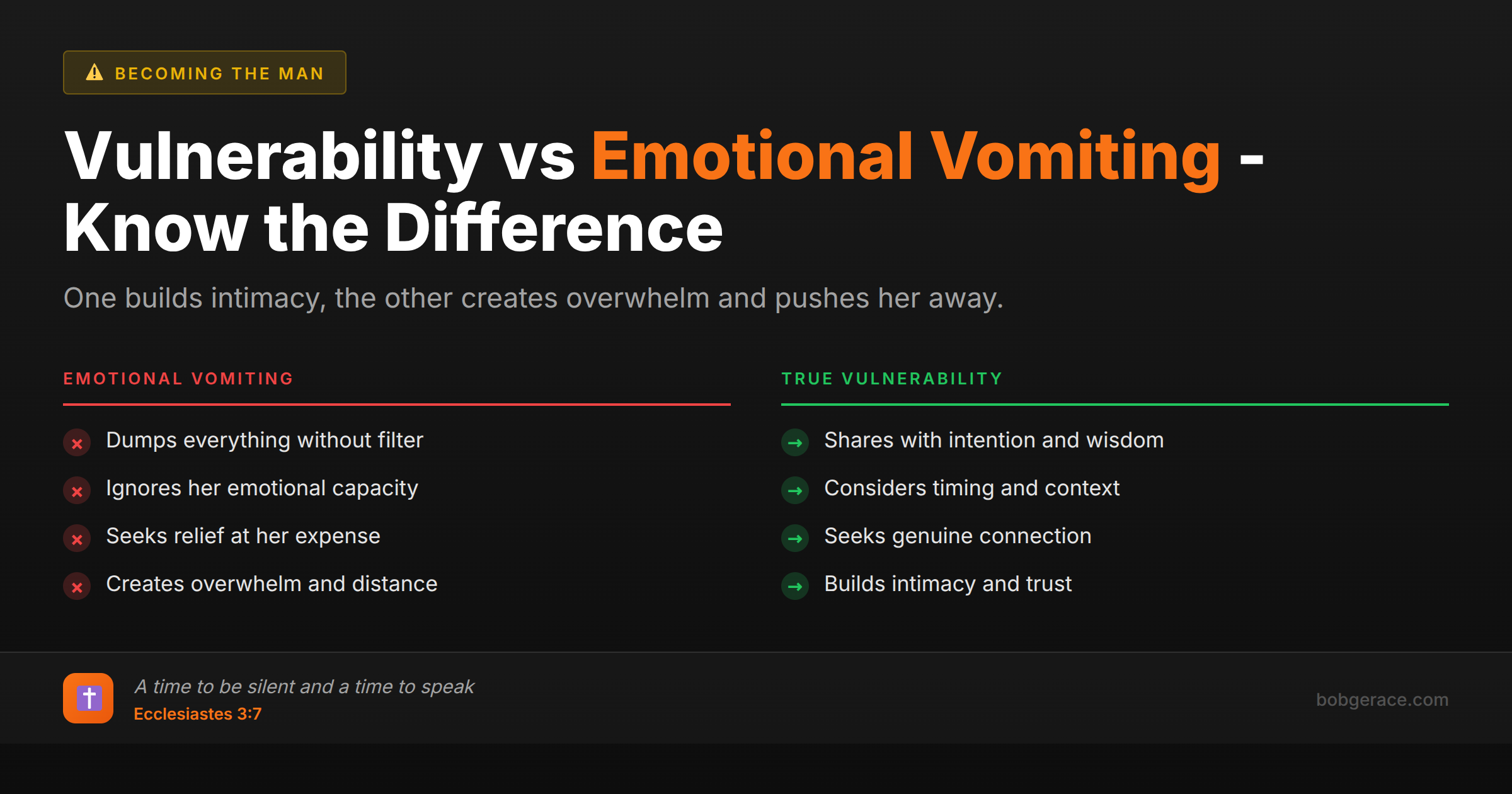
Vulnerability is the intentional, appropriate sharing of your inner world with your spouse to build connection. It's measured, timely, and considers your wife's capacity to receive. Emotional vomiting, on the other hand, is the unfiltered dumping of every feeling, fear, and thought without regard for timing, context, or your spouse's emotional state. Vulnerability builds intimacy; vomiting creates overwhelm. The key difference lies in self-awareness, timing, and the intention behind your sharing. True vulnerability requires emotional intelligence and seeks connection, while vomiting seeks relief at your spouse's expense.
The Full Picture
Many men confuse vulnerability with complete emotional transparency, thinking they need to share everything they're feeling the moment they feel it. This misunderstanding has destroyed more marriages than emotional withholding ever has.
Vulnerability is strategic emotional sharing. It's choosing the right moment, the right words, and the right amount of information to create deeper intimacy with your wife. When you're vulnerable, you're considering her emotional capacity, the timing of the conversation, and your motivation for sharing. You're building a bridge between your inner world and hers.
Emotional vomiting is the opposite. It's dumping your anxiety about work, your fears about money, your frustrations with the kids, and your insecurities about your marriage all at once, usually when she's already stressed or overwhelmed. It's sharing without filtering, without timing, and without considering the impact on her.
The difference shows up in the results. Vulnerability draws your wife closer. She feels honored that you've trusted her with your heart. Vomiting pushes her away. She feels like your emotional dumping ground rather than your beloved partner.
Most men vomit when they're overwhelmed and haven't developed the skill of processing their emotions internally first. They mistake their wife for their therapist, their journal, or their accountability partner. While your wife should be your closest confidant, she's not equipped to handle every raw emotion in real-time.
The goal isn't to eliminate emotional sharing—it's to elevate it. Your wife wants to know your heart, but she needs you to be thoughtful about how and when you reveal it.
What's Really Happening
From a clinical perspective, the difference between vulnerability and emotional vomiting lies in emotional regulation and relational awareness. Vulnerability requires what we call 'emotional intelligence'—the ability to recognize, understand, and manage your emotions before expressing them.
When men emotionally vomit, they're essentially dysregulated. Their nervous system is activated, and they're seeking co-regulation through their spouse. While this is natural, chronic emotional dumping creates what we call 'caregiver fatigue' in the receiving partner. The wife begins to feel responsible for managing her husband's emotional state, which is both exhausting and resentful.
Healthy vulnerability, however, demonstrates emotional self-awareness and other-awareness. The vulnerable partner has done some internal work first—they've identified what they're feeling, why they're feeling it, and what they need from the conversation. They've also assessed their partner's capacity to receive and respond.
Neurologically, emotional vomiting activates the listener's threat detection system. The brain interprets the overwhelming information as danger, triggering a fight, flight, or freeze response. Measured vulnerability, on the other hand, activates the social engagement system, promoting connection and bonding.
The key clinical indicators of healthy vulnerability include: timing awareness, emotional regulation before sharing, clear communication about needs, and respect for the listener's boundaries. Men who master this skill report significantly higher marital satisfaction and emotional intimacy.
What Scripture Says
Scripture gives us clear guidance on how to share our hearts with wisdom and love.
Proverbs 27:14 warns us: *"Whoever blesses their neighbor with a loud voice in the early morning will be counted as cursing."* Even good things shared at the wrong time or in the wrong way can become harmful. Your emotions, even valid ones, can become a curse if shared without wisdom.
Ecclesiastes 3:7 reminds us there is *"a time to be silent and a time to speak."* Emotional maturity means discerning which time it is. Just because you're feeling something doesn't mean it's time to share it.
Ephesians 4:29 instructs us: *"Do not let any unwholesome talk come out of your mouths, but only what is helpful for building others up according to their needs, that it may benefit those who listen."* Notice the phrase "according to their needs." Your sharing should consider what your wife needs to hear and when she needs to hear it.
Proverbs 25:11 beautifully captures healthy vulnerability: *"Like apples of gold in settings of silver is a ruling rightly given."* The right words at the right time are precious and beautiful. Your vulnerable sharing should be like gold in silver—valuable content delivered in the proper setting.
1 Corinthians 13:5 teaches that love *"is not self-seeking."* Emotional vomiting is often self-seeking—you feel better after dumping, regardless of how it affects your wife. True vulnerability seeks her good and your mutual connection.
James 1:19 gives the perfect framework: *"Be quick to listen, slow to speak and slow to become angry."* Even in vulnerability, you should be slow to speak—thoughtful, measured, and wise.
What To Do Right Now
-
1
Process First, Share Second: Before sharing any strong emotion, spend 10 minutes journaling or praying about it. Ask yourself: What am I really feeling? Why am I feeling this? What do I need?
-
2
Check Her Tank: Before vulnerable sharing, assess your wife's emotional capacity. Ask: 'Is this a good time to talk?' or 'How was your day?' Don't dump on an empty tank.
-
3
Start Small: Practice vulnerability with smaller emotions first. Share a minor worry or a simple fear before tackling major anxieties or deep insecurities.
-
4
Ask Permission: Use phrases like 'I'm processing something and would love your perspective' or 'I'm feeling anxious about work—can we talk through it together?'
-
5
Set a Container: Give your sharing boundaries. Say 'I need about 10 minutes to talk through this' rather than launching into an endless emotional download.
-
6
Check the Impact: After sharing, ask 'How did that feel for you?' or 'Was that too much?' Learn to read her responses and adjust accordingly.
Related Questions
- How do I become emotionally intelligent?
- How do I share emotion without overwhelming?
- How do I open up without falling apart?
- What does emotional co-regulation look like?
- How do I self-regulate before I connect?
- What is emotional intelligence and why does it matter?
- How do I not lose my mind right now?
- How do I stop exploding?
- How do I express emotion without dumping?
- What does 'holding space' actually mean?
Also find Bob on
Subscribe for weekly videos on Christian marriage.
Ready to Apply This to Your Marriage?
Knowing the difference is one thing. Calibrating it to your wife, your history, your actual conversations—that's where a coach who knows your story makes the difference.
Talk to Bob →