How do I distinguish my desires from God's direction?
6 min read
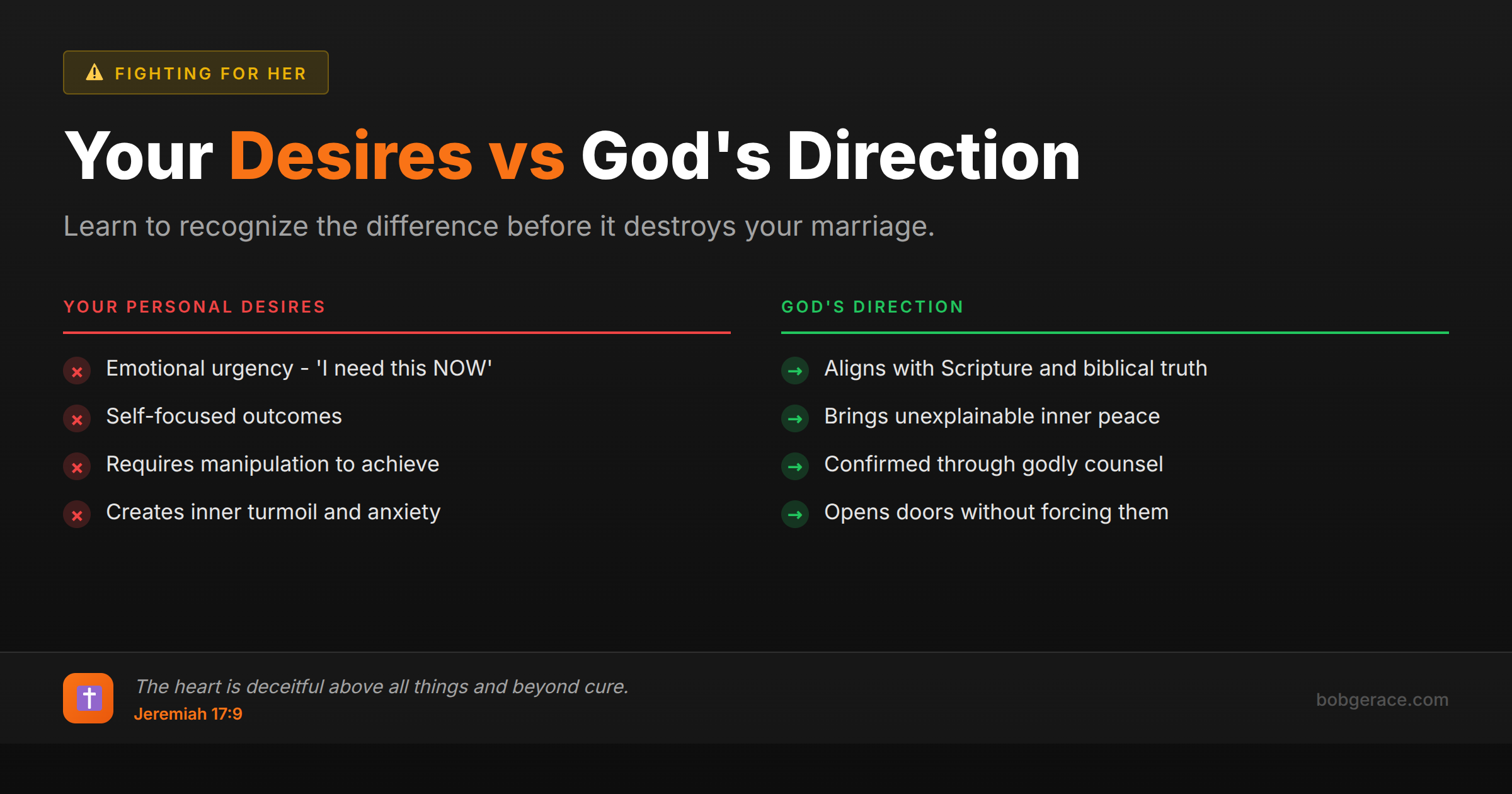
Distinguishing your desires from God's direction requires intentional spiritual discipline and biblical wisdom. The key indicators of God's direction include alignment with Scripture, inner peace that surpasses understanding, confirmation through godly counsel, and circumstances that open rather than force doors. Your personal desires, while not inherently wrong, often carry emotional urgency, self-focused outcomes, and require manipulation or compromise to achieve. In marriage, this discernment becomes crucial when making decisions about conflict resolution, major life changes, or relationship direction. God's guidance typically promotes unity, sacrificial love, and long-term flourishing for both spouses, while personal desires might prioritize immediate gratification or individual preferences over the marriage's health.
The Full Picture
The challenge of distinguishing personal desires from God's direction is one of the most common struggles in Christian marriage. Every day, you're faced with decisions that affect your relationship - from how to handle conflict to major life changes like career moves, financial decisions, or parenting approaches.
Here's what makes this so difficult: your desires aren't automatically wrong. God created you with preferences, dreams, and legitimate needs. The problem comes when we can't tell the difference between God-given desires and self-centered wants that might harm our marriage.
Personal desires often feel urgent and emotionally charged. They usually focus on what you want right now, what makes you feel good, or what seems to solve an immediate problem. These desires might sound like: "I need space from my spouse," "We should move closer to my family," or "My spouse needs to change this behavior."
God's direction, on the other hand, often feels peaceful even when it's challenging. It aligns with biblical principles of love, sacrifice, and unity. It considers the long-term health of your marriage and both spouses' spiritual growth. God's direction might lead you toward difficult conversations, personal change, or sacrificial love that doesn't feel natural.
The confusion happens because both can seem "right" in the moment. Your desire for your spouse to change might feel justified, but God's direction might be calling you to change first. Your want for a particular lifestyle might seem reasonable, but God might be directing you toward contentment and gratitude for what you have.
What's Really Happening
From a psychological perspective, our brains are wired to seek immediate gratification and avoid discomfort, which can cloud our spiritual discernment. When we're stressed in marriage, our limbic system - the emotional center of the brain - often overrides our prefrontal cortex, where rational thinking and spiritual wisdom reside.
This creates what I call "emotional reasoning" - where we mistake intense feelings for divine guidance. Couples often tell me they "feel led" to make decisions that actually stem from unresolved trauma, attachment wounds, or defense mechanisms rather than genuine spiritual discernment.
True discernment requires what neuroscience calls "emotional regulation" - the ability to acknowledge our feelings without being controlled by them. When we're in a calm, regulated state, we can better access our capacity for wisdom, empathy, and spiritual sensitivity.
I've observed that couples who practice regular emotional regulation techniques - like prayer, meditation, and mindfulness - show significantly better discernment in their relationship decisions. They're less reactive to conflict and more able to seek solutions that benefit both partners.
The key psychological principle here is that our personal desires often serve protective functions - they're trying to meet legitimate needs for safety, connection, or significance. But God's direction usually involves growth that pushes us beyond our comfort zones while still meeting our deepest needs in healthier ways.
What Scripture Says
Scripture provides clear guidance on discerning God's will from personal desires, especially in the context of marriage relationships.
Jeremiah 17:9 warns us: "The heart is deceitful above all things and beyond cure. Who can understand it?" This doesn't mean our hearts are evil, but that our emotions and desires can mislead us if we rely on them alone for guidance.
Proverbs 3:5-6 offers the solution: "Trust in the Lord with all your heart and lean not on your own understanding; in all your ways submit to him, and he will make your paths straight." God's direction comes through submission to His wisdom rather than our limited perspective.
1 Corinthians 7:3-4 specifically addresses marriage: "The husband should fulfill his marital duty to his wife, and likewise the wife to her husband. The wife does not have authority over her own body but yields it to her husband. In the same way, the husband does not have authority over his own body but yields it to his wife." This reveals that God's direction in marriage often involves considering your spouse's needs equally with your own.
Philippians 4:6-7 provides the test for God's peace: "Do not be anxious about anything, but in every situation, by prayer and petition, with thanksgiving, present your requests to God. And the peace of God, which transcends all understanding, will guard your hearts and your minds in Christ Jesus."
James 1:5 promises wisdom: "If any of you lacks wisdom, you should ask God, who gives generously to all without finding fault, and it will be given to you." God wants to guide your marriage decisions.
Galatians 5:22-23 shows the fruit of God's direction: "But the fruit of the Spirit is love, joy, peace, forbearance, kindness, goodness, faithfulness, gentleness and self-control." When God is leading, these qualities increase in your marriage.
What To Do Right Now
-
1
Pause before major decisions - Institute a 24-48 hour waiting period before making any significant choice that affects your marriage
-
2
Apply the Scripture test - Ask yourself: "Does this align with biblical principles of love, sacrifice, and unity in marriage?"
-
3
Seek godly counsel - Talk to mature Christian couples or a pastor who can offer objective, biblical perspective on your situation
-
4
Check your motives - Honestly examine whether your desired outcome serves your marriage's growth or primarily your personal comfort
-
5
Pray together as a couple - Bring the decision before God together, asking for His peace and wisdom rather than confirmation of predetermined desires
-
6
Look for God's peace - Move forward only when you both experience the peace that surpasses understanding, even if the path seems difficult
Related Questions
- How do I discern God's will for my marriage?
- What role does Scripture play in discernment?
- What role does wise counsel play?
- What role do circumstances play?
- How do I hear God when I'm in crisis?
- What if godly people disagree on what I should do?
- How do I pray through this?
- How do I know God's will in this?
- What's the difference between hope and presumption?
- Is there peace available before resolution?
Also find Bob on
Subscribe for weekly videos on Christian marriage.
Want a Coach Who Knows Your Story
Discernment isn't abstract when it's your marriage. A coach who knows your situation can help you see what God's actually saying versus what you want to hear.
Talk to Bob →