What is 'responsive desire' vs. 'spontaneous desire'?
6 min read
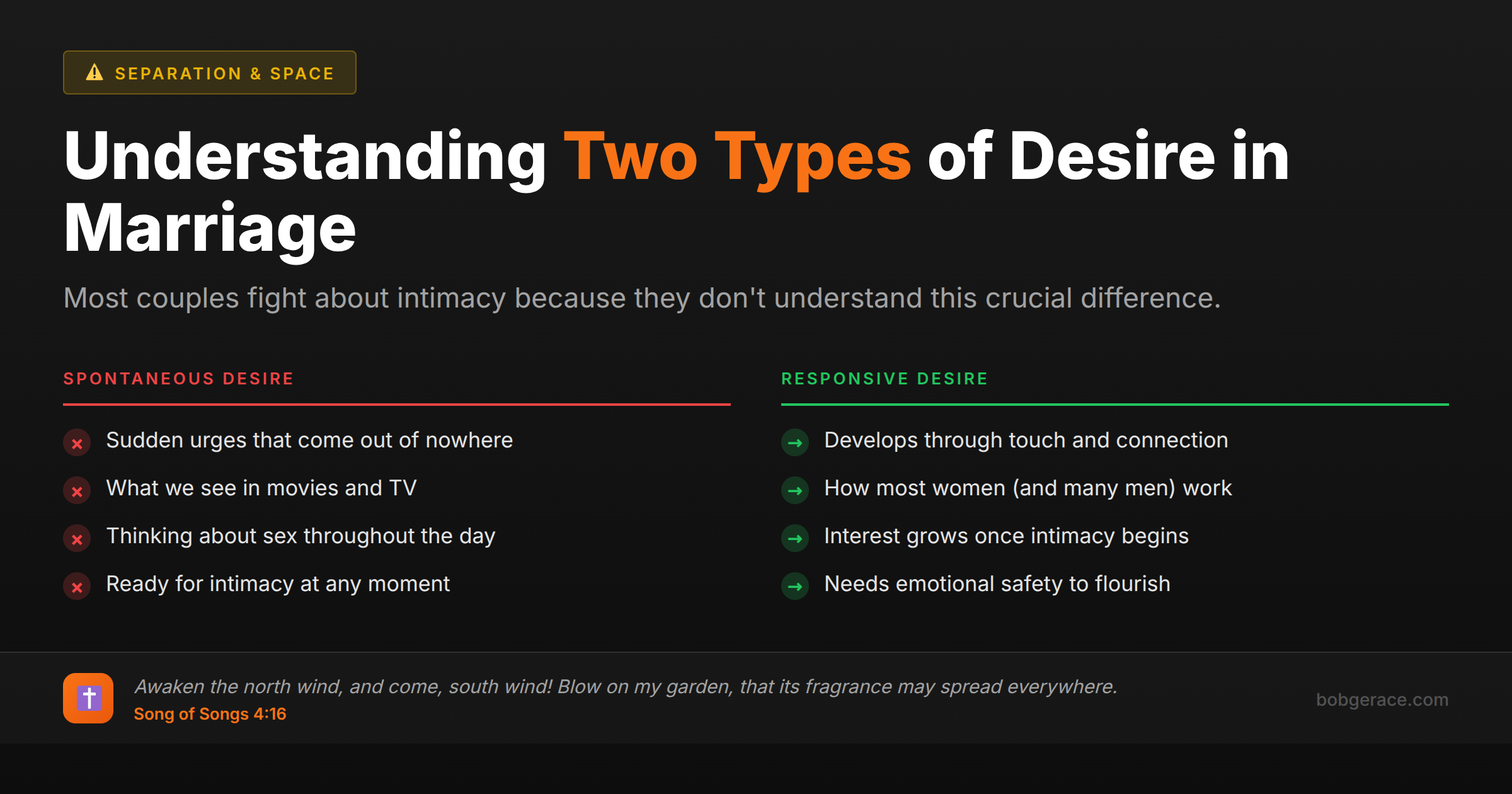
Spontaneous desire is what we see in movies - sudden urges for physical intimacy that seem to come out of nowhere. Responsive desire, however, is arousal that develops in response to physical touch, emotional connection, or intimate situations. Most women (and many men) experience responsive desire, meaning they don't walk around thinking about sex, but can become interested once intimacy begins. This isn't a problem to fix - it's how God designed many people to experience desire. The issue comes when couples don't understand this difference. If your wife has responsive desire and you keep waiting for her to initiate or show obvious interest, you'll both end up frustrated and disconnected.
The Full Picture
Here's what most couples don't realize: there are two completely different but equally valid ways people experience sexual desire, and not understanding this difference destroys marriages.
Spontaneous desire is the Hollywood version - sudden, intense urges that seem to come from nowhere. People with spontaneous desire think about sex regularly, get turned on by visual cues, and often initiate physical intimacy. This pattern is more common (but not exclusive) in men and in the early stages of relationships.
Responsive desire works differently. These individuals don't walk around thinking about sex or feeling sudden urges. Instead, their desire develops in response to physical touch, emotional connection, romantic gestures, or being in intimate situations. They need the right context - feeling loved, secure, and connected - before desire emerges.
Here's the crucial part: responsive desire isn't broken spontaneous desire. It's not a lower sex drive or a problem to solve. It's simply a different operating system, and it's actually the more common pattern, especially for women and in long-term relationships.
The problems start when couples don't understand these differences. The spontaneous desire partner feels rejected because their spouse "never wants sex." The responsive desire partner feels pressured and disconnected because intimacy feels demanded rather than cultivated. Both people end up hurt, confused, and increasingly distant.
When you understand these patterns, everything changes. Instead of waiting for desire to appear, you create conditions where it can develop naturally.
What's Really Happening
From a clinical perspective, responsive desire is the predominant pattern I see in my practice, yet most couples have never heard of it. Research by Dr. Emily Nagoski shows that about 75% of men and 15% of women experience primarily spontaneous desire, while 5% of men and 30% of women experience primarily responsive desire. The remaining percentages experience both types depending on circumstances.
What's fascinating is how context affects desire. Responsive desire individuals need what we call 'accelerators' - things like feeling emotionally connected, being stress-free, having adequate sleep, and experiencing non-sexual touch throughout the day. They also need minimal 'brakes' - factors like relationship conflict, body image concerns, fatigue, or feeling overwhelmed.
The tragedy I witness is couples where the responsive desire partner (often the wife) gets labeled as having 'low libido' or being 'frigid.' Nothing could be further from the truth. When the right conditions are present - emotional safety, physical affection without pressure, adequate foreplay, and genuine connection - responsive desire can be incredibly passionate and fulfilling.
I often tell couples: responsive desire isn't a bug in the system, it's a feature. It connects physical intimacy to emotional intimacy, ensuring that sex happens within the context of genuine connection rather than just physical release. Understanding and honoring both patterns creates space for authentic intimacy to flourish.
What Scripture Says
Scripture beautifully illustrates both types of desire and shows us God's design for marital intimacy that honors different ways of experiencing connection.
Song of Songs 4:16 shows responsive desire in action: *"Awaken the north wind, and come, south wind! Blow on my garden, that its fragrance may spread everywhere. Let my beloved come into his garden and taste its choice fruits."* The bride's desire awakens through courtship and romantic pursuit - it's responsive to her husband's love.
1 Corinthians 7:3-4 establishes mutual responsibility: *"The husband should fulfill his marital duty to his wife, and likewise the wife to her husband. The wife does not have authority over her own body but yields it to her husband. In the same way, the husband does not have authority over his own body but yields it to his wife."* This isn't about demand or pressure, but about mutual care and consideration for each other's needs and patterns.
Ephesians 5:25-28 shows the foundation needed for responsive desire: *"Husbands, love your wives, just as Christ loved the church and gave himself up for her... In this same way, husbands ought to love their wives as their own bodies."* This sacrificial love creates the emotional safety responsive desire requires.
Proverbs 5:18-19 celebrates passionate marital love: *"May your fountain be blessed, and may you rejoice in the wife of your youth. A loving doe, a graceful deer - may her breasts satisfy you always, may you ever be intoxicated with her love."* God designed both spontaneous passion and cultivated intimacy.
God's design includes both patterns of desire, and both serve the purpose of connecting couples in deep, meaningful intimacy.
What To Do Right Now
-
1
Have an honest conversation about how you each experience desire - share this article and discuss which pattern feels more familiar to each of you
-
2
If your wife has responsive desire, stop waiting for her to initiate and start creating conditions for desire to develop naturally through emotional connection
-
3
Focus on non-sexual touch throughout the day - hand holding, hugs, shoulder rubs - without expecting them to lead to sex
-
4
Address the 'brakes' in your relationship - stress, conflict, exhaustion, feeling disconnected - these kill responsive desire
-
5
Create regular opportunities for emotional intimacy through meaningful conversations, date nights, and quality time together
-
6
Be patient and consistent - responsive desire develops over time and requires sustained emotional and physical safety
Related Questions
Ready to Rebuild Real Intimacy?
Understanding desire patterns is just the beginning. Get the tools and support you need to create lasting intimacy in your marriage.
Work With Me →