What is 'sexual aversion' and does she have it?
6 min read
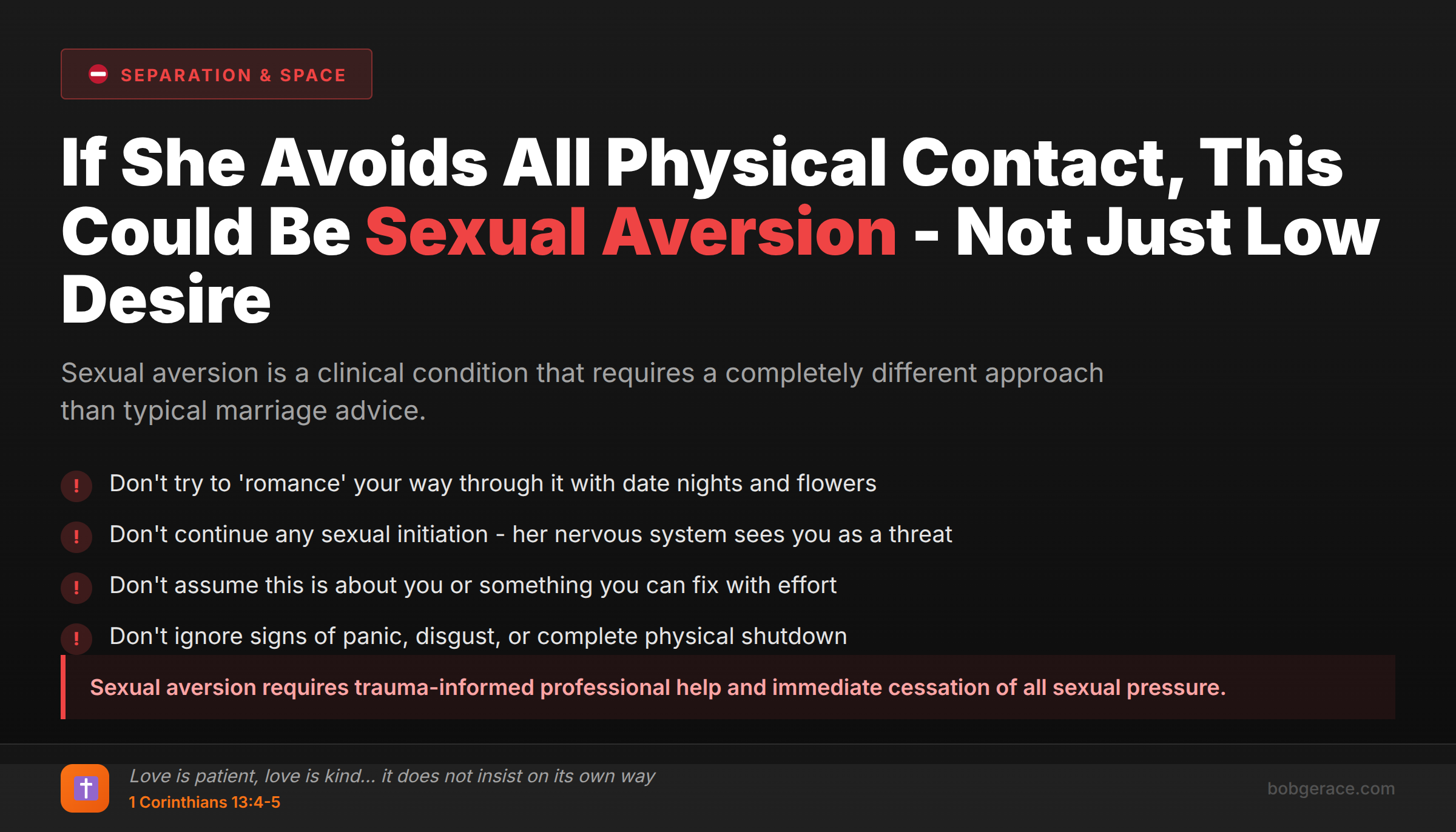
Sexual aversion is a clinical condition where someone experiences intense fear, disgust, or panic when faced with sexual contact. It's not just 'not being in the mood' - it's an involuntary, overwhelming negative response to physical intimacy. If your wife consistently avoids all physical contact, shows signs of distress or anxiety when intimacy is approached, or has completely shut down physically while seeming fine in other areas, she may be experiencing sexual aversion. This condition often develops after trauma, prolonged relationship conflict, or repeated negative sexual experiences. The key difference from normal low desire is the intensity of the negative response and the complete avoidance of sexual situations. Understanding this isn't about blame - it's about recognizing that healing requires professional help and a completely different approach than typical marriage advice.
The Full Picture
Sexual aversion disorder involves persistent or recurrent extreme aversion to, and avoidance of, all genital sexual contact with a partner. This goes far beyond typical fluctuations in sexual desire that every marriage experiences.
Signs of sexual aversion include: - Complete avoidance of situations that might lead to sexual contact - Physical symptoms like nausea, sweating, or panic when sexual activity is initiated - Extreme emotional distress at the thought of sexual intimacy - Avoidance of non-sexual physical affection out of fear it will lead to sexual expectations - Scheduling activities or creating barriers to avoid potential intimate moments
What causes sexual aversion? Often it develops from: - Past sexual trauma or abuse - Painful medical conditions that made sex uncomfortable - Prolonged periods of unwanted or coercive sexual experiences - Severe relationship betrayal or emotional trauma - Hormonal changes combined with negative sexual experiences - Religious or cultural shame around sexuality
The tragedy is that sexual aversion often develops gradually in marriages where the wife felt pressured, unheard, or violated repeatedly. What started as normal resistance became an involuntary protective response. Her body and mind now associate sexual contact with danger or distress, creating an automatic aversion response that she cannot simply 'choose' to overcome.
This isn't about you not being attractive enough or skilled enough. This is about her nervous system being in protection mode. Recovery requires safety, patience, and usually professional intervention.
What's Really Happening
Sexual aversion represents a trauma response where the nervous system has learned to perceive sexual situations as threatening. When someone develops sexual aversion, their brain's alarm system activates during intimate moments, flooding them with stress hormones and triggering fight, flight, or freeze responses.
What many husbands don't understand is that sexual aversion often develops in marriages where there wasn't obvious trauma or abuse. It can result from years of subtle coercion, dismissal of her 'no,' or sex that felt obligatory rather than desired. The female nervous system is particularly sensitive to feeling unsafe or unheard in intimate contexts.
The physiological reality: Her body now associates your sexual advances with threat. This isn't conscious or controllable - it's happening at a neurological level. Trying to convince her logically or increase romantic gestures often backfires because it doesn't address the underlying nervous system dysregulation.
Treatment approach: Recovery requires creating absolute safety around sexuality, often meaning a complete temporary cessation of sexual activity while rebuilding trust and addressing trauma. This isn't punishment - it's medical necessity. The aversion must be treated before desire can return.
Most importantly, sexual aversion is treatable with proper clinical intervention. However, it requires the husband to completely change his approach, often meaning months of focusing solely on emotional safety and non-sexual connection while she works with a trauma-informed therapist. The good news is that when properly addressed, couples can rebuild healthy sexual intimacy.
What Scripture Says
God's design for marriage includes physical intimacy, but Scripture also emphasizes love, gentleness, and mutual care that must undergird healthy sexuality.
Love is patient and kind: *'Love is patient, love is kind. It does not envy, it does not boast, it is not arrogant or rude. It does not insist on its own way; it is not irritable or resentful'* (1 Corinthians 13:4-5). If your wife has sexual aversion, love means prioritizing her healing over your sexual needs.
Husbands must understand their wives: *'Likewise, husbands, live with your wives in an understanding way, showing honor to the woman as the weaker vessel, since they are heirs with you of the grace of life, so that your prayers may not be hindered'* (1 Peter 3:7). Understanding includes recognizing when she's experiencing trauma responses, not just frustration.
Gentleness in all things: *'Let your gentleness be evident to all'* (Philippians 4:5). Sexual healing requires extraordinary gentleness and patience, sometimes for months or years.
Body belongs to each other - with wisdom: While *'The wife does not have authority over her own body, but the husband does. And likewise the husband does not have authority over his own body, but the wife does'* (1 Corinthians 7:4), this verse assumes healthy sexuality. When aversion exists, pushing sexual rights causes further harm.
Bear one another's burdens: *'Bear one another's burdens, and so fulfill the law of Christ'* (Galatians 6:2). Her sexual aversion is a burden you both carry together toward healing.
God desires restoration: *'He heals the brokenhearted and binds up their wounds'* (Psalm 147:3). God wants to restore healthy sexuality to your marriage, but healing happens on His timeline, not yours.
What To Do Right Now
-
1
Stop all sexual initiation immediately - her nervous system needs to know you're not a sexual threat before healing can begin
-
2
Find a trauma-informed therapist who specializes in sexual aversion - this isn't something you can fix with date nights and flowers
-
3
Focus entirely on non-sexual emotional connection and safety - rebuild trust in small interactions throughout each day
-
4
Educate yourself about trauma responses and sexual aversion - understanding what's happening in her body reduces your frustration
-
5
Address any ways you may have contributed to the aversion - past pressure, dismissing her 'no,' or making sex feel obligatory
-
6
Commit to the long healing process - sexual aversion recovery often takes 6 months to 2 years with professional help
Related Questions
- She doesn't want to be touched
- What kills female sexual desire in marriage?
- What's the relationship between emotional safety and sexual desire?
- Could her sexual shutdown be trauma-related?
- What does coercion do to sexual desire long-term?
- How do I rebuild emotional intimacy first?
- Why does sex feel contaminated now?
- What is post-affair sexual healing?
- How do I reclaim our intimacy?
- What is 'betrayal trauma' and do I have it?
Also find Bob on
Subscribe for weekly videos on Christian marriage.
This Needs a Coach Who Knows Your Story
Sexual aversion in your marriage isn't generic—what caused it, how deep it runs, what she needs from you right now—that's all specific to the two of you. Talk to Bob.
Get a Coach →